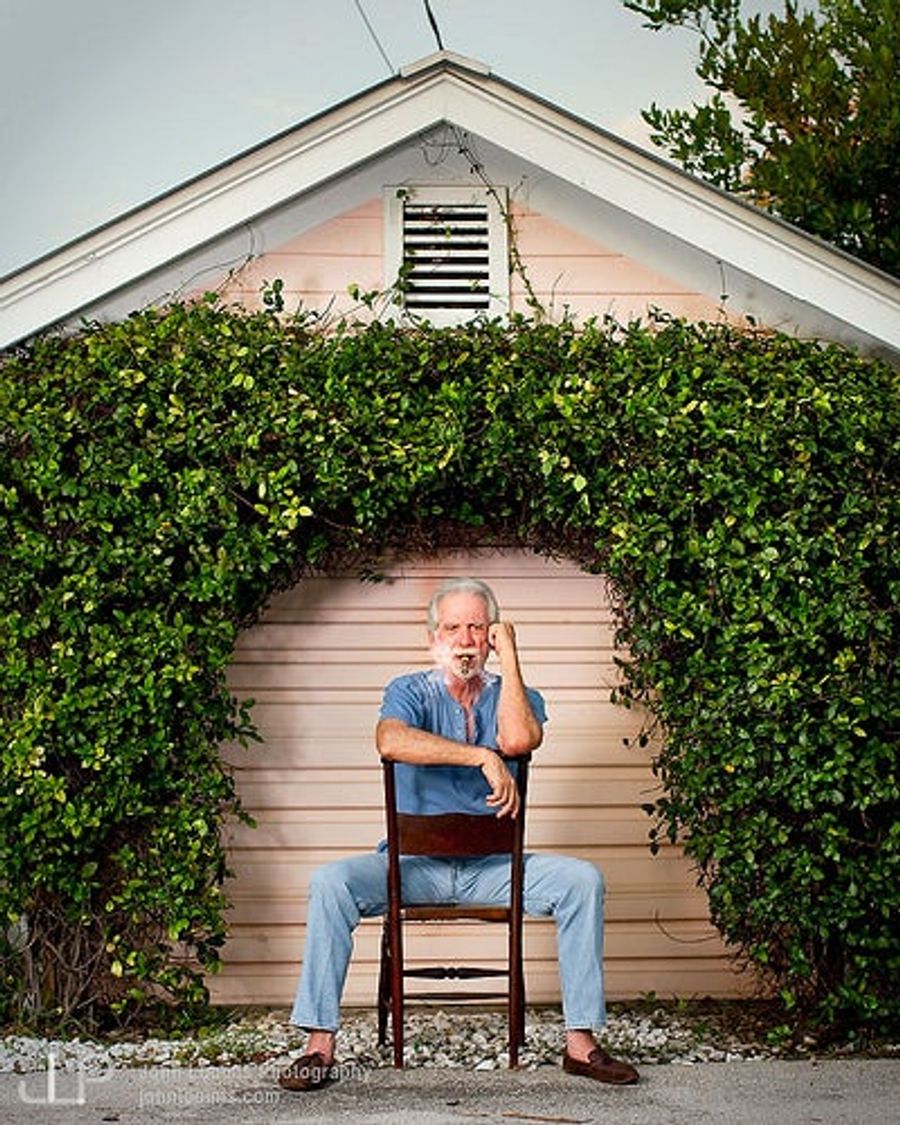
<![CDATA[Deadspin: Pat Jordan]]> http://cache.gawker.com/assets/base/img/thumbs140x140/deadspin.com.png <![CDATA[Deadspin: Pat Jordan]]> http://deadspin.com/tag/pat jordan http://deadspin.com/tag/pat jordan <![CDATA[ Pat Jordan Doesn't Mess Around ]]> Many Deadspin readers were probably introduced to Pat Jordan's work thanks to his Jose Canseco piece that was published here. If you looked a little closer at some of the other stories he'd penned in the past, you may have realized you'd read one of his stories before. Some of Jordan's best work is archived in the new book " The Best Sports Writing Of Pat Jordan," which is exceptional reading for anyone interested in sportswriting that's vital, literary, and human.

As you may know, Pat Jordan ain't no Rick Reilly. Jordan's profiles— from Roger Clemens, to Carlton Fisk, to O.J. Simpson, to Pete Rose Jr. — are all painstakingly excavated, analyzed and scrutinized through his head-first reporting. His stories reveal a darker, unflattering side of some — okay, most — of his subjects, but his technique is so refined it is more revelatory than gossipy. And although some of the stories are more than 30 years old, they feel remarkably timeless.

Here's a short interview with Pat Jordan that'll give you a little better idea of the type of writer — the type of man — behind some of these stories.

AJD: There seemed to be a time when sportswriters could befriend athletes — actually hang out with them, go to dinner with them, have a relationship that's convivial and not antagonistic. Are those days completely gone forever?

PJ: Gone forever. Now, you're lucky to get 20 minutes at their locker with everybody interrupting you. It's a big mistake on their part. Fans don't get to know them as people, to form a relationship with them as people, so they only know them as athletes and an image. See A Rod. Which is why fans delight in catching A Rod in gotcha moments with a stripper. These guys foster love-hate relationships with their fans because of the distance they maintain from them. If they let guys like me profile them, we could show fans their human side. Now, I was supposed to do a profile on Josh Beckett this spring, but he backed out of it. On one hand, I don't blame him. From his perspective, what does he have to gain? It's Beckett's prerogative, of course, but it would make him more human if I did a profile of him. Now fans just know him as a great pitcher, who's a sullen, red-ass, Texas boy. My profile would help him survive bad times in Boston when they come. But he can't think that far down the road.

AJD: Was there ever an athlete — either you've written about or just met casually — you perceived as an asshole who pleasantly surprised you?

PJ: Yes. Bo Belinsky (author's note: Bo Belinsky!). I thought he was a guy who pissed away his career, carelessly, but he was a man who was very sensitive, a good guy, who could never hurt anyone but himself.

AJD: You seem to have an admiration for players who are a little prickly, who have principles both on and off the field, like the piece on Carlton Fisk in your book. Do those athletes even exist anymore?

PJ: I don't know. I haven't interviewed such guys lately. Seaver, Fisk, they were men first, and athletes second. I admired them as men, and then, secondarily, as athletes. They had fucking standards. Maybe not my standards, but at least they had standards. They were AUTHENTIC. That's all i expect in a subject.

AJD: I found the story (Breakers West: Where The Kissing Never Stops) about the Williams sisters disturbing. It had this very incestuous vibe to it. You seemed to go out of your way to point out how their father wasn't the usual overbearing tennis father (in his mind, at least), but you had it peppered with those odd "I love you Daddy/I love you, Venus Williams" exchanges throughout. Were you genuinely freaked out by Richard Williams?

PJ: Second worst pathological liar i have interviewed. OJ was the first. Richard was a scary guy. A manipulator. He was not an authentic man.

AJD: You're married to Meg Ryan's mom. You did a piece slamming Meg because of some of things she'd said about your wife. Do you still have animosity toward her? Do you consider her, uh, a step daughter?

PJ: Technically, Meg is my step-daughter, even if she does refer to me in Hollywood as the Anti-Christ. But I hold no animosity toward her as long as she leaves her mother alone. I am known in Hollywood as Meg Ryan's mother's pit bull. No one fucks with my wife, especially not her kids. If Meg called her mother today and said she was sorry and she loved her, I'd be the first person to pick her up at the airport.

AJD: Obviously, Jose Canseco didn't appreciate the story you wrote about him. In fact, he (and his girlfriend!) pretty much discredited the whole thing by making it seem like you were an angry, bitter writer taking out your frustrations on him. How much of the version that you published on Deadspin do you think would've been in the piece had you actually spent some time with Canseco? Would an hour of his time really have changed the direction of the story that much? Or is Canseco just telling the truth again and you're just an angry, jealous man?

PJ: I certainly am not jealous of Jose. I never aspired to stupidity. But I was certainly pissed off at his dragging me to LA for three days and canceling our interview. He definitely would have come off better than he did if he'd have talked to me. Maybe he could have made himself more human in my eyes in a way he wasn't from a distance. His mistake.

AJD: Do you think the majority of sports writers are pussies?

PJ: Abso-fucking-lutely. Most have yet to grow pubic hair. They idolize and are resentful of jocks that have a talent they never had. They fawn over them one minute, and slam them the next. Very schizophrenic. I never admired athletes because I was one and knew just because we were athletes that didn't make us any better than anyone else. So I could throw a ball faster than a non-athlete, so what. Anyway, I admire athletes who are, again, AUTHENTIC. I am not a fan. I am a writer who appreciates authentic people, whether they are jocks, actors, politicians, or unknowns.

AJD:When was the last time you got into physical altercation with somebody?

PJ: I was 52. My wife and I were pedaling our bikes on the sidewalk on Fort Lauderdale beach. This big guy, maybe 220 lbs, 28 years old, was roller blading backwards toward us without looking. He clipped my wife's bike, almost spilling her to the sidewalk. When he passed me I said, "Hey, asshole, watch where you're going." So he skates back to me in a threatening way and says, "What did you call me?" I said, "Asshole." Now he's thinking, this is an old guy, but not that old, and then he slams into my wife's bike again and knocks her to the sidewalk. I leap off my bike on top of him and we're wrestling on the sidewalk. I have his head in a headlock, when my bicep rips, and I let go. He jumps off and skates furiously away, screaming back at me, that I was crazy. I told you, nobody fucks with my wife. Anyway, my bicep is still ripped and I never had it repaired. Long story, huh?

AJD: Does publishing a book like this depress you at all? Of course, it's gratifying, but at the same time, it's your life, or at least a huge chunk of it. Doesn't putting together a collection like this open you up to second guessing any of the choices you made?

PJ: Nothing depresses me, in my job, except when I'm not writing. Writing is an end for me, not a means. I aspire to nothing, ESPN-TV, fame, fortune, or anything, other than to be able to write each day and pay my bills. The collection has some of my best stuff, not all. I don't live in the past of everlasting regrets. Every story I do next, I think will be my best. That's what keeps me going. I am first, last, and always, a professional writer who lives to sit at the typewriter each morning. As for regrets, I have none, except for my sins, which will remain private as far as you're concerned. Certainly I have no regrets about my career. I never thought of my career as a career. It was God's gift. I fucked up the first gift God gave me, and hope He isn't still pissed off at me. Then He gave me a second career which I know I haven't fucked up. I do the best and truest work I can from story to story and let the rest of you decide whether their good, bad, or irrelevant. and you guys, Alex (Belth, the editor of Jordan's collection), and anyone else who reads my stuff is the point for me. I write for my readers, not me. If i don't please you, I failed. As for second-guessing, that's for losers. I live with my choices, even if I wish I hadn't made some of them. It's called, being a fucking man, guys.

]]>
Deadspin-384662 Mon, 28 Apr 2008 14:20:05 EDT DAULERIO http://deadspin.com/index.php?op=postcommentfeed&postId=384662&view=rss&microfeed=true
<![CDATA[ Jose Canseco's Lawyer Finally Released Into The Wild ]]> duelingCansecos.jpgYou may remember, from Pat Jordan's already famous story for us about trying to interview Jose Canseco, his lawyer "Rob," a "a Cherokee Indian from North Carolina" who, after four years working for Jose, had yet to be paid. Well, Canseco might have just done Rob — whose real name is Robert Saunooke — a big favor: He just fired him.

Saunooke seems a bit bewildered by the firing ... and more than a little relieved.

"What's percolating is I don't represent him anymore. I terminated my relationship with him," said Saunooke. "Just moving on. It's a number of things. Irreconcilable differences, disagreement on some issues. I just don't need the hassle anymore."

Here's perhaps our favorite section on Canseco and Saunooke from the story:

Over the last few years, Rob has negotiated prospective deals for Jose worth almost $2 million. Rob got Taco Bell to ante up $25,000, plus residuals, for Jose to star in a TV commercial in which Jose would hold up a huge burrito and say, "This thing's gotta be on something." Jose demanded $50,000 instead and Taco Bell walked. Rob also got Jose an offer of $100,000 from GoldenPalace.com, which would require Jose simply to wear that company's t-shirt and cap whenever he was on TV. Jose demanded $200,000 and Golden Palace walked. Then, Rob got Jose an offer of $75,000 from a reality TV show that wanted to film Jose in a wheelchair for thirty days. Jose demanded more, and the TV show vanished. Finally, Rob got Jose an offer of $500,000 for a movie based on his life, but Jose demanded $1.5 million and the offer vanished. "I told him, 'You're not Bill Clinton, Jose!'" said Rob.

Rob, we congratulate you on your return to the world of the sane.

Jose Canseco Parts Ways With His Longtime Agent [New York Daily News]
Chasing Jose, By Pat Jordan [Deadspin]

]]>
Deadspin-378719 Fri, 11 Apr 2008 13:35:55 EDT Leitch http://deadspin.com/index.php?op=postcommentfeed&postId=378719&view=rss&microfeed=true
<![CDATA[ Pat Jordan, Canseco "Square Off" On Howard Stern ]]> cansecocharming.jpgThis morning, on The Howard Stern Show (a.k.a., the show you used to listen to all the time until either: a) he left for satellite radio, which you don't get; or b) he got divorced from his wife, draining the show of its subtle, mostly hidden pathos), Jose Canseco was a guest. And Pat Jordan, author of the gripping story about Chasing Jose for us, called in and chatted.

We can't say it was necessarily "enlightened discourse," but hey, it's radio. As you'd probably guess, Canseco is not pleased about the story, which means, of course, it's a pack of lies. After all, it's Jose Canseco, a beacon of truth and justice. You can hear the Jordan-Canseco clip right here.

boomp3.com

And if you want to hear the whole interview, here's the whole thing in five parts:

boomp3.com
boomp3.com
boomp3.com
boomp3.com
boomp3.com

]]>
Deadspin-374730 Tue, 01 Apr 2008 18:30:43 EDT Leitch http://deadspin.com/index.php?op=postcommentfeed&postId=374730&view=rss&microfeed=true
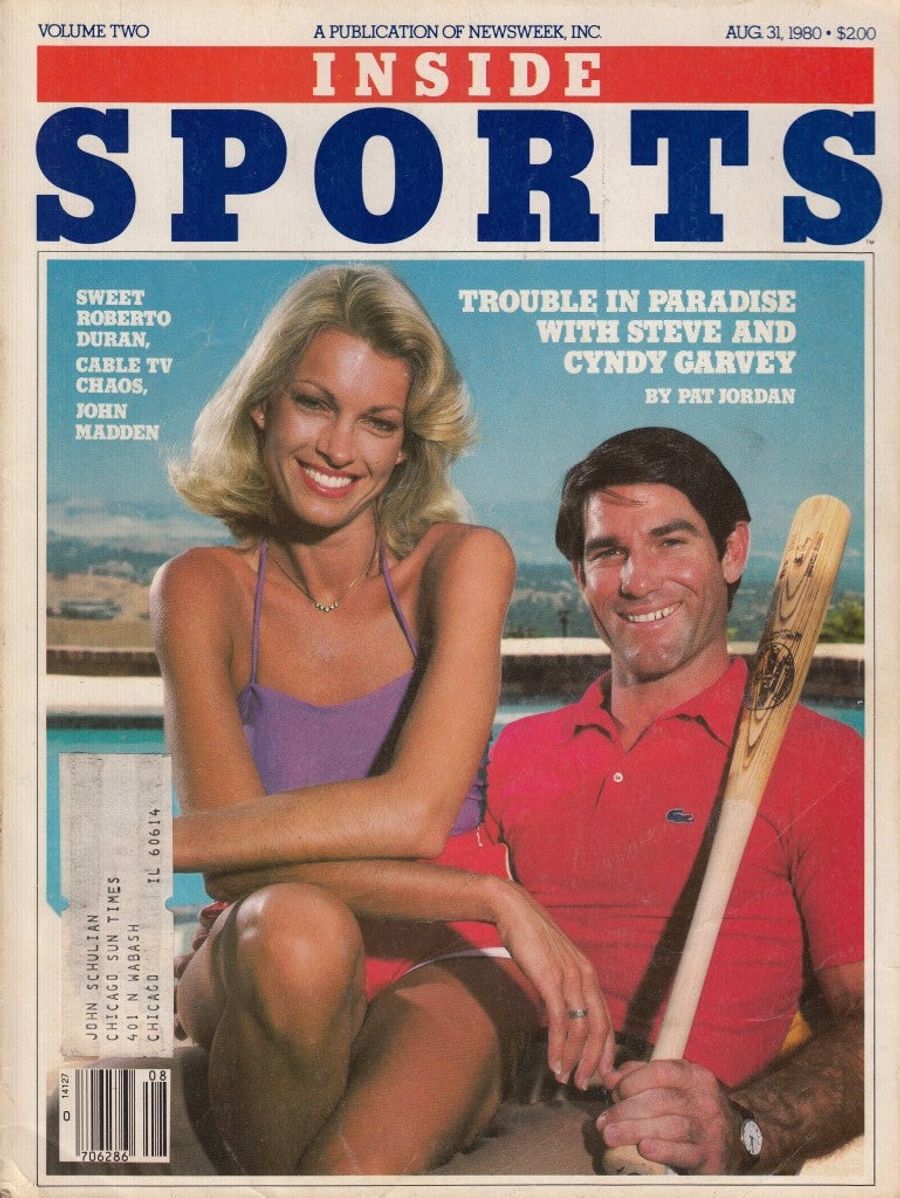
<![CDATA[ Chasing Jose, By Pat Jordan ]]> searchingforcanseco.jpgPat Jordan is the author of 13 books, including "A False Spring," hailed by Time as "one of the best and truest books about baseball, and about coming to maturity in America." A prolific freelance journalist for 40 years, Jordan was recently dubbed "a national treasure" by Booklist in a starred review of a collection of his finest work, "The Best Sports Writing of Pat Jordan," (Persea Books), which includes definitive profiles of O.J. Simpson, Roger Clemens and Sylvester Stallone, along with Jordan's most controversial stories, on Steve and Cyndi Garvey and Hall of Fame pitcher, Steve Carlton. "The Best Sports Writing of Pat Jordan" will be released on April 14. He writes today for Deadspin about his repeated attempts to interview Jose Canseco for the last three months.

I have been pursuing Jose, like the Holy Grail, for three months now, trying to nail him down for a magazine profile he'd agreed to do in January, partly because, as his lawyer/agent had told me, "Jose's on the balls on his ass," and partly because Jose was trying to interest a publisher in his second steroids-tell-all book, which existed only as a two page proposal of typos that had yet to interest any publisher. This second book would be titled "Vindicated," and it would "encompass approximately 300 pages and will require six months to complete."

My pursuit of Jose began in January when I called him in California. His girlfriend, Heidi, answered the phone. I told her that I was writing a magazine story about Jose writing a book. "And a movie," she said. "Jose is writing a book and a movie about himself." I said, "You mean a screenplay?" She paused a beat, then said, "No, a movie." I said, "Of course."

I tried to picture Jose writing his book and his movie. Hunched over, his broad shoulders casting a shadow across his desk like a raptor's wings, his brow furrowed in concentration, his massively muscled body tensed in anticipation of that torrent of words about to flow out of him like urine for one of the many steroid tests he'd been forced to take during his baseball career. I wondered, just how does Jose write? Like Shakespeare, with a quill pen on parchment? Like Dickens, wearing a green eye shade while seated at a clerk's desk? Like Hemingway, standing at a lectern in Finca Vigia, with a stubby pencil and unlined paper? Like Thomas Wolfe, in his Victorian house in Ashville, pounding away on a tall, black, manual Underwood? Or maybe the words flow out of Jose in such a torrent, 10,000 an hour, that he can relieve himself adequately of his thoughts only by tap-tap-tapping on a lightning fast computer, like Stephen King?

Anyway, as Heidi said, Jose is writing a book, and a movie, about his life, which he will star in, as himself. Jose is also going to star in a Kung Fu martial arts movie. That's what Rob told me. "Jose is fielding offers," said Rob. Rob is Jose's lawyer and agent. He's a Cherokee Indian from North Carolina. In the four years that Rob has been Jose's agent, Jose has racked up about a half-a-million dollars in legal fees. Rob hasn't been paid anything yet, although he said that Jose did give him his five World Series rings, worth about $50,000, as a down payment.

Heidi, Rob told me, is Jose's girlfriend/publicist. She's a "cute, little, junior college graduate, who lives with Jose," said Rob. "She likes to let Jose think she's working hard for him when really all she is doing is fucking things up for him." Rob said Heidi lives with Jose without paying anything, which may be literally true, but not figuratively. The price women pay for living with Jose is actually quite high. All those boring days and nights during which Jose rarely speaks, except to say, "Where's the Iguana?" because of Jose's fervent belief that when "women talk only bad things can happen." All those needles and vials of performance enhancing drugs around the house which his woman of the moment must learn to differentiate, winstrol from deca-durabolin from HGH, and then draw the proper amount of fluid into each syringe and inject that needle and its fluid into Jose's buttocks. All those variations of his moods from steroid-fueled anger to steroid-withdrawal depression. All those startling changes in his genitalia, his penis swelling with steroid use at the same time his testicles are shrinking from steroid use. All those strange women's messages on Jose's cell phone. All those trips to the gynecologist to cure the STDs Jose brought back with him from one of his road trips. And, finally, most depressing of all, all those perfunctory sex acts with Jose, doggy style in front of a mirror so Jose can watch himself perform, his chest muscles and biceps twitching as he works. Which is why Jose's first two wives, Miss Miami, and Miss Fitness America, divorced him.

josejordan1.jpgAfter a little prodding, Rob did admit to me that as of the moment no actual offers for that Kung Fu movie have come Jose's way, which, considering his fielding prowess (he once camped under a fly ball which hit him in the head and bounced into the bleachers for a home run), might be a good thing. Still, Jose spends his days at his house in Sherman Oaks, California, off the Ventura Freeway near the San Fernando Valley, home of the porn industry, waiting for producers to call to inform him that the time is ripe, America is now hungry for a Kung Fu movie starring a steroid-inflated, Cuban, ex-baseball player in his forties. In anticipation of that call, Jose showed off his martial arts moves to the man who choreographed "Crouching Tiger, Hidden Dragon." The man watched Jose's 250-pound body spin and kick and leap into the air for a few minutes and then he told Jose that his moves "were stiff, not very fluid, and you don't kick very well." Jose told Rob, "That guy doesn't know what the fuck he's talking about."

Jose always knows best. He's the master of everything he undertakes and he can point as proof to his baseball success, 462 home runs in 17 years, based on a simple philosophy, "see ball, hit ball." Jose has carried over this philosophy into everything in his life. "See girl, fuck girl." "See Ferrari, buy Ferrari." "See money, take money." Admittedly, Jose's philosophy of life has brought him some success with girls and fancy cars, but it has not, of late, brought him much success with money. Rob said, "Right now, Jose has zero money." In fact, Rob has a lien on one of Jose's two houses, and "Whenever Jose pisses me off, I threaten to foreclose."

Rob has yet to foreclose because he has the stoic patience of his ancestors who made that terrible trek from North Carolina to Oklahoma, which was called "The Trail of Tears." But that doesn't mean that Jose hasn't "pissed off" Rob a lot over the last four years that he has been Jose's lawyer. When Rob was defending Jose and his twin brother Ozzie a few years ago in a civil suit brought against the two brothers by a man they had beat up in a Miami bar, he told Jose to keep a low profile and not buy anything because Rob planned on pointing out to the court that Jose was broke. A week before the trail began, Jose leased a $300,000 Rolls Royce and bought a $2.6 million house, in addition to the $1.7 million house he already owned in Encino. "I had to admit in court that all those things Jose owned," said Rob. The jury returned a verdict that required Jose to pay the man he and Ozzie beat up 90 percent of $1.5 million. Ozzie, who is also broke, had to pay the other ten percent. "Jose still hasn't paid a cent," said Rob.

After the trial, Jose put his $2.6 million house in South Florida up for sale. He had several offers on it, but decided to take the offer of over $2 million in Mexican telephone stock, which he was prohibited from selling for two years, at which time, the buyer guaranteed him, the stock would be worth $5 million. Two years later, Jose sold the stock for $15,000.

Over the last few years, Rob has negotiated prospective deals for Jose worth almost $2 million. Rob got Taco Bell to ante up $25,000, plus residuals, for Jose to star in a TV commercial in which Jose would hold up a huge burrito and say, "This thing's gotta be on something." Jose demanded $50,000 instead and Taco Bell walked. Rob also got Jose an offer of $100,000 from GoldenPalace.com, which would require Jose simply to wear that company's t-shirt and cap whenever he was on TV. Jose demanded $200,000 and Golden Palace walked. Then, Rob got Jose an offer of $75,000 from a reality TV show that wanted to film Jose in a wheelchair for thirty days. Jose demanded more, and the TV show vanished. Finally, Rob got Jose an offer of $500,000 for a movie based on his life, but Jose demanded $1.5 million and the offer vanished.

"I told him, 'You're not Bill Clinton, Jose!'" said Rob. Jose, it seems, learned about money from the many strippers he has dated. Most strippers don't put their faith much in the promise of future riches. Their only reality is the cash in their hands. "I explained to Jose," said Rob, "that if he did all these things he'd get other things out of them. But Jose doesn't see it that way. He wants it all right now. I just can't get him to do what's best for him." One of the things Rob thought would be best for Jose was to let me write a profile of him for a national magazine which would help him sell his book, and the movie about his life, neither of which had been sold yet. (Even the ever-optimistic Rob didn't hold out much hope for the Kung Fu movie.) When I agreed to write the profile, and found a magazine that would publish it, Rob told me to call Heidi to work out the details of my trip to Sherman Oaks. "I cleared it with Jose," said Rob. So I called Heidi.

"What interview?" Heidi said. I told her. She said, "Jose's too busy now, he's writing a book, and a movie, about his life." I called Rob. He called Heidi. Then he called me to tell me that he'd "straightened Heidi out." So I called Heidi. She said, "Will it be a cover story?" No. "Then Jose's not interested. He's too busy writing a book, and a movie, about his life." I called Rob. I told him Heidi was not quite "straightened out." He called her. Then I called her. She said, "Will you pay Jose?" No. She said, "Then Jose's not interested. He's too busy writing his..." I said, "I know," and hung up.

During the marathon of my negotiations with Heidi, the Mitchell Report was published. Jose's name figured in the report based on the allegations he had made about steroid use he'd instigated with some of his teammates in his first book, "Juiced." In fact, Jose tried to crash the press conference when Mitchell announced the findings of his report. He was intercepted by security and escorted from the hearings because he didn't have press credentials. But now that Jose was experiencing the last five minutes of his fame before he retired to the anonymity of his future job as an official greeter at a San Fernando Valley Gentleman's Club, a book publisher surfaced like the Loch Ness Monster, and offered to publish Jose's as-yet-written second book, "Vindicated," if it included new revelations about baseball's steroid users. There were coy hints from Jose that he would mention such names as Roger Clemens and Alex Rodriguez. The publisher agreed to shell out $250,000 for such a tome if it could be written in ten days so it could be published in April, on baseball's opening day. Rob called and asked me if I wanted to write that 70,000 word tome in ten days. I said, "You said it would take six months in the proposal." Rob said, "Ten days." I said, "Rob, I can't write 2,000 words in ten days. I'm not a fucking typist!" Besides, I added, I was still committed to the magazine profile. Rob said, "Call Heidi." I called Heidi. (By now my wife had begun to be suspicious about my whispered telephone conversations with this mysterious Heidi. "Who is this broad?" she said. I shrugged.) Heidi answered the phone. She said, "Jose can't do the interview now because his book publisher doesn't want him to reveal anything that will be in his book." Click. Buzz.

Apparently, there wasn't as much new dirt in Jose's second book as he had promised. Not a day after the press reported that he had signed a contract to write a second book, Jose's ghost writer, a former Sports Illustrated writer, informed the press that he was withdrawing from the project because, after he had reviewed Jose's material, he'd decided that Jose couldn't produce the goods on A Rod's supposed drug use. Jose's publisher then dropped his book and Rob scurried around to do damage control. He claimed that Jose had cancelled the deal with his publisher because he had got a better offer from another publisher that no one in Jose's camp would identify. Then, a third ghost writer (if you can count me as the first) was impressed into Jose's service on the strength of his impeccable writing credentials—a stint at the National Inquirer, and the authorship of O.J. Simpson's sterling effort, "If I Did It," in which Simpson described how he would have killed his wife, Nicole, and Ron Goldman, if he had actually killed them, which he hadn't. "Vindication" was begun, and just as quickly finished, 70,000 words in ten days (I am in awe!), and will be published April 1 by that phantom book publisher, which, it would later be revealed, was to be Simon and Schuster.

Jose was paid $100,000 for "Juiced," which sold about 200,000 copies. He has received about $850,000 in royalties so far, but he claims he is owed $1.4 million. The book was a best-seller despite the fact that many people questioned the veracity of Jose's claim about rampant steroid use in baseball for a number of reasons, not the least of which was Jose's unsavory reputation as a wife-beater (Miss Fitness America), a baseball slacker (his teammates accused him of not hustling), a gun-toting, sports car-speeding, steroid-crazed solipsist who cared nothing about anyone else on earth, except himself. He had a reputation for not showing up at benefits for children, and card shows as he'd promised. In fact, Rob said that one of the reasons why he had so much difficulty selling Jose's second book was because "he never showed up for interviews" for his first book. "I had to go get him out of bed for interviews." Jose even managed to turn his penchant for refusing to get out of bed into a money-making scheme when he was sentenced to house arrest after a steroid-use conviction. He simply offered his fans a chance to spend the day with him, hanging out at his house in South Florida, for $2,500, while Jose slept.

josejordan2.jpgIt is no wonder then, that Jose's steroid revelations were met with a jaundiced eye, despite the fact that those revelations were essentially proven true. Still, the L.A. Times was not impressed, calling "Juiced," "The worst book in three centuries," which may, or may not, have been an exaggeration, but which prompted me to buy a copy of "Juiced" and, with much trepidation, dip my toes into its fetid waters.

In "Juiced," Jose dismisses his baseball achievements and the $45 million he made, and writes, instead, about those subjects that warmed his heart: fast cars and loose women. He lists all the fancy cars he owned and raced dangerously on public roads, and all the many women he bedded (baseball players are constitutionally unable to be faithful to wives and girlfriends, he claimed), which, curiously, did not seem to give him much pleasure. These women he referred to, decorously, as "road beef" and "slump-busters," if they were outrageously homely, and "imports," if they were classy enough like Miss Fitness America, to import to the city where he was employed. Jose even talked about his relationship with Madonna, with whom he once had a flirtation that did not go much beyond the teenaged make-out stage because he found her so unattractive. (Jose is ever the gentleman.)

Jose's most explosive revelation in the book concerned his teammate with the Oakland A's, Mark McGwire. They were called "the Bash Brothers" because of all the home runs they hit for the A's in the eighties. Jose claimed that he convinced Mark to take steroids after his rookie year, and that often in the clubhouse he and McGwire would retire to a stall in the bathroom where they would each drop their drawers, bend over, while the other injected him with steroids. In fact, Jose and Mark seemed to spend more time in clubhouse bathrooms, bent over, exposing their buttocks, than Congressman Larry Craig did in the Minneapolis Airport restroom.

After I finished "Juiced," and thoroughly washed my hands, I learned from Rob that Jose's second wife, Miss Fitness America, had written her own book about her life with Jose, after they were divorced. It was called, "Juicy," and, curiously, it was published by the same publisher that had published "Juiced," Regan Books. "Jose negotiated the deal for his ex-wife's book with Judith Regan," said Rob, "so he could pay for the child support he owed her for their daughter." After Jose got his ex-wife her book contract, he told her, "Go ahead, knock yourself out." And she did.

Although "Juicy" is every bit as depressing as "Juiced," it does have one literary quality "Juiced" never aspired to. "Juicy" is a very funny book, although I'm not so sure that Miss Fitness America, a breast-implanted young woman named Jessica, as in Rabbit, intended it to be.

In "Juicy," Jessica describes herself as a failed Hooter's waitress whose claim to fame, before she became Jose's "road beef," was that she almost gave Lars Ulrich of the band Metallica a blow job, to which news her sister replied, "so cool!" Jessica wrote that she always wanted to be a dancer (she did not specify, with pole or without) but knew that dream was beyond her because she was too lazy. So she re-channeled her ambition toward being a veterinarian, but abandoned that dream before she even embarked on it because she had Attention Deficit Disorder. (Unlike Jose, at least Jessica was self-aware.) Then she met Jose. It was a "meet cute" at Hooters, and a match made in the heavens of such matches.

At first, Jessica loved being Jose's "road beef" and then his "import," because he spent a lot of time buying her clothes she couldn't afford on her Hooters salary. Then they set up housekeeping at Jose's Coral Gables mansion with its rock waterfall pool and its cougars and giant Iguanas roaming the grounds and, sadly, Jessica discovering that living her life with Jose was "a total fucking bore." Her daily calendar of their activities reads something like this: sleep, wake, fuck, eat, lay by the pool, find Iguana, eat, fuck, shop, watch TV, fuck, sleep (for Jose, anyway), and masturbate, all, of course, without Jose ever speaking. This last activity on Jessica's daily to-do list, she was forced to resort to because Jose's sexual performance left a lot to be desired, at least, by Jessica. The way it worked was, Jose had sex with Jessica in front of a mirror until he had an orgasm, then spilled off her and went to sleep. While her big Lug snoozed, Jessica slipped out of bed and repaired to the bathroom where she made love to herself. Jessica claimed she didn't have an orgasm with Jose during their first two years of sex. She wrote, "If he noticed, he didn't care." So, she began faking orgasms, "but I can't honestly say he noticed that either."

When I finished reading "Juicy," I had only one thought: How do such people, so perfectly right for each other, meet? Craig's List? Divine Intervention? A database reeking of fire and brimstone? It astounded me that Jessica and Jose ever even got divorced. Probably, they did, because, as Jessica wrote, when Jose was no longer rich and famous after he left baseball she found him less interesting, damning herself in the process by admitting that at one time she had actually found such a man interesting.

Today, Jose is not only less interesting, but also broke. Which is why his second tome, "Vindicated," is so important to him. It is his last chance in life to forestall, for a few more years anyway, that looming downward spiral of his life when he will be forced to confront his future as an official greeter at that San Fernando Valley Strip Club. Rob, ever Jose's Sancho Panza, and ever-conflicted, said, "I want to put Jose on a path to enjoy the fruits of his athletic labors. He's genuinely a nice guy. I desperately want to help him. Still, he is my most frustrating client." Most frustrating, and, most frustrated, for now, after years of steroid abuse, Jose has been confronted with one more unpleasant fact of his life (all those bills that eventually come due). Jose's own testosterone level is now so low that, in order to maintain erections, he must now take testosterone, irony of all ironies, legally, under a doctor's supervision. I wonder if he'll write about that in "Vindicated."

cansecopitching2.jpgRob said that like all men Jose has changed over the years, learning, I presumed, that an unexamined life is not worth living. Rob said, "Yeah, Jose has evolved. But it hasn't been a positive evolution. He's still as opportunistic and self-absorbed as ever. Only now, he's even more desperate." So desperate, in fact, that before Jose sold his second book to Simon and Schuster, he, or one of his emissaries, tried to extort money from Detroit Tigers outfielder, Magglio Ordonez, by promising not to mention in "Vindicated" that Ordonez was a steroid abuser, if Ordonez invested $5 million in one of Jose's movies (Jose didn't specify which movie, his autobiography or his Kung Fu extravaganza.)

"Jose is one step from homeless," Rob told me in early March. It seems that Simon and Schuster is holding up Jose's book advance until he performs his required book tour, S&S having learned a lesson from the publisher of Jose's previous book, which set up interviews and book signings that Jose blew off.

In mid-March, Rob called to tell me that my interview with Jose was back on.

I said, "Why?" The interview couldn't be published now until early June, two months after "Vindicated" would be published. Rob said, yes, but that June story would give the book a secondary bounce after the initial flurry of publicity died down. Rob was worried that after the names of the steroid abusers were culled from "Vindicated," the book would die a quick death in maybe two weeks. That's where I came in.

"Call Jose," Rob said. "He's expecting your call." So, I called Jose. Mercifully, he answered the phone, and not the inscrutable Heidi. In a surprisingly mute voice, Jose agreed to an interview at his house in Sherman Oaks on the following Saturday. Before I left for California I insisted Rob give me Jose's address in case Jose failed to meet me at my hotel, as he'd agreed to. Rob also gave me his original two-page proposal for "Vindicated." In it, I was shocked to learn, there was no mention of the new names of drug abusers Jose would mention in "Vindicated," except as an afterthought in the last line of the proposal. It seems that the Mitchell Report and its attendant publicity had jogged Jose's memory of the many PED abusers he'd left out of "Juiced."

When I got to my hotel in Sherman Oaks on Saturday afternoon, I called Jose. Heidi answered the phone. "What interview?" she said. "Jose is too busy writing..." I called Rob. He called Jose, then he called me back. "He's busy tonight, but he'll pick you up in front of your hotel at noon Sunday and take you to his house."

I woke at 7 a.m. on Sunday and drove out to Jose's house on my own, just to prepare myself for the eventuality that Jose would not show up at my hotel. And if he didn't, what would I do? Break down his front door? Jesus, Jose was making me as crazed as he was.

Anyway, Jose was renting a nondescript house in a neighborhood of faux, vaguely Mediterranean houses that looked out over a dry water viaduct, littered with detritus, and beyond that the Ventura Freeway. There was a "For Sale" sign on the front lawn, and a black BMW in the driveway. Through the house's many windows I could see nothing on the walls. No prints or photographs or mirrors. It was the kind of rented house that people use as a way station, before they move on to a bigger house, or to living in their car underneath the Ventura Freeway. I went back to the hotel and waited for Jose to pick me up at noon.

At 10 a.m., L.A. time, Rob called to tell me the interview was off. Jose had changed his mind yet again. I was apoplectic. Rob tried to calm me down with these reassuring words, "Pat," he said, "why are you so upset? You and I both know Jose's a piece of shit."

Copyright Pat Jordan, 2008.

]]>
Deadspin-372409 Wed, 26 Mar 2008 18:05:00 EDT Leitch http://deadspin.com/index.php?op=postcommentfeed&postId=372409&view=rss&microfeed=true