<![CDATA[Deadspin: stephen strasburg]]> http://tags.deadspin.com/assets/base/img/thumbs140x140/deadspin.com.png <![CDATA[Deadspin: stephen strasburg]]> http://deadspin.com/tag/stephenstrasburg http://deadspin.com/tag/stephenstrasburg <![CDATA[The 2009 Washington Nationals: A Season Of Bigger Failure]]> Despite appearances, the New York Mets are not baseball's worst team. That honor belongs to the Washington Nationals, a organization whose legendary incompetence should be memorialized on the marble arches of the great city that wishes they played elsewhere.

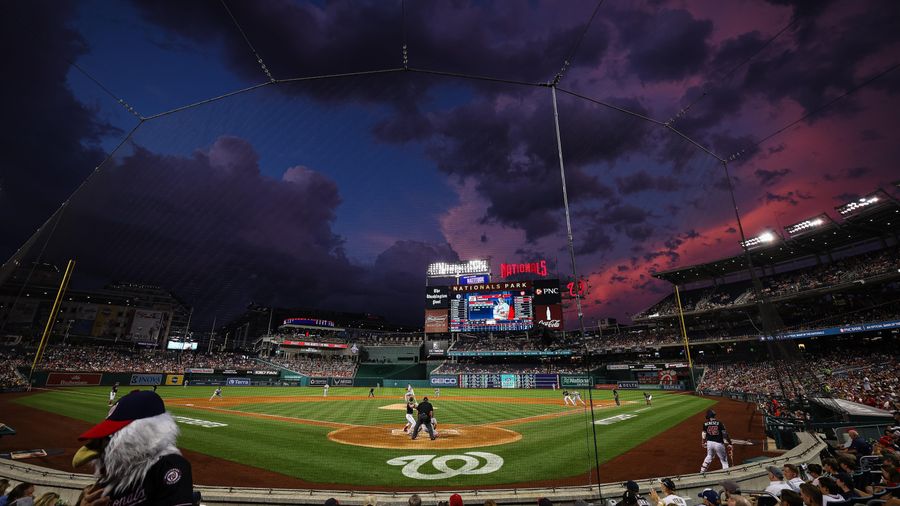
Since Pierre L'Enfant is no longer around to accurately convey the majesty of their ineptitude, this humble blog will attempt to do it with pretty pictures. It's more than what's needed, but less than they deserve and it will hopefully make Mets and Pirates fans feel a little bit better about themselves.

[Photo via. Special Thanks to Dan Steinberg and the rest of the Washington Post crew for their thankless coverage of this team.]


February 17: Sports Illustrated reports that Esmailyn Gonzalez—a highly-touted 19-year-old Washington Nationals prospect from the Dominican Republic—is actually 23-year-old Carlos Alvarez Daniel Lugo, a not-quite-as good baseball player from the Dominican Republic who forged his identity. "Gonzalez" had received a $1.4 million signing bonus in 2006, nearly double his next closest offer.


February 26: The Nationals fire Jose Rijo, a "special assistant" to General Manager Jim Bowden. Since July 2008, Rijo, Bowden and others within the organization had been under investigation by Major League Baseball and the FBI for allegedly skimming money designated for prospect signing bonuses in Latin America. Rijo, a former Major League pitcher, also owns the Dominican baseball academy where "Esmailyn Gonzalez" was discovered, but denied any involvement or knowledge of the fraud. [Washington Post]


March 1: Just days after spring training begins and faced with the growing scandal over the team's operations in Latin America, GM Jim Bowden resigns. The team's record over his four-year tenure is 284-362.


March 2: The Nationals unveil the new "Screech," a modified version of their previous eagle mascot that is both less adorable and less bird-like.


March 16: The Nationals sign journeyman RP Julian Tavarez, who describes his decision to join the team thusly: "When you go to a club at 4 in the morning, and you're just waiting, waiting, a 600-pounder looks like J-Lo. And to me this is Jennifer Lopez right here. It's 4 in the morning. Too much to drink. So, Nationals: Jennifer Lopez to me." Tavarez is designated for assignment in July.


April 6: On Opening Day, The Nationals are beaten by Florida, 12-6. The team loses its first seven games and falls 5.5 games back after just one week of the season. They are never closer than five games behind the division leader the rest of the season. [Photo: AP]


April 18: Elijah Dukes is scratched from the starting lineup and fined $500 after he arrives five minutes late for pre-game stretching. Dukes was tardy because he was giving a speech to children at a Little League ceremony. The league solicits donations from parents and pays the fine on his behalf.


April 18: Several Nationals players take the field with the letter "O" missing from their uniforms.


May 15: Rookie P Jordan Zimmermann receives his first personalized bats after being called up to the majors three weeks earlier. His name is misspelled on the bats. On August 19, Zimmermann undergoes Tommy John surgery and will miss all of 2010. [Just A Nats Fan]


May 16: A mechanical failure with the mascot's "sausage cannon" causes exploding hot dogs to rain down upon fans during an in-game promotion. One traumatized onlooker says: "It's just funny to watch hot dog rolls explode and come down on people." [WaPo]


May 16: Also, this happened.


June 7: Off-duty District of Columbia Fire Chief Dennis Rubin attends an afternoon game at Nationals Park against the New York Mets. Rubin immediately suspends all pyrotechnics at the stadium after he is hit by "debris" during a fireworks display that accompanies the National Anthem. [Wash. City Paper]


June 10: After a two-and-a-half hour rain delay in the bottom of the ninth inning, the Nationals rally from two runs down to force extra innings. They lose, 4-2, in the twelfth with fewer than 100 fans still left in the ball park.


July 13: After finishing the first half of the season with 26-61 record, manager Manny Acta is fired. [Photo: AP]


August 2009: A congressional aide returning from a trip to Middle East is detained by Israeli airport security when his green Nationals cap is mistaken for "Hamas headgear."


August 2: The Nationals begin an 8-game winning streak—their longest of the season—with victories over Pittsburgh, Florida, and Arizona. At the end of the streak, the team is 22.5 games back. [Photo: AP]


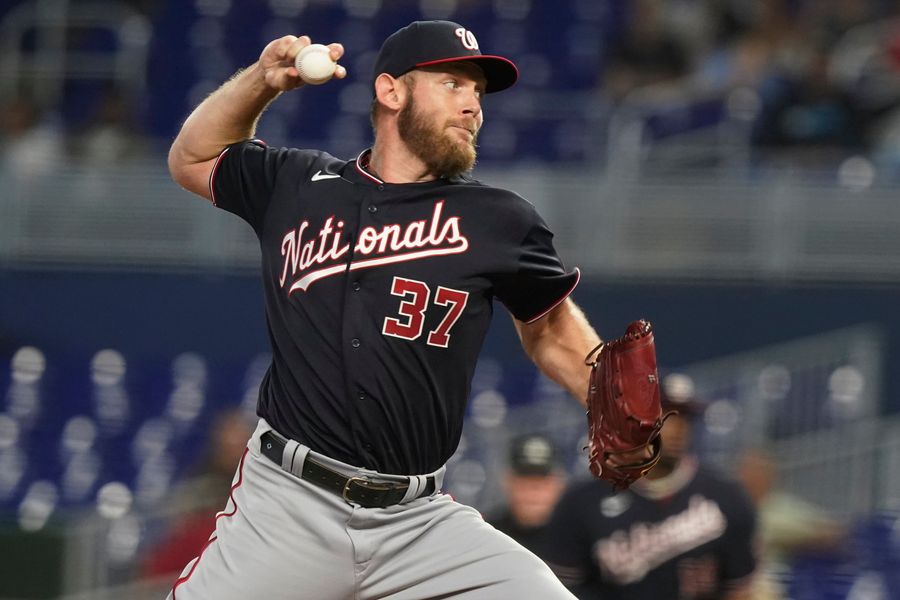
August 18: Two months after the MLB Amateur Draft, the Nationals sign No. 1 overall pick SP Stephen Strasburg to a four-year, $15 million contract, including a record signing bonus of $7.5 million. (He does not pitch in the majors in 2009.) Some experts believe they got off easy. [Photo: AP]


September 4: The Nationals are mathematically eliminated from the playoffs. [Photo: AP]


September 9: Interim manager Jim Riggleman is quoted as stating that baseball is "not a physically taxing sport." The Nationals are 24-33 under his watch. [Photo: AP]


Somewhere In Time, 2009: The Nationals thank their fans for their "patients" as they try to build a winning team. The End.

]]>
http://deadspin.com/index.php?op=postcommentfeed&postId=5360945&view=rss&microfeed=true
<![CDATA[They Lost The 'Devil,' But The Rays Are Still Goth]]> Because no one reads the newspaper, and SportsCenter's anchors are too perky for this early in the morning, Deadspin combs the best of the broadsheets and the blogosphere to bring you everything you need to know to start your day.

Joe Maddon goes the Just For Men route, dyeing his hair jet black to turn around the Rays' fortunes. It worked for Wicked Lester, didn't it?

•Nationals GM says it's "unlikely" Stephen Strasburg will pitch for the team this year. You should probably read that as: it's "likely" the Nationals would like to avoid having his four-year deal kick in until 2010.

•Another day, another Brandon-Marshall-pissed-off-at-the-Broncos story. This time it's because a team flack told players not to express too much joy at Marshall's acquittal on domestic violence charges last week. No word on how much joy they would have been allowed to express had he been found guilty.

•Old folks who should probably be retired keep coming back. This time it's John Smoltz, who's close to a deal with the Cardinals. Not a bad move: they're a little short on starting pitching, and he'll automatically become the third best hitter in that lineup.

•Pedro Martinez and Jamie Moyer combine for nine innings, four hits, one run, eight strikeouts, and thirty thousand, eight hundred and eighty nine days on earth. And one win.

•The NCAA is investigating the eligibility of Tennessee freshman RB Bryce Brown, and some alleged recruiting violations involving cash for college visits. But here's the shocking part: Lane Kiffin had nothing to do with it!

•Look, just because Kevin Gregg has blown a fifth of his save opportunities, and just because he's got a double-digit ERA this month, and just because you can hear the collective sphincter of Cubs fans tightening every time he comes in, is no reason to take him out of the closer's role. Actually, those are all pretty good reasons.

]]>
http://deadspin.com/index.php?op=postcommentfeed&postId=5340489&view=rss&microfeed=true
<![CDATA[Nationals Sign Strasburg At The Buzzer; Anti-Boras Demagoguing To Begin Shortly]]> The Nationals locked up the best pitching prospect ever with 77 seconds to spare, and Scott Boras once again nudged the whole draft right up to the point of going tilt.

Stephen Strasburg signed a four-year big-league contract for $15 million, with a record bonus of $7.5 million, which some busybody Nats teammates may deem "reasonable" compensation but which, it bears repeating, is approximately $85 million less than Strasburg might've gotten on the open market. If the number seems smaller than expected, consider that the contract doesn't cover his arbitration years, when he'll see a significant salary bump.

Four hours before the deadline — which, it also bears repeating, is one of the many cumbersome devices whereby baseball tries to prevent its owners from leaving the negotiating table wearing a barrel — 10 of the top 15 picks remained unsigned. There was some handwringing that this might be the year the draft falls apart altogether, though ultimately all but three first-rounders wound up signing, and big-league clubs once again merrily flouted MLB's spending recommendations. Writes Baseball America's Jim Callis:

Major league clubs combined to spend $160,160,100 on bonuses for players signed in the first 10 rounds, just short of the $161,048,300 teams spent in the same rounds in 2008. The 2009 total will surpass 2008 if first-round pick Aaron Crow signs with the Royals or sandwich-rounder Tanner Scheppers signs with the Rangers.

That's not much savings to show for all the effort MLB put into slashing its bonus recommendations by 10 percent, leaning hard on clubs not to exceed those guidelines and restricting the flow of signing information.

Final bonus data won't be available for a few weeks, but it's possible that the industry will break its draft bonus record of $188,297,598 set a year ago.

Callis also reports that this draft has set new records for largest bonus (Strasburg), largest guarantee (Strasburg), largest bonus for a high schooler (Donovan Tate's $6.25 million) and largest bonus for a prep pitcher (Jacob Turner's $4.7 million). All three are Boras clients, and this virtually guarantees that, as we approach the expiration of the Collective Bargaining Agreement in 2011, baseball will once again throw the superagent in the pillories and publicly shame him for the game's allegedly out-of-control signing bonuses. The league will demagogue this issue right up until it signs off on a new CBA, which will very likely include a strict slotting system like the NBA's. What's absurd here is that the draft remains the biggest bargain in the game, and yet baseball has managed to convince everyone, including the players, that things have gotten out of hand. Strasburg will make $2.5 million in 2011, when even conservative projections have him pitching like an All-Star. Barry Zito will make $18.5 million.

The Strasburg Era Begins
[Washington Post]
Nationals Sign Top Draft Pick, but Need $15 Million to Do So [New York Times]
$160.2 Million Spent In Top 10 Rounds [Baseball America]
Draft ‘09: Is This The Year Things Break? [Baseball Prospectus]

]]>
http://deadspin.com/index.php?op=postcommentfeed&postId=5339742&view=rss&microfeed=true
<![CDATA[Adrian Beltre Goes On The DL With An OH GOD WHY OW OW OW]]> Because no one reads the newspaper, and SportsCenter's anchors are too perky for this early in the morning, Deadspin combs the best of the broadsheets and the blogosphere to bring you everything you need to know to start your day.

•Worst headline ever: "Beltre Could Be Out For Season With Testicle Injury." Fuck Tom Hanks; sometimes, there is crying in baseball.

•Students at Northwestern have created a computer program that can write a game story from just a box score. Yes, but can it accurately cover Adrian Beltre getting nailed in the knick-knacks?

•If Tiger's hoping to avoid a major-less 2009, this is a good start; he's up by one after the first round. And if he's perfectly content with his life without winning a major this year, well, that's understandable too.

Time's running out for the Nationals to sign Stephen Strasburg. But if he's not signed by Monday, it's no biggie. The Nats should have first picks for the next few years.

Quentin Richardson is on the move for the fourth time since draft day, to the Heat for Mark Blount. Miami's front office said they look forward to many productive offseason days from Q, before they trade him again.

Lady boxing is now an official Olympic sport, with Rugby and Golf soon to follow. Baseball, meanwhile, is S.O.L. This means we won't have the chance to be embarrassed by Japan until the 2013 WBC.

]]>
http://deadspin.com/index.php?op=postcommentfeed&postId=5337193&view=rss&microfeed=true
<![CDATA[Have You Read Enough About This Guy Today?]]> Today's MLB Draft officially kicks off Stephen Strasburgapalooza, and despite the torrent of media coverage, most stories tackled one of two questions: How much will the Nationals pony up, and are No. 1 picks worth the money?

Such were the cornerstones of nearly every article that went beyond the staples of the rudimentary Strasburg caricature. After that, there was little variation: There were news stories about the battle between Scott Boras and the Nationals and columns about whether any college pitcher deserves $50 million, which ultimately funneled into two arguments:

• Strasburg is a plus-plus-plus-squared pitcher worth every penny, regardless of how many pennies it requires.

Too many can't-miss prospects have whiffed to enshrine Strasburg already. He's good — really, really good — but plenty of amateur pitchers have been pretty damn good, too, and now they're stuck reminiscing about their high school glory days.

With most stories quoting hardened scouts, mid-level executives, college coaches and washed-up former No. 1 picks, it's easy to forget that Strasburg is still just a baseball player, not a commodity. And that brings us to perhaps the most salacious detail in the Strasburg lovefest — one that, for once, concerns Strasburg's skills — courtesy of ESPN's Tim Keown:

San Diego State pitching coach Rusty Filter, the man who created the monster, says Strasburg's "plus-plus" changeup couldn't be used in college because the hitters weren't good enough to be fooled by it.

PHOTO: Flickr's jpangan3.

Strasburg Is The Pick, If The Price Is Right [Washington Post]
Strasburg vs. Nats Shaping Up To Be Biggest Battle [SI.com]
Strasburg no sure thing [ESPN]
Strasburg worth every penny [ESPN]
Pitcher's Bright Stars Sometimes Flame Out [NY Times]

]]>
http://deadspin.com/index.php?op=postcommentfeed&postId=5284858&view=rss&microfeed=true
<![CDATA[Why Scott Boras Isn't As Evil As You Think He Is]]> Tomorrow, Scott Boras begins the process of jimmying a record bonus out of the Nationals on behalf of Stephen Strasburg. Let's dispense with the usual frog-raining about baseball's superagent and see him for what he is: Scott Boras, labor revolutionary.

The amateur draft is baseball's annual rite of pretending that Boras is a terminal malignancy on the game. The draft is now, also, a certifiable event, albeit one that on television more closely resembles Bingo Night at the Boca Kiwanis club. This year's will be broadcast in primetime (with Twitter updates), part of baseball's effort to make its draft a sport unto itself, like football's and basketball's. This is an important development, if only because it further pretties up the uncomfortable fact that the draft is a hopelessly crooked and quasi-legal system for apportioning labor, one we'd never tolerate in any other area of working life except in the American fairyland of sports. (Imagine if hospitals or law firms were staffed like this). Boras' offense against baseball boils down to this: He has made an unfair system a great deal more equitable, almost by accident, certainly not out of any high-minded principle, one 5 percent commission at a time.

"He's hardly Robin Hood," says Baseball Prospectus' Kevin Goldstein, one of the sharper Boras observers around. "But Boras' job is to get the most money or the best deal for his clients, period. The draft greatly limits his ability to do that. So he works very hard to find ways either around or to explode as much as he can of the draft." Goldstein calls him "a trailblazer."

Baseball's draft dates back to 1965; it was designed explicitly to suppress the rising bonuses on the open market. That year, the first pick in the league's very first draft was Rick Monday, who received a $104,000 signing bonus, or nearly half as much as Rick Reichardt pried out of the Dodgers the year before. In 1982, the first pick was Shawon Dunston, who got $135,000. This is all the more remarkable when you consider that, five years earlier, Marvin Miller delivered free agency to baseball and pulled the game out of the Pleistocene Era.

Free agency may have been a great liberalizing force on the majors, but it did little for the ballplayers riding buses in the Texas League and nothing whatsoever for the amateurs on the verge of professional baseball. Minor leaguers, lacking union representation, have always floated in a weird limbo where their fate is determined by two parties — Major League Baseball and the Major League Baseball Players Association — who at best have only an oblique interest in their well-being. The result is that the job of ensuring that minor leaguers got fair value for their services fell, for better or worse, to the agents, a wingtipped fleet of César Chávezes. That someone like Scott Boras came along was an inevitable outcome of baseball's misshapen evolution.

The amateur draft offered that sweet spot where a player's self-interest lined up neatly with Boras' (an agent gets a cut of a player's signing bonus, then often has to wait four years for another payday). He declared himself in 1983 with a talented pitcher named Tim Belcher, who was drafted by the Twins but on Boras' recommendation rejected their offer of a $100,00 bonus. Belcher was tossed into the supplemental draft pool and picked up by the Yankees, who, depending on your source, offered anywhere from $30,000 to $50,000 more.

From there, Boras set about laying siege to the draft (much of this comes from Kevin Goldstein's reporting, which Baseball Prospectus subscribers can read here).

• In 1991, he found himself with a client, Brien Taylor, who even now, years after he ripped up his shoulder in a trailer-park fight, makes scouts sound like the sort of people who see the Virgin Mary in grilled cheese sandwiches. It was Boras' additional good fortune that the Yankees, of all teams, were picking first. Taylor enrolled in a junior college, and Boras fenced the Yankees into a corner, euchering them out of $1.55 million, or nearly a million more than the highest bonus on record. "I don't think anybody remotely saw that bonus happening," says Allan Simpson, founder of Baseball America.

• In 1994, Jason Varitek was a college senior drafted with the 21st pick by the Mariners. Seattle significantly lowballed its offer; Boras had his client sign an independent league contract, making him a professional baseball player who — as Boras argued in a grievance — was no longer subject to the provisions of the draft and therefore a free agent. The Mariners relented, and baseball never got around to closing the enormous loophole through which Boras would shove J.D. Drew a few years later.

• In 2000, at Boras' suggestion, Landon Powell, a high school junior and one of the top prospects in the country, got his GED, thus making him draft-eligible. No announcement was made; no one knew Powell was fair game. The 2000 draft went by, and Powell of course went undrafted, and Boras argued successfully that Powell was now a free agent. It was a victory, but only a limited one. As Goldstein writes: "[T]he messiness of the situation had many teams unwilling to step into the fray, despite their desire to sign the talent. He would not sign, and he returned to high school." Powell wound up playing four years at South Carolina and signed with the A's in 2005 as a client of SFX.

Examples abound (and not all of them reflecting well on Boras). "It's kinda like being a goalie, if you're baseball," Goldstein says. "You're staying in the same place, and Boras shoots from 8 milion angles. You never know where he's gonna shoot from next."

The goal, in each instance, is free agency, something for which Curt Flood sacrificed his career and for which Marvin Miler needed years of painful legal wrangling to bring about — a virtuous end, whatever the circumstances and however slippery the means. Scott Boras has given his clients something very close to it, just by reading the fine print.

This year, Boras could represent five of the top 10 picks, Strasburg being the jewel of the bunch. He will certainly get his record bonus, probably closer to $20 million than the widely bruited figure of $50 million. Facile people will claim, as the Los Angeles Times did, that "the exploitation is long over," which is only true if you disregard the $100 million Strasburg might've made on an open market. During the inevitable holdout, Boras will once again be turned into the face of everything wrong with baseball, a bizarro realm where the common fan more readily identifies with billionaire owners like Tom Hicks than the middle-class kids who stand to make money off their talent for the game.

Baseball long ago won this public relations battle, and for that reason, Strasburg's record-breaking deal could wind up boomeranging on Boras. The issue of signing bonuses is sure to come up when the CBA expires in 2011. Baseball, summoning the bogeyman of Strasburg's massive bonus, will certainly fight for a strict slotting system, not unlike what the NBA has (right now, Major League Baseball only suggests how much teams pay their draft picks; more often than not, the slot recommendations are flouted). The players, susceptible to the argument that a dollar given to an unproven prospect is a dollar plucked from a veteran's pocket, will very likely bargain away large chunks of the current system. Boras, unable to bid up signing bonuses, will effectively be marginalized (this probably explains why you're hearing loose talk that he wants Chosen One Bryce Harper's family to move to the Dominican Republic, which isn't covered by the draft).

The irony is that, because of Boras' unruly success in looking out for his players' interests, he may wind up screwing them in the end. And perhaps at that point it will be time for Boras to move on, settle into a new line of work, one that's worthy of a guy who, however crassly, has served the players and ultimately the game so well. Baseball commissioner, maybe?

ILLUSTRATION: Jim Cooke

]]>
http://deadspin.com/index.php?op=postcommentfeed&postId=5283119&view=rss&microfeed=true
<![CDATA[Make Some Space On Your CBS Sports Fantasy Teams]]> Stephen Strasburg wasn't one of The Chosen Ones, but he is otherworldy enough to be one of Washington's starting pitchers before the MLB Draft. In all fairness, CBS' geeksquad was probably just prepping for summer vacation. [CBS Sports]

]]>
http://deadspin.com/index.php?op=postcommentfeed&postId=5280443&view=rss&microfeed=true
<![CDATA[Stephen Strasburg Can't Even Save His College Team]]> Stephen Strasburg, who almost every scouting executive in the world cites as the most can't-miss prospect ever, struck out 15 last night in the NCAA tournament, but took the loss by allowing two earned runs in a 5-1 loss. The defeat likely ended his college career. It was 3-years-old.

Virginia — which, for the record, was absolutely hosed by the selection committee — jumped out to a 1-0 lead in the first with a 400-foot homer and secured a second run in the second off Strasburg, who bore down in his final five innings to surrender just three more hits and walk none in the entire game.

So now Strasburg will be drafted by the Nationals, and he should probably get accustomed to losing. Here's one hint: Don't make silly excuses for giving up two runs in seven innings.

"Everybody had the jitters," Strasburg said. "It was tough playing a team we'd never heard of. There was no scouting report to rely on the first time through the batting order. We thought they were tipping our pitches when [catcher] Erik Castro set up so we changed it up a little after the first two innings. We went more to sinkers, sliders and the changeup earlier in the count."

San Diego State had never heard of Virginia? There was no scouting report for the Cavaliers? They were tipping Strasburg's pitches? Come on. Virginia just plain-old beat the best pitcher in the country by hitting a few bombs. Give the team some credit.

In other ping-related news, Southern Mississippi beat Elon 17-15, Gonzaga beat Georgia Southern 19-10 and Georgia beat Ohio-State 24-8, thanks in part to Knowshown Moreno's 210 yards and three touchdowns. But nope — metal bats are the way to go.

Cavalier attitude [Baseball America]
Strasburg should get used to struggle [Yahoo! Sports]
Friday Recap, Saturday Preview [Baseball America]

]]>
http://deadspin.com/index.php?op=postcommentfeed&postId=5273160&view=rss&microfeed=true
<![CDATA[The Nationals Are Content With Losing As Many Games As Possible This Season, Thank You]]> Stephen Strasburg, this year's can't-miss baseball prospect, has started 13 games at San Diego State and he's won 12 of them.

You don't need to be Billy Beane to notice that Strasburg, therefore, has won more games than the Washington Nationals, who are 11-27 and badly in need of a guy who can go 12-0 with a 1.34 ERA and 174 strikeouts. The Nationals' entire pitching staff has struck out only 228 batters.

So the Nationals will draft Strasburg with the No. 1 pick in the MLB Draft, and they will bicker with the Scott Boras client until August, when both sides realize that the Signing Deadline is the next day and the extra $100 grand isn't really that necessary. But don't expect to see Strasburg padding the Nationals' paltry pitching stats this year. Washington G.M. Mike Rizzo told Jeff Passan that he can't imagine Strasburg joining the team without doing time in the minors.

If the Nationals wanted to make some easy cash, though, they would start him Sept. 28 at home against the Mets, take a page from San Francisco, and jack up the ticket prices. Which brings us to an existential dilemma: Would you pay $250 to watch a 55-100 team?

Strasburg won't see D.C. this season [Jeff Passan]

]]>
http://deadspin.com/index.php?op=postcommentfeed&postId=5261043&view=rss&microfeed=true
<![CDATA[Top Draft Prospect About To Get Paid]]> Top draft prospect Stephen Strasburg pitched a 17 K, no hitter in his last home game at San Diego State. Expect the Nationals to draft him before getting anally raped by his agent, Scott Boras.

Not only is this kid poised to become the most expensive draft pick in baseball history, he could very well fly through the farm system and be on the major league mound in September.

The biggest concern with Strasburg extends not from his talent, but his demands. His adviser, Scott Boras, already has hinted that the 6-foot-5, 220-pound 20-year-old will want a record-breaking salary — maybe six years and $50 million.

I put the over/under on this kid's mental breakdown at one season.

]]>
http://deadspin.com/index.php?op=postcommentfeed&postId=5247954&view=rss&microfeed=true