A Dumb, Specific Argument About Balks

 credits: David Zalubowski | source: [object Object]
 It doesn’t take long at all for any debate about a balk to feel extremely stupid, or, at least, extremely tiring; this is due, in large part, to the fact that there’s no great shared understanding of what a balk is. Not among fans or broadcasters or even umpires, sure, but not quite among the league’s own documents, either! Look at MLB’s glossary of terms and get something quite different from what you have in the official rulebook. “The rule is in place to prevent a pitcher from deceiving the baserunners,” the glossary reads, while the rulebook doesn’t get close to such an idea. There’s nothing about the intent or the result of the motion like that in the Official Baseball Rules, just a technical description, and one that can end up remarkably tricky to apply, at that.
Anyway, yes, all this tends to make these arguments frustrating as hell. So here’s one such argument, inspired by this balk in the first inning of tonight’s Padres-Rockies game:
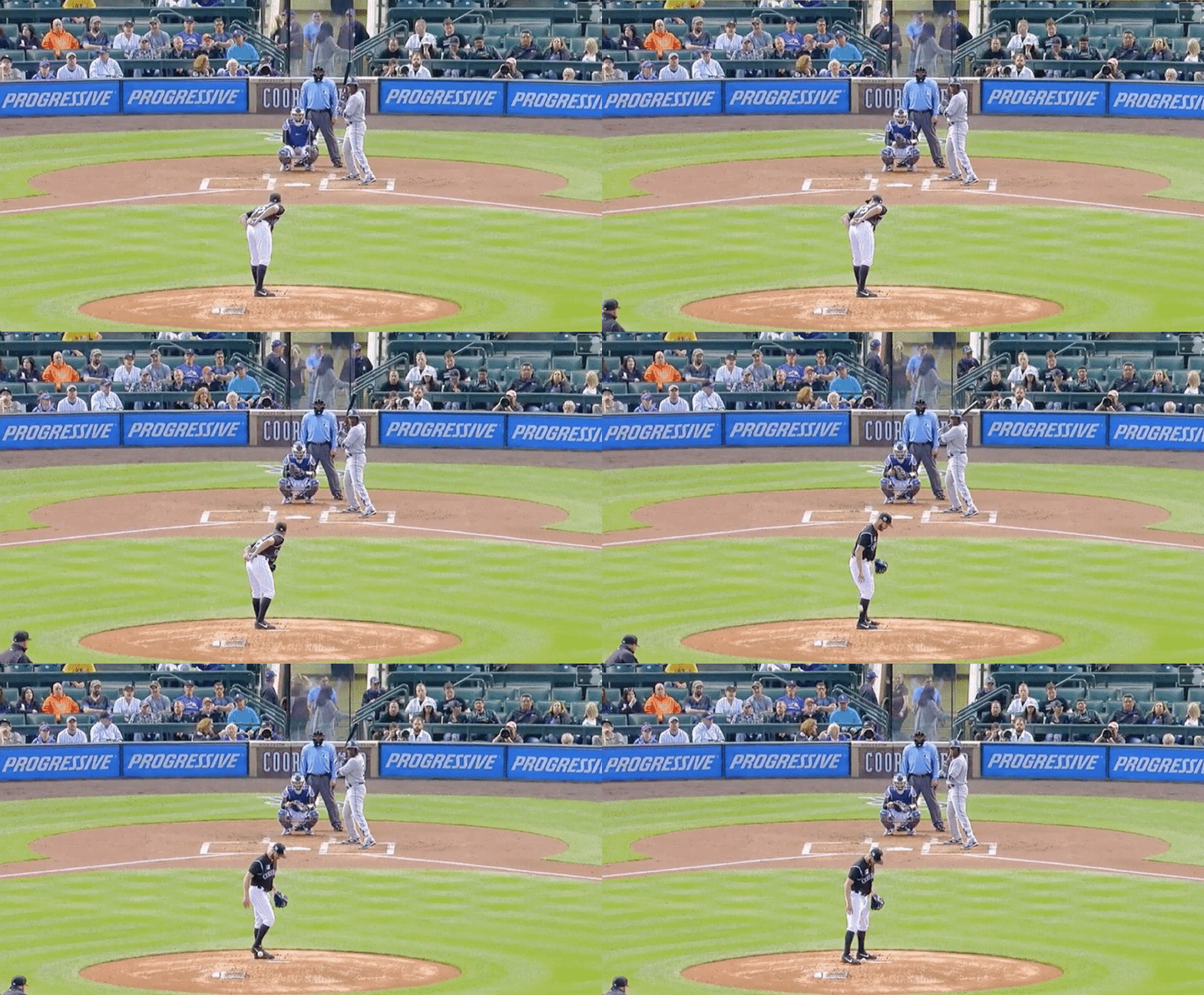
There’s Chad Bettis, dropping the ball as he tries to come set, with runners on first and third. This, of course, brought that runner on third home to score. (The first run on the board in what would ultimately be a 13-5 victory for San Diego.) And that leads me to my precious little argument, highly specific and generally stupid: runs scored on balks should not be earned runs.
But the pitcher’s clearly responsible for the balk; he should be responsible for the run that it causes! you might say. Okay, yes, but—he can be clearly responsible for an error, and yet he’s not considered responsible for the run that the error causes! And you might then say that the error is related to the pitcher’s defense, which is a separate matter, while the balk relates only to his pitching proper. But does it? The whole idea of the balk is that he’s not really pitching, not near any point of completion. (If he was, it’d just be a pitch!) In Bettis’s case here, and many others, the whole thing’s really just an error—in the literal sense of the word, not the baseball sense. So why draw the line here? Why determine that a pitcher’s fielding error is exempt, and this technical error is not? On a call that is so often made or missed in error itself? Baseball grants a pitcher a little bit of mercy here; the scorecard will not ignore an error from him, but it won’t use it to statistically penalize him in the measures where it’d hurt him most. Why shouldn’t a balk be scored in the same way? There’s no reasonable consistency to any logic that treats them differently.
This has been a pointless argument about balks. Thank you.
Related



Is Any College Football Team Actually Good This Season?


Five Fights the UFC Needs to Make After UFC 333

Cowboys vs. Eagles Prediction: NFL Week 7 Best Bet and Odds



- Seahawks vs. Chiefs Betting Pick: SNF Best Bets
- WNBA Finals Game 4 Picks: Back Atlanta Dream, Angel Reese Rebounds
- Rays vs. Brewers Prediction: Why Tampa Bay Can Steal Game 2 on the Road
- UFC 333 Betting Lines Are Tightening Across a Wide-Open Fight Card
- UFC 333 Betting Splits: Where the Sharp Money Is Landing This Weekend
- NBA Best Bets Today: Pacers, Grizzlies and Trail Blazers Picks
- College Football Week 8 Best Betting Picks, Predictions