For The First Time, The NCAA Selection Committee Reveals How The Brackets Are Built

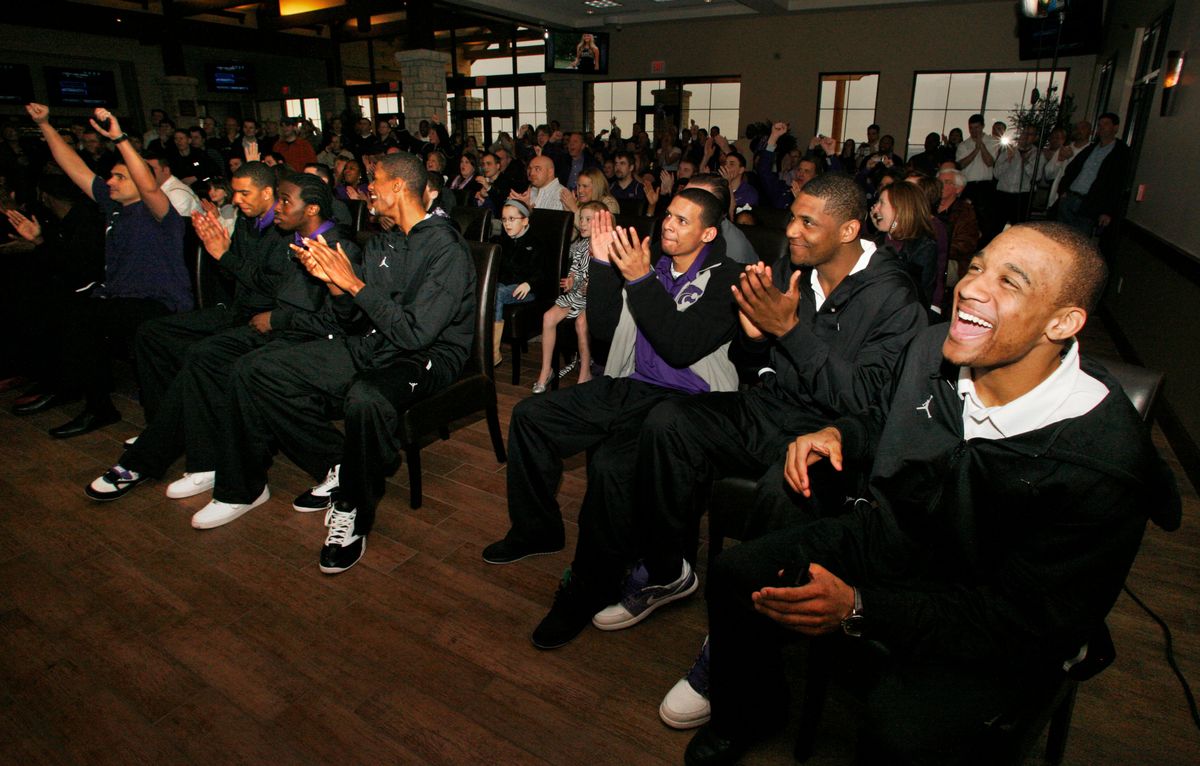
There is no more compelling broadcast in sports than the unveiling of a bracket. We see it with the quadrennial World Cup draw, and this Sunday is the single most anticipated and controversial day of the college basketball season: Selection Sunday, when 68 teams find out where they're going and who they're playing.
It's the culmination of months of of work, and it's a shame the actual selection lasts just an hour. But this year, the NCAA is offering a methadone chaser for bracketology addicts. Immediately following the selection show, the highest-ranking members of the Selection Committee will spend an hour breaking down why the bracket looks the way it does.
Airing on truTV, Jeff Hathaway and Mike Bobinski will attempt to justify the committee's selections, rather than leave it to the pundits' best guesses. That entails giving concrete reasons for why each bubble team made it in or was left out. And even better, for the first time ever, the NCAA will reveal the complete seed list, ranking every team in the tournament from 1 through 68.
It's part of the NCAA's push toward transparency with tournament selection, a move that's welcome for both answering questions and raising further debates. One of the juiciest fruits of this glasnost is the publication of the official "Principles and Procedures for Establishing the Bracket," a manual containing all the rules for handing out the 37 at-large bids, and guidelines for putting them in the correct regions and matchups.
Here's the full document. Below are a few highlights.
• All committee members submit their own list of 37 teams they believe should receive an at-large berth. Any team that appears on all but two of these lists is automatically moved into the tournament.
• Any team that appears on at least three of these lists goes into the "under consideration" column, along with teams that won their conference's regular season title, and any other school that receives a committee member's verbal nomination and receives enough votes. This list of "under consideration" teams is winnowed down by successive votes until it reaches eight, at which point committee members rank them. The four highest ranking teams are given berths. If there are still tournament berths remaining, the process repeats, always adding four at a time, until the bracket is full.
• A similar "four-at-a-time" process is used to decide the seeds. Successive votes and rankings, with each committee member's vote being equal, decides the four No. 1 seeds, then the four No. 2 seeds, etc.
• "Each of the first three teams selected from a conference shall be placed in different regions. There shall not be more than two teams from a conference in one region unless a ninth team is selected from a conference." Teams from the same conference should not be seeded to meet until the regional final.
• The committee should specifically avoid putting teams with a 5 or lower seed at a "home-crowd disadvantage." For example, Michigan will never be placed in a pod that has them playing their first two games in Columbus, Ohio, one of the regional hosts. To avoid this and other geographic problems, the committee is allowed to change a team's seed by one, in either direction, if there is no other way around it.
• Rematches of regular season games should be avoided in the first two rounds.
• The committee must pay attention to recent years' brackets to avoid sending teams far across the country multiple years in a row. For example, Wisconsin opened in Tucson last year, so the committee must make sure they play close to home this time around.
And if you've ever wondered just what information the Selection Committee is working with, the manual makes it clear:
Among the resources available to the committee are complete box scores, game summaries and notes, pertinent information submitted on a team's behalf by its conference, various computer rankings, injury reports, head-to-head results, chronological results, Division I results, non-conference results, home, away and neutral results, rankings, polls and the NABC regional advisory committee rankings.
Related
Seattle Seahawks vs. Denver Broncos TNF Betting Pick
Los Angeles Chargers Shouldn’t Resist Justin Herbert Trade

5 Fights to Make After UFC Vegas 112
Brewers vs. Dodgers Game 3 Predictions, Picks and Odds
- Guardians vs. Rays Game 2 Prediction: Picks, Odds and Best Bets
- Bills vs. Rams Odds, Prediction and Best Bet for MNF
- Three Longshot NFL Futures Worth Betting in Week 5
- Falcons vs. Ravens Odds, Prediction and Best Bet for Sunday Night Football
- White Sox vs. Guardians ALDS Game 5 Betting Pick
- UFC Vegas 122 Betting Odds: The Biggest Line Moves Before Allen vs. Duncan
- UFC Vegas 122 Picks and Predictions: Three Bets for Allen vs. Duncan