Huge American Servebot Reilly Opelka Will Render John Isner Obsolete

 source: [object Object]
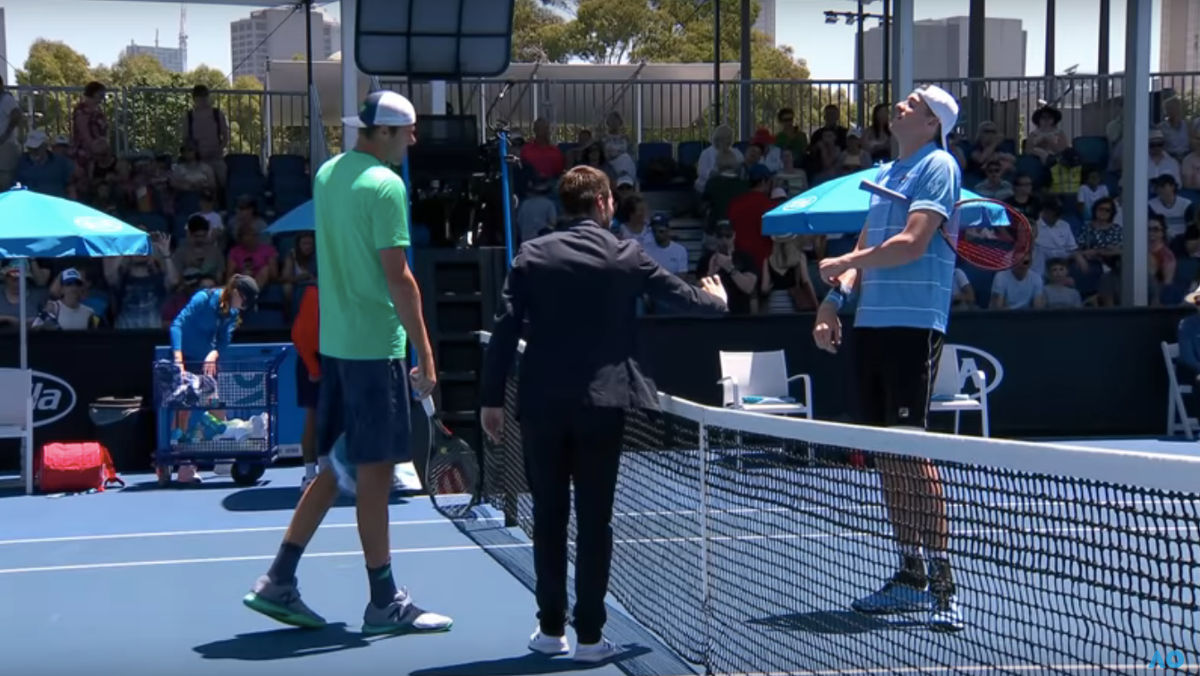
 John Isner, the leading American man in tennis, has a simple calling card: being 6-foot-10 and serving bombs. He’s the most prominent purveyor of the American Man Style of tennis: giant delivery, giant forehand, full stop. That’s been enough to make him a top-20 fixture, a historically successful holder of serve, a participant in an unholy mess of tiebreaks, and a presence in some of the most nightmarish slogs in Grand Slam history—including the longest match ever.
This player archetype is known, aptly if unkindly, as a “servebot.” What Isner does isn’t easy, and he applies a lot more to the ball than brute pace—the spin and placement are also wild, and many players couldn’t touch his kick serve even if they stacked a twin onto their shoulders. But even the most openminded of tennis fans can find it brutal to watch a match where the bulk of the points last just a second or two. Sometimes you just want to see the ball mercifully ping back and forth a little.
Serving typically ages very well, and the short points minimize stress on the body, but Isner has been on the pro tour since 2007. Just when it appeared that the 33-year-old might be gradually easing out of the game and into Sean Hannity’s good graces, brightening tennis broadcasts the world over, a new Isner model has emerged. Fellow American Reilly Opelka, at 21, stands even taller than Isner at 6-foot-11—even that might be an understatement—and won his breakout title at the New York Open last weekend. Opelka, bigger than Croatian titan Ivo Karlovic and considered the tallest professional player ever, leapt up to No. 56 in the rankings this week. Fittingly, he had to beat his spiritual predecessor to get there.
Isner and Opelka’s 7-6(8), 6-7(14), 7-6(4) semifinal in New York set a new tour record for the best-of-three format: 81 aces. Of all the points in the match, 34 percent were unretrievable serves. There were no breaks of serve in the two hours and 31 minutes of play. The master won 84 percent of first serve points, and the apprentice won an outrageous 91. In tennis, extreme height opens up serve angles unavailable to the smaller masses, and it lets these two players serve with absurd power. Typically, the tradeoff is compromised mobility on the court. Add those trends together and you might not see all too many serves floating back into play. Even without highlights, it’s easy enough to visualize the cannon fire. Opelka saved six match points in the second set. He’s faster than Isner, and might have a higher ceiling if that translates to a better return game. Here’s one example from that second set tiebreak:
This was Opelka’s second win in three matches against Isner, including a recent battle at last month’s Australian Open. In those three contests, the Americans played eight tiebreaks across 10 sets. There will be many more Opelka tiebreaks to come, well after Isner is gone. A new bot is rising. Ideally this one doesn’t output lines like, “ I’d love to have Trump come watch me. That would be awesome. Maybe I’ll tweet at him if I win on Wednesday. I know a lot of people won’t like that, but I don’t care.” Hopefully the software update cleans that up.
Related

The 5-0 49ers Are Finally Getting the Respect They Deserve
Jorge Masvidal Makes $100K Pick to Beat Islam Makhachev
Dana White's Contender Series Week 10 Predictions and Picks


Guardians vs. Rays Prediction: Picks, Odds for ALCS Game 1


- Three Longshot NFL Futures Worth Betting in Week 5
- Falcons vs. Ravens Odds, Prediction and Best Bet for Sunday Night Football
- White Sox vs. Guardians ALDS Game 5 Betting Pick
- UFC Vegas 122 Betting Odds: The Biggest Line Moves Before Allen vs. Duncan
- UFC Vegas 122 Picks and Predictions: Three Bets for Allen vs. Duncan
- College Football Week 6 Bets: Three Picks for Saturday’s Biggest Games
- UFC Fight Night Underdog Pick: Why Kai Kamaka III Is Worth a Bet