Is There A Young Lefty Starter In MLB Who Hasn't Gotten An Extension?

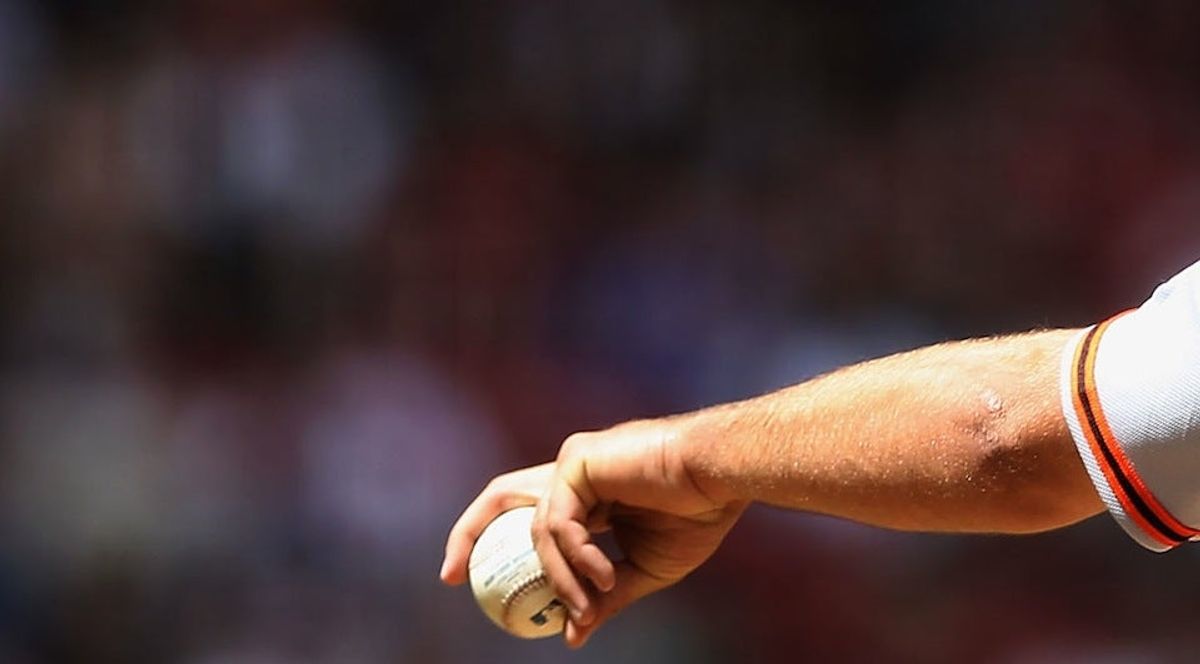
The San Francisco Giants just signed lefty starter Madison Bumgarner to a five-year, $35-million extension. 2011 was Bumgarner's first full season in the big leagues. He struck out 8.4 batters per nine innings and walked only two per nine. That's quite good. It is, as you might expect, far too early to say whether Bumgarner's contract will be a good one.
But we can note this: If you've been keeping track, you'll notice that Bumgarner's new deal fits into a recent trend. Since the end of last season, we've had extensions for Matt Moore, John Danks, Gio Gonzalez, Derek Holland, Cory Luebke, Jon Niese, and now Bumgarner, young lefties all. ( Clayton Kershaw bought out two of his arbitration years, too.) It's almost easier to think of young left-handers that haven't gotten contract extensions. Although that too becomes a challenge. Jon Lester? Nope, he got one. Ricky Romero? Think again. Jaime Garcia? Surely you jest.
Essentially, the lone lefty wolves are Kershaw (a free agent after 2014), David Price (after 2015) and Cole Hamels (after 2012!), all of whom will earn enough money, barring injuries, to topple South American governments or buy fancy cars or whatever.
But might this lefty extension spree be a bad thing? Scocca wrote not so long ago about how the Orioles' hiring of Dan Duquette wasn't necessarily a bad thing. A retread GM, he argued, might stumble upon market inefficiency because he wouldn't chase the same things all the whiz kids had decided to chase. This is exhibit A—every team with a hotshot young lefty is signing its lefty to a guaranteed extension (with club options at the end, in most cases) to bring about some cost certainty.
How valuable is cost certainty, anyway? A team is supposed to milk its marginal value (cheap wins) from young players to subsidize its ill-advised veteran deals. All of the guaranteed money in extensions mitigates the bang the young lefty might bring for the team's buck. Sure, a team can avoid a terrifying, unpredictable arbitration award. But those don't come around often, and when they do, they reflect exceptional performance. (Which means that there were marginal wins in the previous season.) And presumably exceptional seasons come around just as often as disastrous injuries that render otherwise sharp young lefties useless and their contracts bloated.
It's, again, too early to know what will come of this recent parade of extensions. Over the next few years, we'll watch. And since MLB's fantasy bottomless cable-television revenues are funding all of the game's ill-advised big-money extensions, we'll be paying a bit more to watch, but we'll watch anyway.
Related






- Top MLB Props and Picks for Saturday May 30th's Biggest Matchups
- MLB Betting Picks for Friday, May 29: Phillies and Marlins Featured
- UFC Macau Best Bets and Fight Predictions for May 30
- MLB Picks Today: Best Pitcher Props for Friday’s Baseball Slate
- Top MLB Picks for Thursday: May 28 Baseball Betting Predictions and Props
- MLB Betting Picks for Wednesday: Two Totals for May 27 Slate
- MLB Picks and Predictions: Why Chase Burns and the Nationals Offer Betting Value