MLB's New Draft Rules, Designed To Increase Competitive Balance, Help Kill It

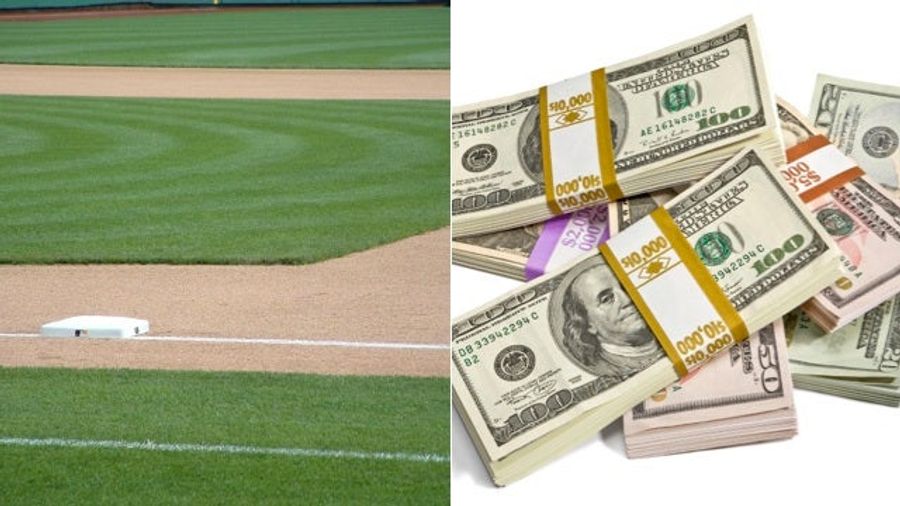
Major League Baseball and the players' union inked a new, five-year collective bargaining agreement today, and that's all well and good. We won't have another 1994, at least not for a while, and, yes, you can hear NBA fans groaning in the corner over there. There will be plenty of baseball. And, if you care, it will be HGH-free.
But, cripes, this new deal just took a maple Louisville Slugger to the kneecaps of small-market front offices.
At first, you see a firm slotting system in which a player's position in the draft order almost entirely dictates his signing bonus, and you think this is good news for small-market teams: money won't run the draft anymore. But small-market teams, like the Pirates, Rays, Royals, and Indians, were some of the ones exploiting the old loose slotting setup, while the Mets and other lumbering leviathans stuck to the unenforced rules.
Before, small-market teams could bet on the draft if they wanted risks and rewards higher than those in free agency. A veteran utility infielder or middling middle reliever might make two or three million dollars on a one-year major league deal. That's a first-rounder's signing bonus that could have gone to lure a late-round pick from attending college. Now, teams can't do that without heavy penalties.
Player movement at the major league level will always favor big-market teams. The Red Sox will always take Carl Crawford from the Rays, the Yankees will always take C.C. Sabathia from the Indians, the Angels will always take Vladimir Guerrero from the Expos. There's no way for small-market clubs to exploit free agency, except by signing particularly undervalued or risky players. And even then, the Texas Rangers are sometimes stuck paying Rich Harden $7.5 million. Those signings are more expensive, and just as tricky, as signing draft picks over-slot.
So MLB offered a gesture out of pity to small-market teams. Per Jeff Passan: "There will be six draft picks immediately after the first round given out via lottery to teams with 10 lowest revenues, 10 smallest markets." But how much can one pick each year in between picks #31-#40 really do? Unlike other years, where teams might find top-ten talents passed over for cash reasons in that window, now they'll find only the 31st through 40th most talented players in the nation. That's not much guarantee of success.
And things get worse for small-market teams. There's a cap on how much teams can pay international players in bonuses. How much one particular team can pay depends on that team's record in the prior year. Losing teams have more money to spend on international free agents. But they can't drop a fortune in one year to restock their farm system. Worse, as Kevin Goldstein explains, MLB teams need to disclose the names of their international targets. There goes a lot of the scouting advantage of discovering a diamond in the rough.
And all of this is to say nothing of the constraints put on a market that used to be freer, constraints that, as one two-sport athlete explains, will help drive those torn between football and baseball away from the minor leagues. The new money rules stanch the flow of talent into MLB.
In other words, this is bad for everyone, but especially bad for the small-market teams. Look on the bright side: more Wild Card teams! Thanks, Bud.
Related

Duke’s Collapse vs UConn Adds to Troubling March Pattern

NBA Best Bets Today: Top Betting Picks for Monday March 30th


Why Illinois Is the Most Dangerous Team in the Final Four


Tiger Woods’ Legacy at a Crossroads After Latest DUI Arrest

Top NBA Bets Today: Expert Picks for March 29 Slate
Did the World Baseball Classic Hurt MLB Starting Pitchers?
- UFC Seattle Predictions: Adesanya vs Pyfer Main Event Betting Picks and More
- Arizona vs Purdue Elite 8 March Madness Betting Picks, Prediction
- NBA Picks for March 27: Best Bets for Friday Night Slate
- Why St. John's Can Cover Sweet 16 Spread Against Duke
- MLB Best Betting Picks for Friday March 27th Slate
- Three Sweet 16 Teams To Avoid Betting in March Madness This Weekend
- NBA Betting Picks: Best Bets for Thursday’s Slate