Carter Capps Is Back, But He's Not What He Used To Be

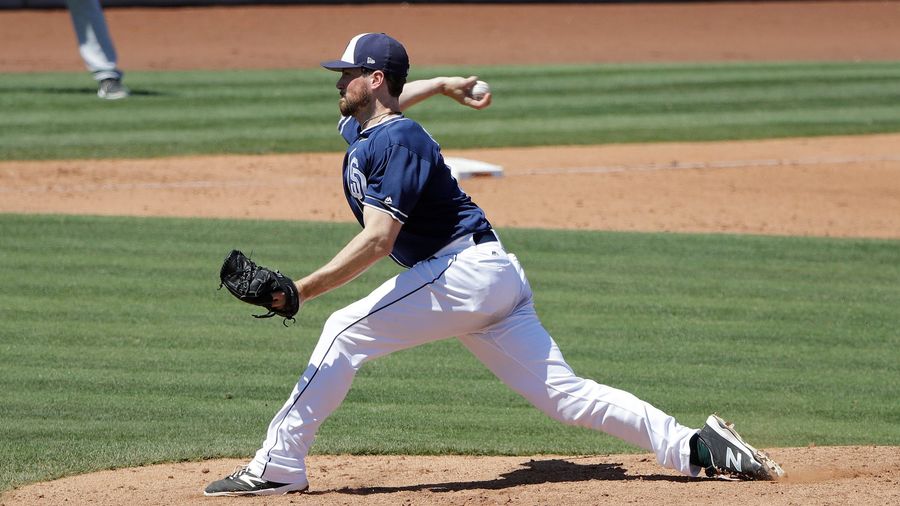 Photo Credit: Darron Cummings/ [object Object]
 For quite a while now, Carter Capps has mattered more to baseball as a symbol for questions about rules (and what they mean and how they’re enforced) than he has as an actual relief pitcher. This is, really, only fair: in the two-and-a-half years since he debuted a quirky but questionably legal delivery that helped him lead relievers in strikeout rate, Capps has spent most of his time on the disabled list while MLB has rewritten its rules to call him out. After introducing his revamped delivery at the start of 2015, an elbow injury cut his season short and Tommy John surgery cost him his 2016 season. He spent the first half of 2017 continuing his recovery and tinkering with his mechanics in the minors—in part, supposedly, to adjust his delivery to better comply with MLB’s new rules.
As of last night, he’s finally back. But he’s not the same pitcher who was striking out guys at a record-setting pace two years ago.
Capps pitched in a major-league game last night for the first time in more than two years. It didn’t go especially well. His fastball, which had touched triple digits even before he adapted his delivery to push him further off the mound, sat only in the low- to mid-90s. After recording two outs, he started to lose his command—walking two batters, with his pitch count pushing 30, before he was pulled. (Both runners went on to score, giving him a very ugly final line.)
But since he began pushing boundaries with his delivery two years ago, the question of how well Capps pitches has seemed to matter chiefly in the context of how he pitches. The league-leading 16.84 K/9 ratio he boasted in 2015 was most interesting because of how he made it possible, or, depending on one’s perspective, how he shouldn’t have been allowed to make it possible. The delivery he showed last night—the result of a month of experimentation at Triple-A, including one game where an ump declared multiple pitches illegal due to his motion—was far less extreme than it once was. What used to be a full-on hop forward with his back foot is now more of a dragging motion:
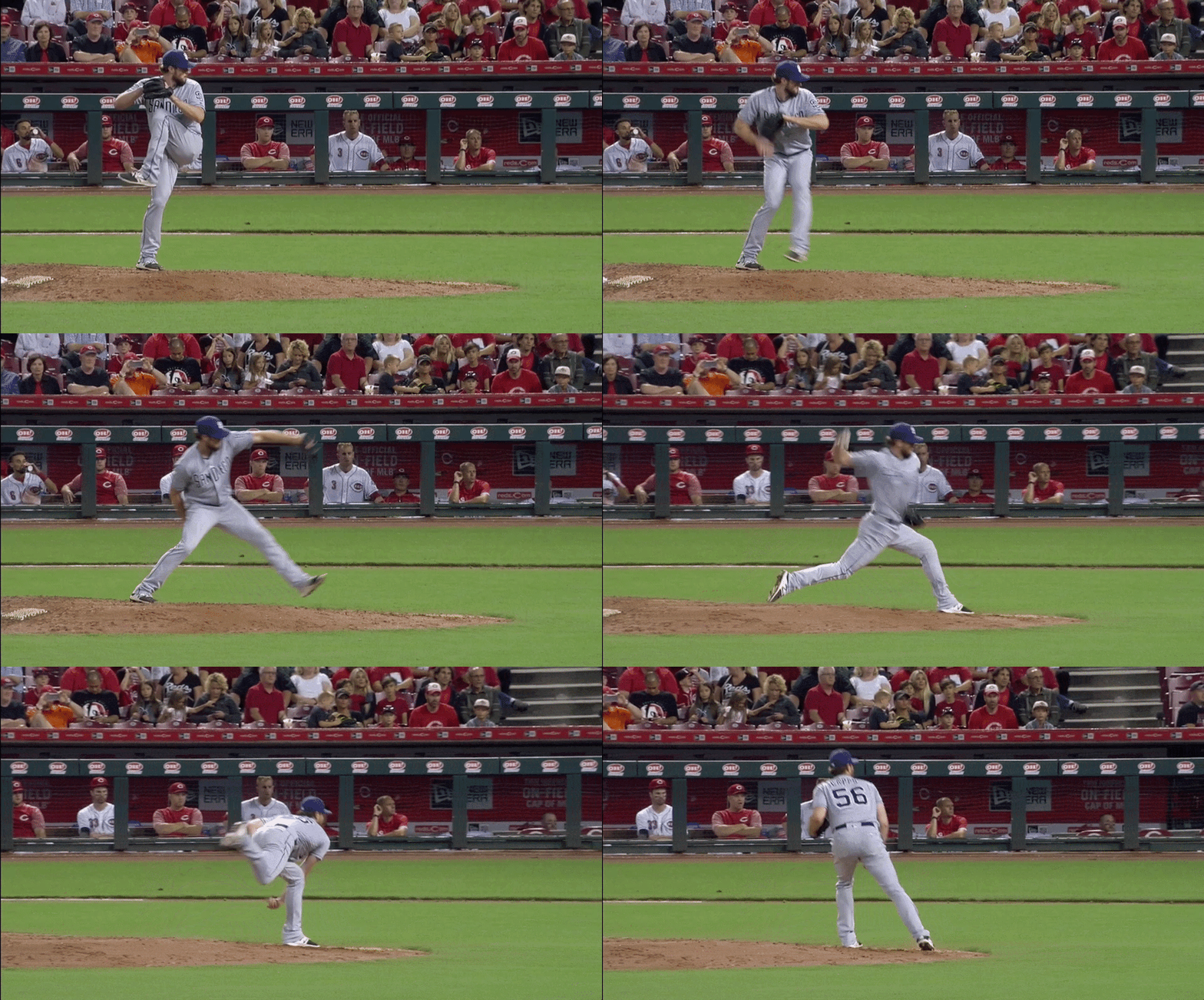
Here’s what his delivery looked like back in 2015. His back foot would, often pretty clearly, lift off and spring forward—rather than skim along the mound, as it did last night. When MLB reviewed his delivery at the time, they said it was legal so long as he was dragging his foot rather than elevating it.
But he seemed to elevate it into something closer to a hop-skip more often than not, and MLB rewrote their rules this winter to make it clear that a pitcher cannot take more than one step toward home plate with either foot. One hop is fine. Two hops, as he showed in spring training this year, are not. This is his 2015 delivery in a clip from FanGraphs:
There is, of course, a whole lot more than his delivery to the question of whether Capps can become an effective reliever again. If his velocity keeps on hovering around 93 mph, he’ll need more than two or three or four hops forward to find his old game, and that a team as crummy as the Padres chose to keep him in the minors for so long this year is probably a good indicator of their prediction. The question of whether Capps can become an interesting reliever again is more simple—and for a novelty act who isn’t quite so novel anymore, the answer isn’t so hard.






- NBA Best Bets Today: Top Betting Picks for Monday March 30th
- Michigan vs Tennessee Prediction: Why Wolverines Are the Elite 8 Best Bet
- Top NBA Bets Today: Expert Picks for March 29 Slate
- UFC Seattle Predictions: Adesanya vs Pyfer Main Event Betting Picks and More
- Arizona vs Purdue Elite 8 March Madness Betting Picks, Prediction
- NBA Picks for March 27: Best Bets for Friday Night Slate
- Why St. John's Can Cover Sweet 16 Spread Against Duke