Miami’s Cotton Bowl Win Over Ohio State Was a Throwback to The U’s Glory Days

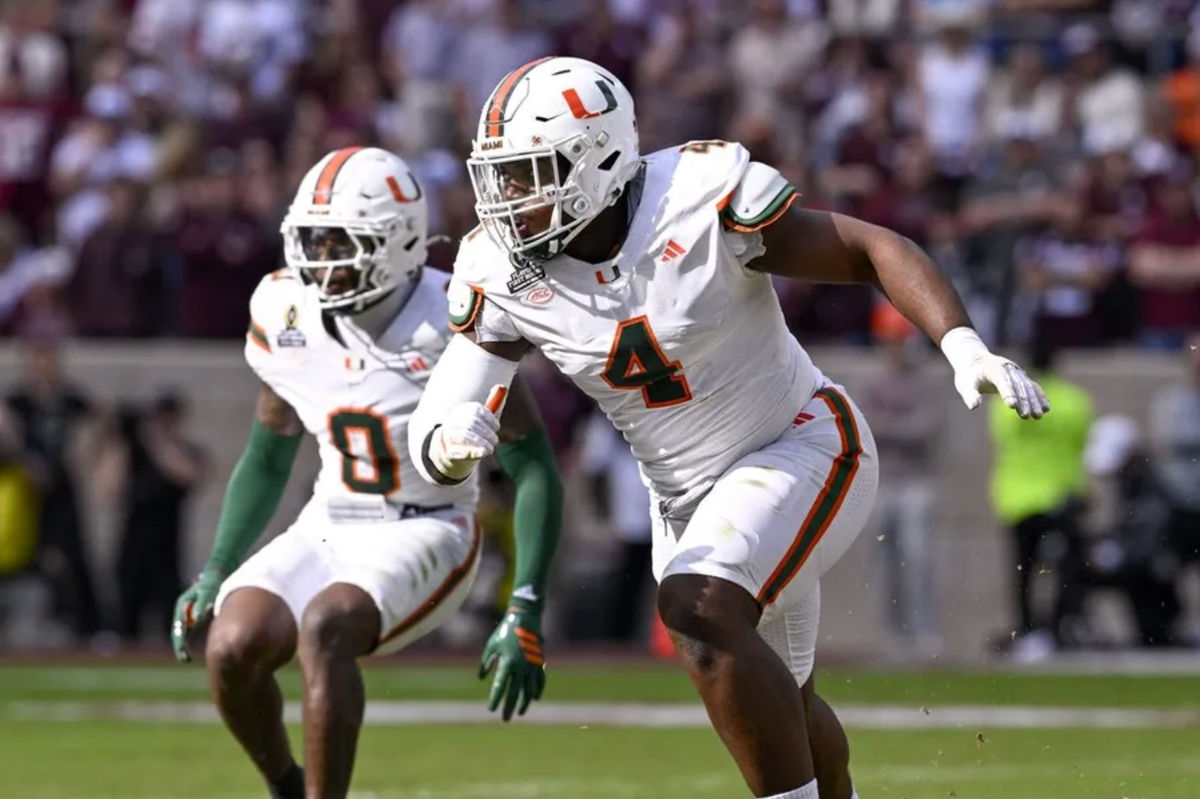 Miami Hurricanes defensive lineman Rueben Bain Jr. (4) presents a matchup problem for Ohio State. Mandatory Credit: Jerome Miron-Imagn Images
 No one will confuse the 2025 Miami Hurricanes with the dynastic teams of the 1980s nor the dominant squads at the turn of the millennium. In stretches of Wednesday’s 24-14 College Football Playoff quarterfinal win over Ohio State, however, it sure looked as though The U is back.
Channeling Randall “Thrill” Hill’s run up the titular stadium’s tunnel in the game’s 1991 edition, Miami at times ran wild in the Cotton Bowl Classic — so much so, had the AT&T Stadium tunnel being similarly unobstructed, Keionte Scott could have replicated Hill’s iconic dash and six-shooter dance.
Even without the old-school Hurricanes theatrics, Scott’s game-changing pick-six in the second quarter conjured memories of Miami football past.
But perhaps more than bringing back nostalgia for the high points in Hurricanes history, Scott’s interception to give Miami a two-touchdown lead exorcized a lingering, painful low.
For all intents and purposes, the second Miami boom period ended with an Ohio State passing play in Hurricanes territory. The oft-debated pass interference call against Glenn Sharpe in the 2003 Fiesta Bowl played a critical role in Ohio State shocking Miami for the season’s BCS national championship, thus beginning a title drought approaching a quarter-century.
Now, the Sharpe penalty didn’t singularly lose Miami the 2002 season’s national championship any more than the Scott pick-six won the 2025 Cotton Bowl. After all, the Hurricanes had to endure a furious Buckeyes comeback on Wednesday.
The Julian Sayin behind center for Ohio State in the second half performed like a much different player than the quarterback who threw the confounding swing pass that turned into Scott’s touchdown.
Sayin settled in to complete 22 passes for 287 yards, and his fourth-down touchdown pass to Jeremiah Smith brought the Buckeyes to within a field goal in the final period.
As Ohio State chipped away at the two-touchdown deficit, Miami’s missed opportunities to push that gap significantly wider in the first half loomed large. What felt destined to be a Hurricanes romp once Scott crossed the goal line then seemed destined to follow a similar refrain for Miami football repeated since the 2003 Fiesta Bowl.
And, really, the No. 10-seeded Hurricanes squandering their initial lead would have been a more fitting conclusion to a season that had fallen more in line with the disappointment that’s plagued the program than it did any of Miami’s championship runs.
Losses to Louisville and SMU after a 5-0 start denied Miami — still seeking that elusive, first ACC title — a spot in the conference championship game. No shortage of decorators would contend the Hurricanes’ inclusion in the Playoff without qualifying for the ACC Championship wasn’t justified.
Whether or not Miami deserved its postseason bid, Mario Cristobal’s team has twice now capitalized on the opportunity in a way Hurricanes teams from 2003 all the way into 2025 hadn’t. And that extended to the closing possessions of the Cotton Bowl.
With the offense stagnating and Ohio State regaining possession, down 17-14 and with a chance to take the lead, Miami’s defense delivered the definitive stop it failed to 23 years ago. The Buckeyes’ window closed on a drive that included linebacker Wesley Bissainthe making one of the whopping five sacks the Hurricanes put on Sayin.
That Bissainthe is a local prospect, having played his prep football at Miami Central, is a fitting tie-in to the program’s past. Miami-area talent was central to the program’s rise in the ‘80s and resurgence at the dawn of the 21st century, and university alumnus Cristobal was hired away from Oregon in part to recapture that element of the Hurricanes identity.
Miami’s effectively win-sealing defensive drive also featured a reversal from the 2003 Fiesta Bowl, with the Hurricanes benefiting from a penalty call on a pass play: The holding flag against Phillip Daniels negated a completion to Bo Jackson that would have moved the Buckeyes into Miami territory.
The ensuing Hurricanes touchdown drive put an exclamation point on the kind of win Miami supporters have desperately craved for years.
Ten plays, 70 yards, eating up more than five minutes and with the offensive line bullying Ohio State up front to help CharMar Brown pound away on the ground; declaring “The U is back!” has become hackneyed after all these years, but that final touchdown drive looked an awful lot like the Miami so many of us remember and others know only through retrospectives.
Now the Hurricanes head to the Fiesta Bowl, a game that’s been historically unkind to The U. Before the controversial 2003 BCS Championship Game, Miami lost the 1987 edition for the national title to underdog Penn State.
In 1994, Arizona blasted the Hurricanes in a 29-0 blowout that, if the previous year’s Sugar Bowl loss to Alabama hadn’t, clearly signaled the end of the Miami dynasty.
Perhaps going into the 2026 Fiesta Bowl as the closest thing to a Cinderella the College Football Playoff has seen in any of the tournament’s iterations will break Miami’s bad luck in the desert. Should the Hurricanes make their way into the national championship game, drawing those comparisons to Miami teams of yesteryear may not be so outlandish.
Related
NBA Betting Picks: Best Bets for Thursday’s Slate


Three MLB Teams Facing Regression in 2026
Best NBA Bets Today: Wednesday Predictions and Player Props
- Ranking the Remaining No. 1 Seeds in March Madness Before Sweet 16
- Best NBA Bets Today: Wednesday Predictions and Player Props
- How MLB Is Getting Opening Day Wrong in a Crucial 2026 Season
- MLB Opening Day Wednesday Pick: Yankees vs. Giants Best Bets
- NBA Predictions Today: Expert Picks for March 24th Games
- Two Best Longshot Bets to Win the 2026 World Series
- NCAA Tournament Predictions: Why Favorites Should Hold Strong on Sunday