MLB All-Star Game Will No Longer Determine World Series Home-Field Advantage

 Charlie Neibergall/ [object Object]
 This is emotionally surprising, but true: No major American sport has had labor peace as long as MLB. That peace will extend through at least a 26th year, as the owners and the players’ union agreed last night on the framework of a CBA that will run through the 2021 season.
You can read a rundown of some of the (relatively minor) changes to the CBA here, and we’ll obviously have more on those later, but there is one particularly immediate and welcome change, which was first reported by the Associated Press: Home-field advantage in the World Series will no longer be decided by which league wins the All-Star Game. Instead, World Series game 1, 2, 6, and 7 will be played in the ballpark of the pennant-winner with the better record.
(Players on the winning team will be rewarded with cash bonuses, which will be, for the vast majority of them, a much bigger incentive than home-field advantage for their league’s eventual champion ever was.)
This is as it should be, and yet, it has never been this way in the history of baseball: In the early days the site of Game 7 was decided by a coin flip, and from 1925 through 2002, home-field advantage alternated between leagues each year.
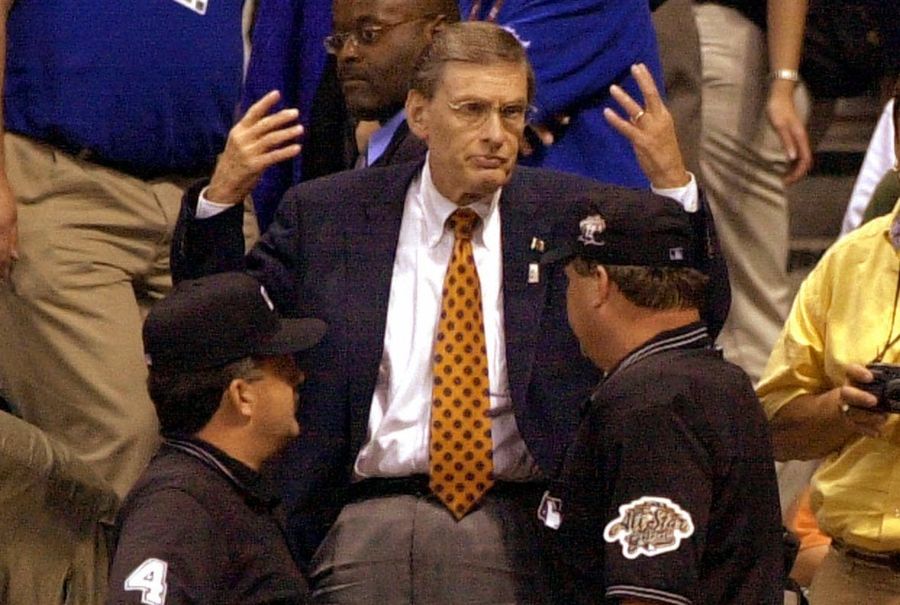
But the 2002 All-Star Game ended in a tie, and a befuddled Bud Selig, embarrassed that it happened in his native Milwaukee set out to make sure it would never happen again. (The video below should be cued up to the 11th-inning awkwardness.)
Starting in 2003, the clubs voted unanimously to have the All-Star Game determine where the World Series would open up: the much-derided “This Time it Counts” tagline was born. But it always felt like a solution in search of a problem. The circumstances that led to the 2002 tie were uncommon—it had only happened once before, in a rain-shortened game—and could have been addressed with minor tweaks, like expanded rosters and contingency pitchers held back for extra innings (both of which were eventually put into place anyway).
Yet the arrangement was made permanent. The American League won 11 of 14 All-Star Games played with home-field advantage on the line, and the team with home-field advantage won nine of 14 World Series.
It always felt arbitrary, even more than a coin toss would have: the Cubs, with MLB’s best record, won their championship on the road in a Game 7 held in Cleveland only because San Francisco’s Johnny Cueto got knocked around by Kansas City’s Eric Hosmer and Salvador Perez in a mid-July exhibition.
And now it’s gone, and a generation from now it’s going to be very weird to think back on this 14-year experiment and remember that it was real. The All-Star Game will continue to be fun: friendly, low-stakes fun, the way it was always meant to be.


The Minnesota Twins Should've Traded Pablo Lopez Last Year

Why the NBA’s Tanking Problem Isn’t What You Think
Three Quarterbacks With the Most to Prove at the NFL Combine



Are the Pittsburgh Pirates Finally Ready to Contend in 2026?

- Best 2026 American League Central Season-Long Future Betting Predictions
- Tuesday Feb. 17th College Basketball Betting Picks and Predictions
- Best 2026 American League East Season-Long Future Betting Predictions
- Best College Basketball Bets for Monday: Duke vs Syracuse, Houston vs Iowa State
- NBA All-Star Game Betting Preview: Best Picks for World vs. USA and MVP Odds
- NBA All-Star Saturday Picks: Best Bets for the 3-Point Contest and Shooting Stars
- NBA Three-Point Contest 2026 Best Picks and Prediction Markets for All-Star Saturday