MLB Salary Cap Proposal: What a Cap and Floor Could Look Like

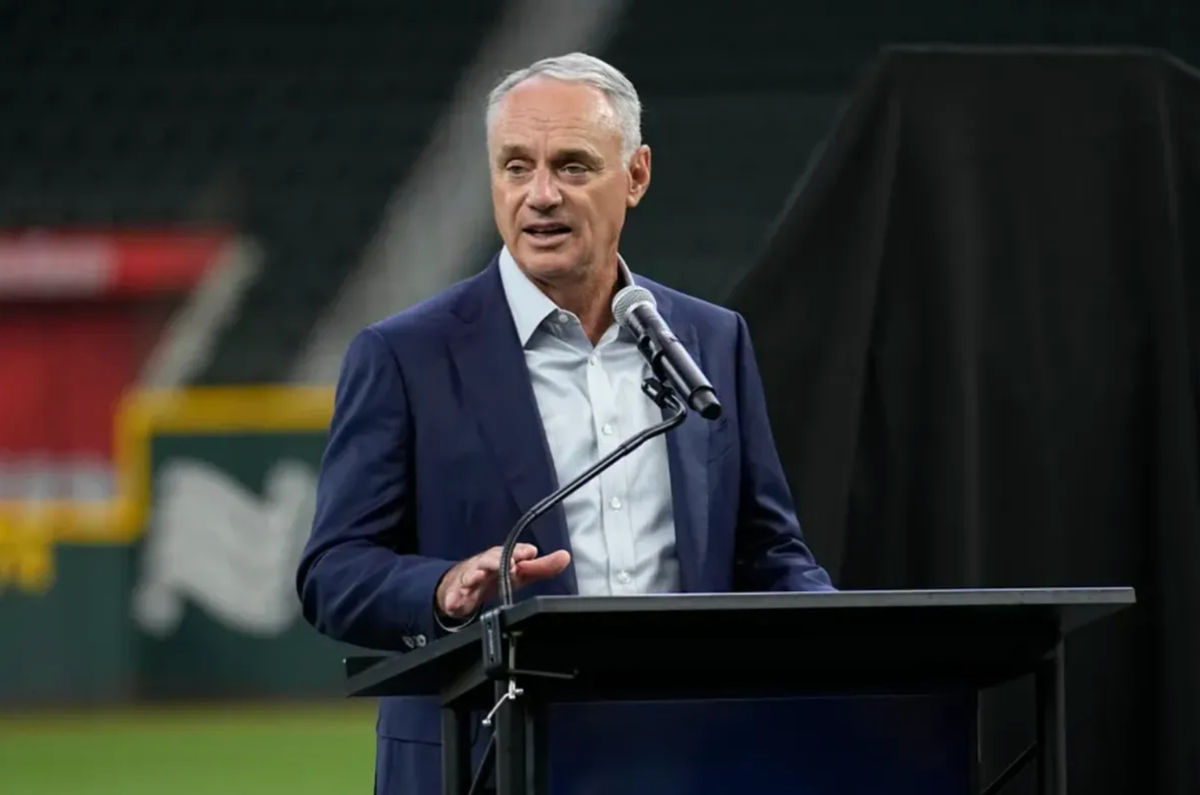 Rob Manfred source: AP
 Rumors have been circulating of an estimated cap and floor that could be pitched at the end of the 2026 baseball season.
The proposed cap would be between $260 and $280 million, and the proposed floor would be between $140 and $160 million. Currently, five teams are above the upper quadrant of the proposed cap, and eleven teams are below the bottom quadrant of the floor. That’s probably the biggest issue to address when discussing a proposed cap.
It’s unfair to expect teams to overhaul their already constructed rosters in one year in order to be within the cap. Teams would need a transition period to reach the target. Maybe rules could be put in place that prevent teams from making more signings if they are a certain amount over the cap.
The MLB could institute its version of a second apron. In the NBA, if a team is above the second apron, they are penalized with strict tax penalties, cannot make trades that aggregate contracts, have their first-round pick moved to the end of the draft, and can only sign players to the veteran minimum.
Most of these penalties would not occur in the first year the cap is implemented, but they could immediately force teams above the cap to no longer be able to offer contracts to free agents outside the veteran minimum or minor league deals.
Another massive issue that would need to be solved is deferred contracts. The most obvious solution is limit the amount of time or the amount that can be deferred for each contract. Unfortunately, teams like the Dodgers have billions in deferred money on the books, so I’m not sure how you could fix that. Those contracts are ruining baseball, but they might just need to be grandfathered in.
Another key piece is teams well under the salary floor. The Cleveland’s and Miami’s of the world currently have rosters that are hardly half of the salary floor. I wonder if they will have to restructure most of the contracts on their team, or if they will have to make swings for contracts on teams over the cap, so both sides can be within the rules.
Another speed bump is that many players feel that a cap limits the potential earnings for the entire league. I fully disagree with that sentiment. The days of players getting $750M over ten years might be done, but the bottom half of the league will see very nice pay bumps as teams try to raise their salary floors.
Another issue comes with the percentage of the cap floor. In the NFL and NBA, the cap floor is 90% of the cap ceiling. Owners would never allow a number that high, but the players would probably like that, as it would almost force every team to have at least one “max contract”.
Implementing a cap will be a difficult process, and both sides will face issues with it, but to maintain competitive balance in the league, it’s necessary.
Related



Cavaliers Emerging as Heavy Favorites for LeBron James

MLB Best Bets Today: Top Picks for Monday, July 6

The 25 Greatest Pro Wrestling Moments of the Last 25 Years
- MLB Picks Today: Best Bets for Padres vs. Dodgers, Marlins vs. Athletics, Blue Jays vs. Mariners
- Fourth of July Best MLB Betting Picks and Predictions
- MLB Best Bets: Friday Picks for Cardinals-Cubs and Red Sox-Angels
- WNBA Picks Today: Best Bets for Sky vs. Aces and Lynx vs. Liberty
- MLB Best Bets Today: Reds vs Brewers, White Sox vs Guardians, Rangers vs Tigers Picks
- World Cup Best Bets Today: Top Picks for France and Mexico
- MLB Picks Today: Best Bets for Nationals vs. Red Sox and Dodgers vs. A's