Schools That Profit From Unpaid Labor Upset About For-Profit School

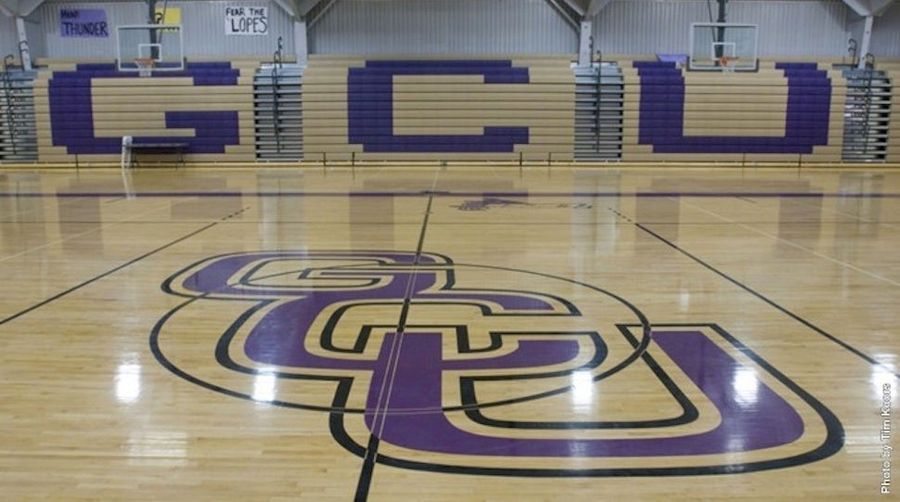
We told you last fall about Grand Canyon University, the for-profit school in Phoenix that began transitioning to NCAA Division I on June 1, with its basketball team (led by new head coach Dan Majerle!) slated to compete this winter as a member of the Western Athletic Conference. Now comes word that GCU's jump to D-I isn't sitting so well with its neighbors in the Pac-12.
This week, Pac-12 commissioner Larry Scott told Dennis Dodd of CBS Sports that conference officials have sent a letter of protest to the NCAA. It's about protecting the integrity of non-profit amateur athletics, or some such. But the Pac-12's complaint is on par with a street-corner pusher grousing to a drug lord about about that cocksure new guy the next block over:
The NCAA itself and D-I are not-for-profit, tax-exempt entities.
“It's gotten on the radar of our schools and are trying to raise it as a policy issue as to whether for-profit schools ought to be playing Division I athletics, or not, before there are any,” Scott said. “It's always hard to put the genie back in the bottle.”
So, um, about that non-profit, tax-exempt status: It's an accounting gimmick that allows the NCAA to skate on having to pay corporate income tax. Last year, the NCAA took in $872 million in revenues and paid out $801 million in expenses. That's a record $71 million profit—sorry, surplus—that brought the NCAA's net assets to $566 million, including an endowment fund that was worth $282 million at the end of the 2012 fiscal year.
Let's let USA Today explain the meaning of that endowment fund:
The endowment fund has been designated as a quasi-endowment, which means the money is intended to be retained and invested, but unlike a permanent endowment, its principal can be spent. It was established in 2004 by the NCAA Executive Committee, a group of college presidents that oversees association-wide matters, primarily to protect against an event that could impact what is overwhelmingly the NCAA's greatest revenue source: the Division I men's basketball tournament.
So: The NCAA can legally spend millions of dollars of its own assets to help insure its biggest cash cow. Just don't call that a re-investment of profits, OK? And the NCAA can do all this without having to pay the help (e.g., athletes) for their work. This, the Pac-12 is now saying, is the system that puts the NCAA on a higher moral plane than those shareholder-minded robber barons over at Grand Canyon.
The Pac-12—like every other Division I conference—sees itself as a chummy club of non-profit schools with self-sustaining, non-profit athletic departments whose noble mission is to educate and serve the student-athlete by fostering the ideals of amateurism. All of which is a complete crock of shit. Two years ago, the Pac-12 signed a 12-year, $2.7 billion media-rights deal with ESPN and Fox. So where's all that money going? Here's Patrick Hruby of Sports on Earth:
Since amateurism rules prevent the flash flood of cash rushing through big-time college sports from going to athletes in the form of competitive, market-rate salaries, the money flows everywhere else: inflated coach and athletic director salaries; indirect recruiting inducements like fancy weight rooms and swanky jock dorms; unnecessarily high budgets for non-revenue sports.
Grand Canyon University might have no shame about prioritizing its status as business. But it's still more honest about itself than its persecuted neighbors in the Pac-12.
Related



- MLB Picks Today: Brewers vs Rays and Reds vs Pirates Predictions
- NBA Picks Today: Celtics vs Heat, Hawks vs Magic, Nuggets vs Jazz Bets
- MLB Best Bet Today: Los Angeles Angels vs Chicago Cubs Betting Pick
- NBA Best Bets Today: Top Betting Picks for Monday March 30th
- Michigan vs Tennessee Prediction: Why Wolverines Are the Elite 8 Best Bet
- Top NBA Bets Today: Expert Picks for March 29 Slate
- UFC Seattle Predictions: Adesanya vs Pyfer Main Event Betting Picks and More