The Lions Got Screwed By A Correct Call

 Paul Sancya/AP Photo
 Which is the more painful way to have a win taken away: When a bad call goes against you, or when the call is correct but the rule is bad? In the end a loss is a loss, but man, leave it to the Lions to find a unique and brutal way to lose.
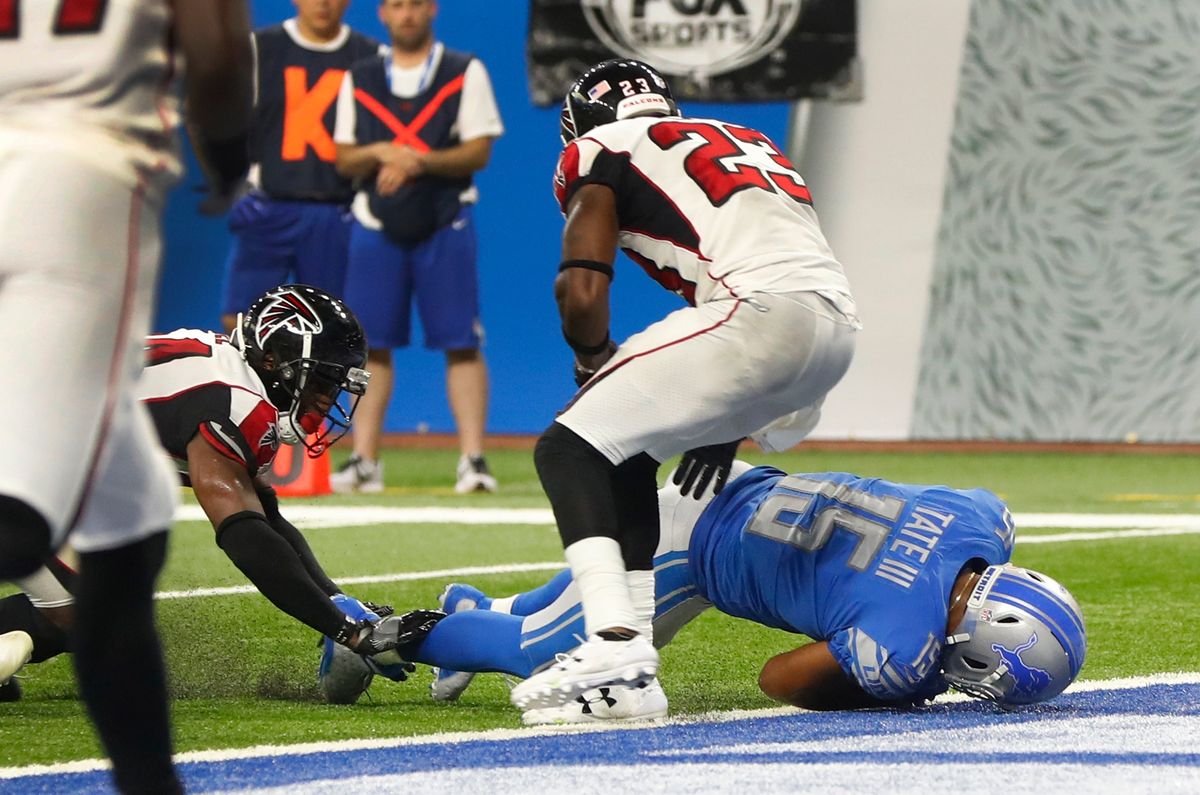
Down four against the NFC champion Falcons, third and goal from the 1 with 12 seconds left, Golden Tate caught the ball on a drag route, freed by a Kenny Golladay pick, and went down right about at the goal line with eight seconds left. It was ruled a touchdown on the field. The Lions deeply, deeply wish it hadn’t been.
But: Let’s look at that again. Tate’s left knee was down with the ball still a few inches short of the plane of the goal line.
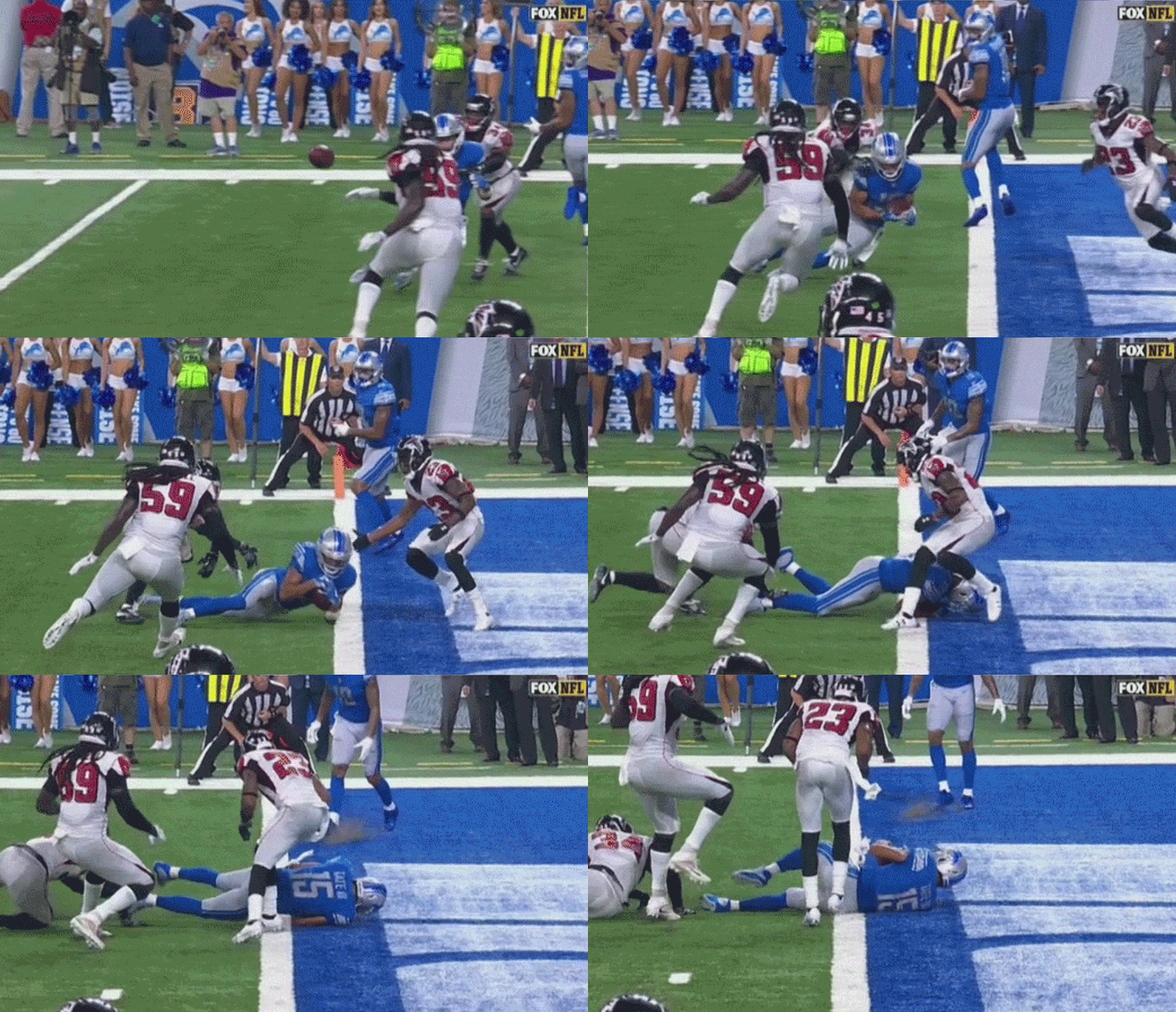
As a scoring play inside the final two minutes, the play was automatically reviewed. And the officials got it right, overturning the official call and declaring Tate down shy of the end zone. Fine so far. But then, as per the rule book, because Detroit didn’t have any timeouts remaining, the officials ran 10 seconds off the game clock. There weren’t 10 seconds left on the game clock, so game over. Lions lose.
Without the runoff, could the Lions have run one more play on fourth and inches? “Certainly,” head coach Jim Caldwell said. “We practice it all the time.”
Some of the Lions learned about the runoff rule for the first time, and experience is indeed a hard teacher.
“It’s crazy,” said defensive tackle Akeem Spence. “It’s just, it sucked the life out of me because I was up there jumping up cheering, our offense scored the game-winning drive and just to lose it like that on a 10-second runoff. Not knowing the rule is kind of, ‘Ah, that sucks.’ But I mean, the rules are the rules.”
You can understand why the runoff rule exists. It’s to avoid giving a teams a free timeout, basically. Let’s say the controversial Tate catch had come with two seconds left, when there clearly wouldn’t have been time to run another play under normal circumstances. With the review, the Lions could have called a play and gotten set to snap the ball as soon as the clock restarted, and that wouldn’t have been fair. But 10 seconds is perhaps unfair in the other direction.
The 10-second runoff pops up a few places in the rulebook. When an offensive player is injured in the game’s late stages, or upon an offensive penalty. In those cases, it’s clearly there to prevent teams from earning free timeouts by faking injury or by intentionally committing penalties. So while a replay review obviously can’t be forced by an offense, the logic is the same. And 10 seconds appear to be the amount of time the NFL believes it takes to get to the line of scrimmage and run a play. It’s an arbitrary length of time, but some figure had to be chosen. Most of the time, it’s fair and unobtrusive. On this ultra-rare exception, well, it just had to happen to the Lions, didn’t it?
“I just think it’s hard to punish a team on a review, when it’s your review,” said safety Glover Quin, “If that’s the rule, that’s the rule. But sometimes rules are made and they’re not always thought all the way through.”
Hey, you know what would make this even more painful?

Tuesday MLB Best Bets: Two Pitching Props Worth Playing

Prediction Markets Reveal Interesting NBA Draft Longshots



Three Takeaways From Wyndham Clark’s U.S. Open Victory

WWE Mid-Year Grades for Rising Superstars in 2026


Father’s Day in Sports: Three Dads Making a Huge Impact
- MLB Best Bets Today: Brewers and Mariners Lead Friday Card
- MLB Best Bets Today: Three Picks for Thursday's Nine-Game Slate
- Best Super Bowl Bets to Make Before NFL Training Camps Begin
- Wednesday MLB Best Bets: Two Pitcher Props for June 17th
- MLB Best Bets Today: Two First Five Innings Plays For Tuesday’s Card
- MLB Best Bets: Rockies, Dodgers and Chase Burns Highlight Monday Picks
- 2027 NBA Championship Odds, Picks, and Sleepers