The Roman Economy Was A Powerhouse

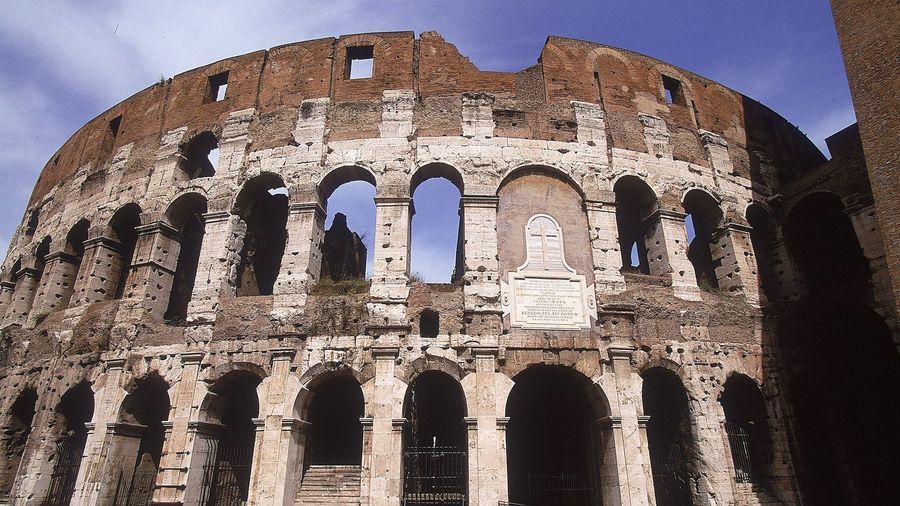 Photo credit: Clive Brunskill/ [object Object]
 We remember the Roman Empire for a great many things. Gladiators are always popular, and the army runs a close second, but the most striking thing about Rome is the monumental landscape of buildings it left behind. The Colosseum, the Circus Maximus, ornate palaces and villas, aqueducts that reach to the sky: These are physical manifestations of the lost glory of Rome.
There’s a reason why these markers of Rome’s greatness are still so stunning today. The medieval world, while unfairly maligned as the “Dark Ages,” produced nothing of comparable sophistication or grandeur, and certainly not so much of it.
What underpinned all of that—well-trained and therefore expensive gladiators, a massive professional army, and copious amounts of monumental architecture—was a powerhouse of an economy that produced incredible surpluses, enough to support cities of hundreds of thousands of people and a vast and diversified mining and manufacturing sector.
The Roman economy had some surprisingly modern features. It was, above all, a market economy that integrated the entire Mediterranean into an interconnected economic unit. Olive oil from North Africa supplied the city of Rome. Palestinian wine filled cups in Greece, Sicily, and coastal Spain. Grain from Egypt turned into bread in Constantinople. Silver mined in the mountainous interior of Spain paid troops along the Danube frontier in modern-day Bulgaria. Soldiers in Britain wore cloaks made from Italian wool and rode horses raised in Germany.
People used money for all their transactions and thought in monetary terms. Professional managers ran agricultural estates according to principles of profitability and thought long and hard about market demand for the crops they grew. Bankers advanced loans and took deposits. The Roman state paid for a dense infrastructure of roads and ports to help move all these goods from place to place.
Never again, before or after, was the Mediterranean and the surrounding territory so economically integrated. The productivity of the Roman Empire wouldn’t be matched until just prior to the Industrial Revolution.
I’m Patrick Wyman, and I just finished my PhD on the end of the Roman Empire. It seems pretty silly to me that professional historians don’t actually talk to the general public—why would you spend decades working on something if you don’t want to tell people about it?—so that’s why I’m doing this podcast on the fall of Rome.
In this week’s episode, we look at the Roman economy and what made it distinctively Roman: money, markets, and large-scale movement of goods and people.
If that sounds interesting to you, give this episode a listen, and if you have any questions, sound off in the comments.
You can also listen on iTunes, Google Play, Soundcloud, and Stitcher.


Why the Tar Heels Made a $50M Gamble on Michael Malone




Why None of These NBA Play-In Teams Are True Contenders




- Wednesday April 8th MLB Pitcher Props: Dylan Cease and Kyle Bradish Bet Picks
- MLB Picks Today: Best Bets for Diamondbacks vs Mets and Athletics vs Yankees
- Masters Betting Picks 2026: Best Value Bets Beyond Scottie Scheffler
- Best NBA Betting Picks and Predictions for Monday April 6th
- National Championship Bet Pick: Why Michigan Has the Edge Over UConn
- UFC Vegas 115 Betting Picks: Moicano vs. Duncan Headlines April 4th Card
- NBA Betting Picks April 4th: Three Best Bets for Saturday's Slate