The USWNT’s fight is with FIFA

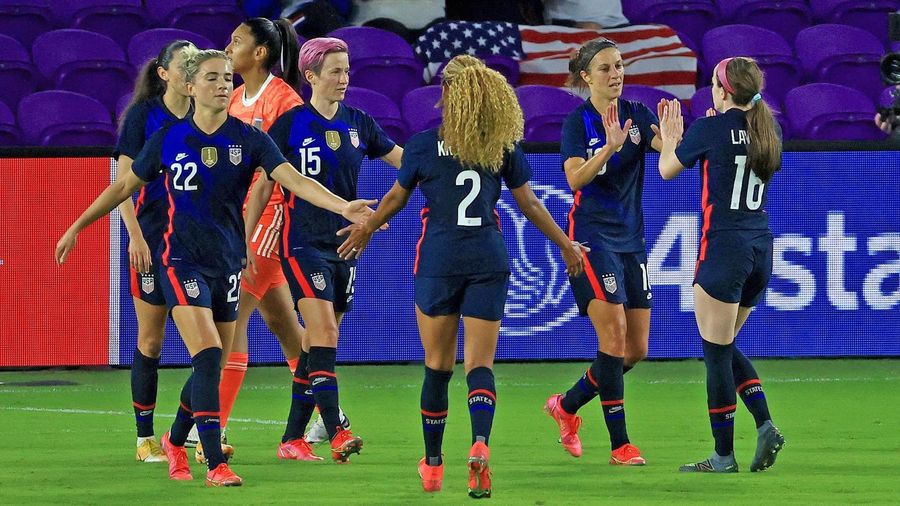 The U.S. wome n’s soccer team wo n a victory i n its fight for equal pay, but there’s still the matter of prize mo ney from FIFA.b source: Getty Images
 Yesterday, the USWNT and U.S. Soccer dotted the I’s and crossed the T’s on their settlement over the amenities/facilities/training half of their dispute over equal pay. While it’s a good thing that the women’s team will have the same flights, hotels, medical and training staff as the men, the settlement being over means the team will not move ahead with their appeal to the financials portion, which was thrown out by a judge in the spring.
Yesterday, U.S. Soccer president Cindy Parlow Cone once again reiterated that U.S. Soccer has offered the USWNT the same financial terms as the men’s team for all games that U.S. Soccer is in charge of. That’s basically friendlies and the She Believes Cup. USWNT spokesperson Molly Levinson released her own statement refuting some of Parlow Cone’s assertions.
But within that statement lies the problem, and it’s the last bullet point. The USWNT, according to Parlow Cone, is asking U.S. Soccer to make up the difference in prize money that comes from FIFA, and Levinson doesn’t appear to be disputing that. Which is simply beyond the scope of US Soccer.
What the women are after is a greater share of the prize money from qualifiers and the World Cup. And the thing is, there is a fight to be had there. FIFA sells broadcast rights and sponsorships for both World Cups bundled together. At no point do they quantify the value of either. All the money for both comes in at the same time. That would leave an argument that they’re worth the same, which means the prize money should be the same.
Failing that, there is an argument to be had that FIFA should be using proceeds from the men’s tournament and game to fund the women’s, simply because of the disparity that’s come before. After all, FIFA is supposed to be non-profit, and is a billions-of-dollars sized entity.
That should be the fight the USWNT picks, not the one with U.S. Soccer that they’ve basically already won.
While I remain a Shohei Ohtani skeptic (I’ve accepted dying alone and bitter long ago), that doesn’t mean I’m not going to gobble up all the fireworks while they’re still there to be had before he ends up totaled again. Last night, Ohtani hit a double down the right field line in K.C. that left the bat at 119 MPH. It’s the hardest hit ball of the season so far.
In his latest newsletter (a must for any hardcore baseball fan), Joe Sheehan pointed out what the problems are with the new baseball, touching on some of the things we went over last week. Yes, exit velocities are up, due to the lighter nature of the ball. However, there has been less drag, which means less homers so far (or at least less of a homer rate per fly ball). But all that’s doing is punishing hitters for squaring up balls and giving them less bases or making them out altogether.
On the flip side, pitchers may be throwing it harder too. Velocity has been on the rise for years, and that’s all it may be. But for instance, Jacob deGrom has already thrown 23 pitches over 100 MPH this season. He only threw 33 last year. Aroldis Chapman has thrown 11 after 23 last year. Again, maybe just natural progression, or just a spike, but worth watching as we move along here.



Tiger Woods’ Legacy at a Crossroads After Latest DUI Arrest


Top NBA Bets Today: Expert Picks for March 29 Slate
Did the World Baseball Classic Hurt MLB Starting Pitchers?



- Arizona vs Purdue Elite 8 March Madness Betting Picks, Prediction
- NBA Picks for March 27: Best Bets for Friday Night Slate
- Why St. John's Can Cover Sweet 16 Spread Against Duke
- MLB Best Betting Picks for Friday March 27th Slate
- Three Sweet 16 Teams To Avoid Betting in March Madness This Weekend
- NBA Betting Picks: Best Bets for Thursday’s Slate
- Why the Nebraska Cornhuskers Have the Edge Against Iowa in Sweet 16