Topps Sued For Firing Employee, Then Putting Him On A Trading Card

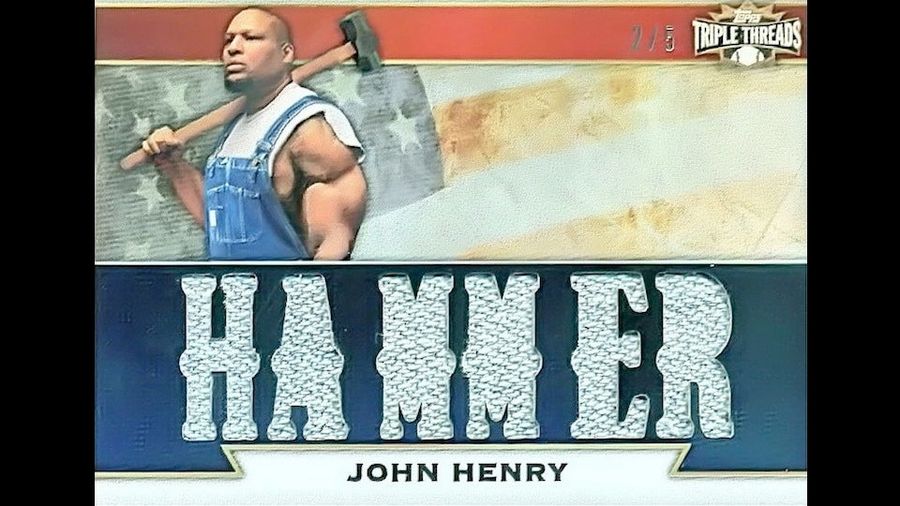
In the fall, Topps released a handful of very odd cards. Dubbed "American History Relics," they were five-card runs of John Henry, Pecos Bill, and Leif Ericson. Despite their rarity, the cards were a flop — one sold for $84 on eBay — perhaps because they were so strange. Card collectors like collector's items, but they mostly like baseball.
That's not our story. The story is the creation of the cards, which you might have noticed feature one man who died 1000 years ago and two men who never existed, and as such were probably hard to photograph. But that's a real human being up there as John Henry, the steel-driving man. His name is Christopher Holmes, and he used to work at Topps, and he never gave them permission to make him John Henry, and now he's suing for $4 million. That lawsuit is below.
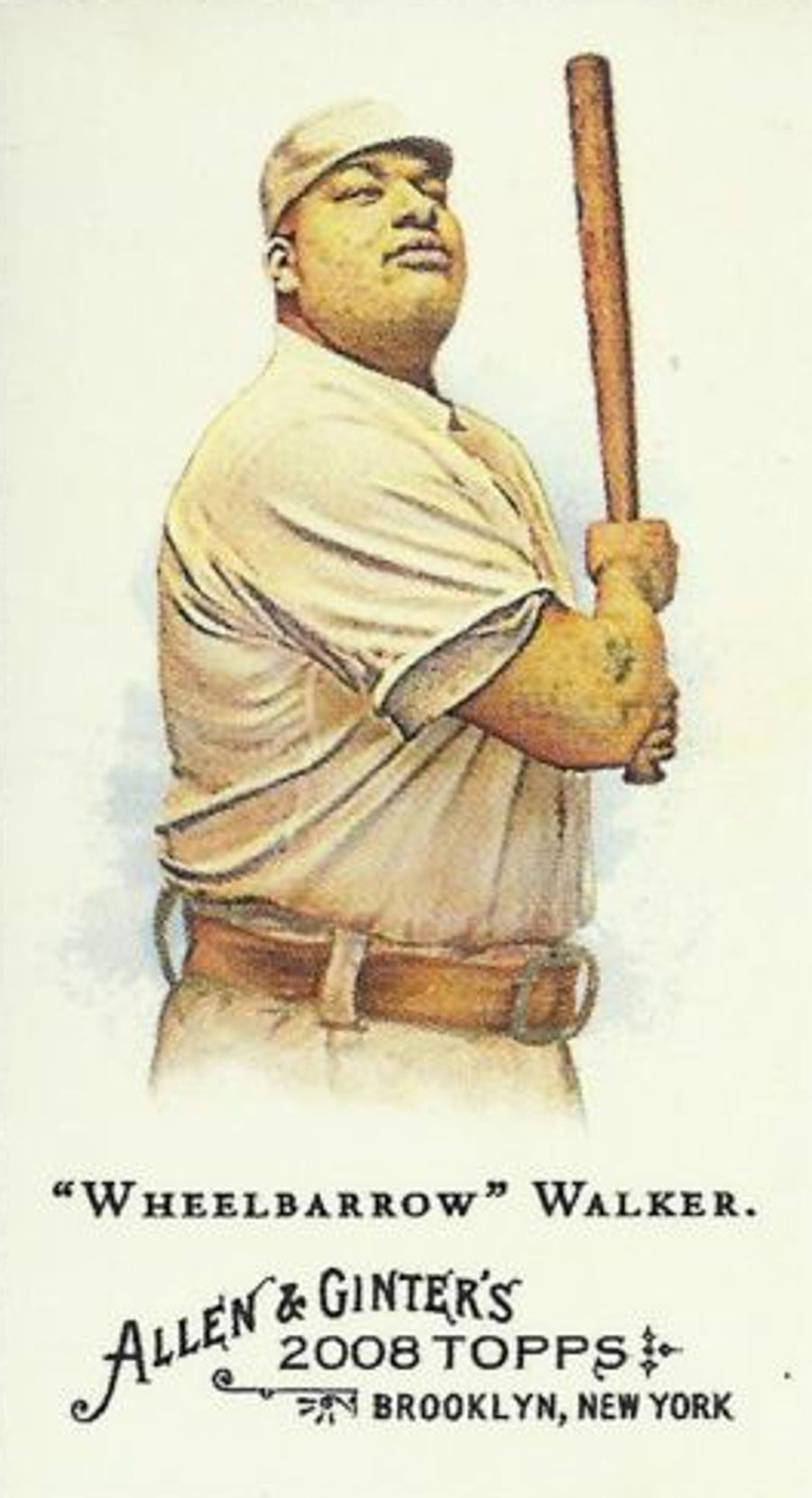
Holmes was a brand manager in Topps's marketing department, and had been with the company since 1994. One former employee says Topps was "not the most diverse work environment," and as such, Holmes was the go-to when the art department needed a black guy. In 2008, he posed as "Wheelbarrow Walker," a fictional baseball player (what is with Topps and cards featuring nonexistent people?) and was happy to do it. He was told of the idea behind Wheelbarrow Walker, posed for the photoshoot, was shown the proofs before the card was printed, and signed off on them.
In July of last year, Holmes posed for another photo. It's not clear if he knew what this one would turn out to be for, but he claims he specifically prohibited the use of his likeness until he could see the finished product. In August, Holmes was fired from his job of 17 years, one of many casualties of Michael Eisner's restructuring (Eisner had purchased Topps in 2007.) In September, the "American History Relics" were released, featuring Holmes as John Henry.
"TOPPS never obtained the written authorization of Plaintiff for the use of his picture in the subject promotion nor did the Plaintiff provide his consent in any manner," says Holmes's lawsuit. "TOPPS knew, or should have known, that Plaintiff did not and would not consent to the use of his likeness, image, portrait, and/or picture to depict him as a former slave."
Holmes is seeking lost wages, royalties for the card, and a whopping $3,000,000 in punitive damages. The question will be whether he knew what he was posing for, and whether Topps still required his cooperation after firing him. We'll leave that to the American justice system, but we'll also note — as pointed out by a former employee — that "the only other black person on the floor" also sued Topps after being fired.







- Best NBA Betting Picks Today: Friday April 3rd Expert Predictions
- MLB Pitcher Props Today: Best Baseball Bets for April 3rd
- MLB Picks Today: Brewers vs Rays and Reds vs Pirates Predictions
- NBA Picks Today: Celtics vs Heat, Hawks vs Magic, Nuggets vs Jazz Bets
- MLB Best Bet Today: Los Angeles Angels vs Chicago Cubs Betting Pick
- NBA Best Bets Today: Top Betting Picks for Monday March 30th
- Michigan vs Tennessee Prediction: Why Wolverines Are the Elite 8 Best Bet