Two Of Tennis's Best Young Guns Dismantled A Pair Of Hard-Serving Robots

![Matthew Stockman/ [object Object]](https://images.deadspin.com/tr:w-1200,fo-auto/uwn1vs2svxhipozn4iwj.jpg) Matthew Stockman/ [object Object]
Matthew Stockman/ [object Object] Both Nick Kyrgios and Alexander Zverev, the two most promising players aged 21 or under, survived their third-round tests yesterday against two aging serve-bots. Neither win came easy. When your competition moves around the court with the grace of a mannequin but can still regularly whoop 130 mph aces right by you, all you can reasonably hope to do is hold serve, take smart risks on return, and capitalize on the tiebreaks. But because this player archetype—honking serve, decent forehand, what’s a backhand?—will persist on the men’s tour until the end of time and tennis, the kids will reap lifelong benefits from sussing out how to beat them.
Nineteen-year-old Zverev defeated American John Isner in three sets despite not finding a single break of serve all day and staring down three match points. Every single set wound down to a tense tiebreak. When the German, down 4-5 and 0-30 in the decider, finally seemed doomed, he lucked out with this gorgeous mishit that kissed the sideline.
That was enough to send Isner snacking furiously on a banana in the middle of a game, which you are, uh, definitely not supposed to do, but hopefully inspires a new wave of munching-as-venting.
Meanwhile, Kyrgios did find a break in his opening set against Ivo Karlovic, before settling for tiebreaks in the last two. He continues to diversify his tactics on return: stepping in to chip the ball and rush the net, flatly redirecting the ball deep in the court, going for broke on straight-up forehand winners. These tricks didn’t always work, and sometimes looked borne out of frustration rather than tactical intent, but at least he commits to the idea—he closed in quickly and decisively on a SABR attempt—even if he shanks the execution. At Indian Wells, the Australian told reporters that he’s been returning as well as he ever has, and it’ll be interesting to watch that aspect of his game develop. He has reflexes and soft hands and to become an elite returner, should he find the patience and willingness to build beyond his huge serve. (He’s nowhere close yet: over the last 52 weeks he’s won only 18.8 percent of his return games, putting him at 56th on tour, compared to Alexander Zverev’s 24.6 percent, which is 21st on tour.)
The closest that the Croatian came to sealing the match was this break opportunity early in the third set, which Kyrgios defused with some mellow groundstrokes and a searing passing shot:
And here is your requisite Ill-Advised Tweener On Important Point:
He is also innovating in the field of post-game celebrations: the ballboy cap-reversal.
If both these players survive their fourth-round matches—a trickier proposition for Zverev, who gets top-seeded Stan Wawrinka, than for Kyrgios, who gets eighth-seeded David Goffin—they’ll get to reprise their mildly disappointing Indian Wells duel, which Kyrgios won uneventfully. And all the color commentators will once again pee their pants about how this is a sneak preview of future Grand Slam finals to come. (This reporter might too.)

Marvin Harrison Jr. Trade Mystery Makes Very Little Sense

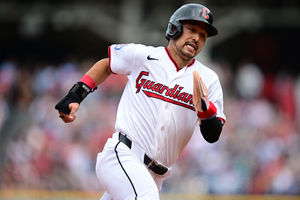
White Sox vs. Guardians ALDS Game 5 Betting Pick
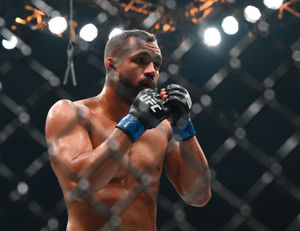

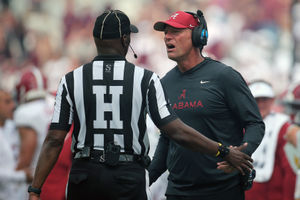
- College Football Week 6 Bets: Three Picks for Saturday’s Biggest Games
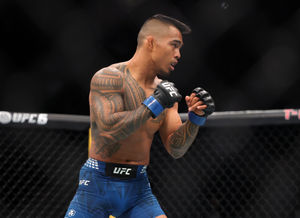
- UFC Fight Night Underdog Pick: Why Kai Kamaka III Is Worth a Bet
- WNBA Playoff Picks: Best Bets for Liberty-Dream and Aces-Valkyries
- Friday College Football Best Bets: Iowa-Washington and BYU-Iowa State
- UFC Vegas 122 Betting Splits: Where the Sharp Money Is Landing This Weekend
- Guardians vs. White Sox Game 4 Bet Picks, Prop Bets
- Buccaneers vs. Cowboys Odds, Prediction and Best Bet for TNF