What Does The U.S. Department Of Energy Do?

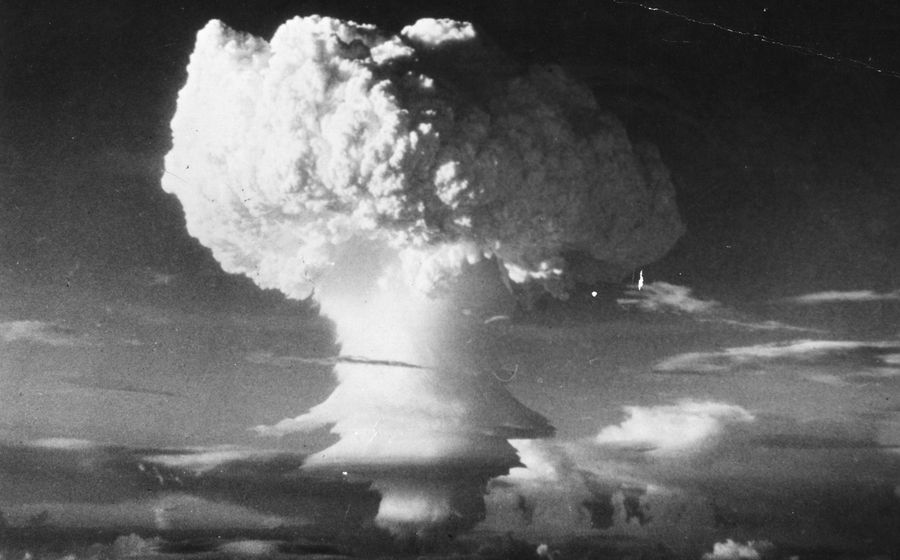 Photo credit: Three Lions/ [object Object]
 The Department of Energy (DOE) is a Cabinet-level department in the United States government, created in 1977. It is a descendant of—and consolidates the functions of—several predecessor agencies, among them the Energy Research and Development Administration (ERDA), which was itself a descendant of the Atomic Energy Commission (AEC). Broadly speaking, the DOE is the arm of the federal government that oversees the development and management of America’s nuclear reactors and atomic bombs.
It has other, lesser responsibilities, of course, relating to non-nuclear domestic energy production (and, somewhat counterintuitively, genomics) but a healthy plurality of the facilities it operates are research laboratories specializing in nuclear science and high-energy particle physics. It also operates facilities concerned with developing the non-nuclear components of nuclear weapons, and facilities and agencies specializing in the removal and storage of nuclear waste. Further, it manages the Nevada Test Site, where from 1951 to 1992 it and its predecessors oversaw the test detonation of enough nuclear bombs to render a 1,360-square-mile patch of the United States uninhabitably radioactive for the next several thousand years, at least.
The act that created the agency, The Department of Energy Organization Act of 1977, ostensibly resulted from the 1973 OPEC oil embargo, and the department’s foundation is typically presented as a response to the oil shortages and economic turmoil that embargo caused. Its founding statute shouts out “effective management to assure a coordinated energy policy” and consigns the nascent department’s nuclear research and waste storage mandates to the vague “and for other purposes.” This could lead a casual observer to believe, incorrectly, that the department’s primary function has to do with the production of fossil fuels, like oil.
Of course an important bit of context for the department’s somewhat misleading name and charter is the Cold War. The department came into existence pre-Gorbachev, after all, and as with the Soviet Union’s, virtually everything about the American nuclear program was shrouded in highest secrecy at the time. A more forthright and accurate name for the department would be something like “Department of Nuclear Energy”; for that matter, “Department of Nuclear Weapons,” if imperfect, would hit closer to the mark than the name it currently has, just based on the apportionment of its actual work, but of course no federal executive department has quite that frank a name.
We at Deadspin hope that this blog post has helped clear up any misunderstandings about what the United States Department of Energy is and what it does. Thank you.

Why NFL's Proposed 18-Game Schedule Doesn't Make Sense

MLB Playoff Teams Off to Shocking Slow Starts in 2026


UFC 327 Picks: Prochazka vs Ulberg Predictions and Best Bets


Why the Tar Heels Made a $50M Gamble on Michael Malone




Why None of These NBA Play-In Teams Are True Contenders
- NBA Picks Today: Best Bets, Odds & Predictions for Friday’s Full Slate
- The Masters Odds and Predictions: Top Picks for Augusta National
- Wednesday April 8th MLB Pitcher Props: Dylan Cease and Kyle Bradish Bet Picks
- MLB Picks Today: Best Bets for Diamondbacks vs Mets and Athletics vs Yankees
- Masters Betting Picks 2026: Best Value Bets Beyond Scottie Scheffler
- Best NBA Betting Picks and Predictions for Monday April 6th
- National Championship Bet Pick: Why Michigan Has the Edge Over UConn