Anthony Edwards not knowing A-Rod is proof that MLB has failed with young Black people

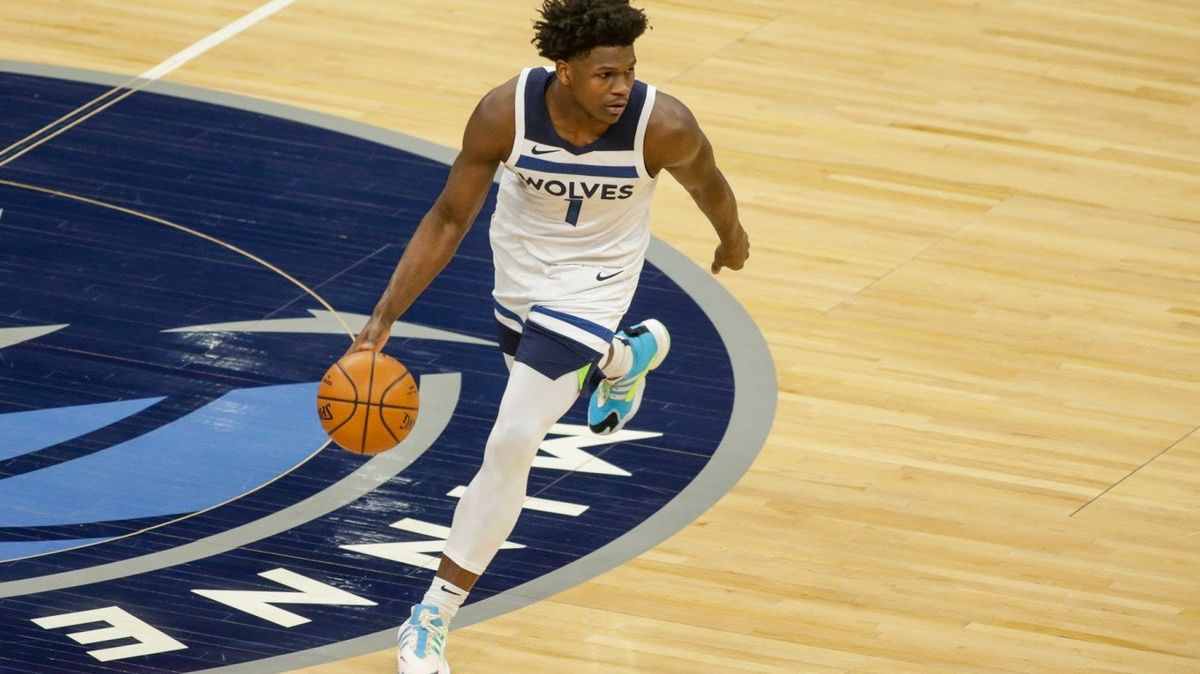 Anthony Edwards pulled a Mariah-like “I don’t know him” on A-Rod. source: AP
 I have an honest question.
Has there ever been a more glaring indictment on the disconnect between Major League Baseball and young Black people than this Anthony Edwards interview?
Minnesota’s Rookie of the year candidate was asked about former baseball star Alex Rodriguez becoming a part of the new ownership group of the Timberwolves. Rodriguez better known as “A-Rod” was a three-time AL MVP and arguably the most polarizing baseball player in the last three decades. Basically, knowing who Alex Rodriguez is, is MLB 101.
“I don’t know who that is,” Edwards responded.
What makes this so bad is that it’s not even Edward’s fault that he doesn’t know about Rodriguez or that he “don’t know anything about baseball.” That’s all on the MLB’s shoulders.
It’s no secret that baseball has had a problem reaching young Black people. It reveals itself in their demographics. Black players only made up about 8 percent of opening day rosters in the league in 2020. In 1986, Baseball reached its high mark for Black players at 19 percent, though in the 1970s the number reached around 27 percent when darker-skinned Latin American players were included.
Despite Major League Baseball’s efforts to increase diversity in the sport with programs such as RBI (Reviving Baseball in Inner Cities) and the Commissioner Rob Manfred’s Play Ball Initiative, the pro game has failed to appeal to a large majority of younger Black athletes. Some would argue that the league itself isn’t doing enough to increase Black involvement because they really don’t want Black people “infiltrating” the league and forcing the league to change its outdated rules and “play the right way” decorum.
Even guys like Edwards, who admits he played nearly every important position on the baseball field when he was younger, have no attachment to the MLB.
Baseball’s problems are easy to identify: The game is still too slow, the culture is prehistoric and there isn’t enough high-profile representation for Black kids.
Speeding up the pace and trying, organically, to make the game more exciting has been difficult. It’s going to take an increased emphasis on the league’s part to promote its Black stars and highlight their accomplishments to change this concerning pattern. Maybe the league’s social media accounts should emphasize sharing plays from the league’s Black stars more often, or profiling Black players on social media platforms.
Also, maybe if they tried to infuse cultural figures into the fabric of the game, similar to the way the NBA and NFL does, it could possibly help turn the tide. Just think about how cool it would look if people like Drake, Future, or Lil Baby were doing photo shoots with players and performing at events hosted by the MLB regularly.
MLB desperately needs to make its product more appealing to Black youth if it wants the game to thrive in the long run.
Adding more of a cultural imprint and making their Black stars even more visible could be the blueprint.
- World Series Game 1 Predictions: Rays vs. Brewers Picks and Best Bets
- UFC 333 Predictions: Best Bets for Volkov, Keita and Murzakanov
- UFC 333 Underdog Pick: Why Dominick Reyes Is Worth a Bet
- World Series Predictions: 3 Best Bets for Brewers vs. Rays
- Bears vs. Patriots Thursday Night Football Week 7 Betting Picks
- Guardians vs. Rays ALCS Game 6 Best Betting Picks
- Commanders vs. 49ers Picks: Best Bet for Monday Night Football