Oh, Hey, College Baseball Successfully Juiced Its Balls

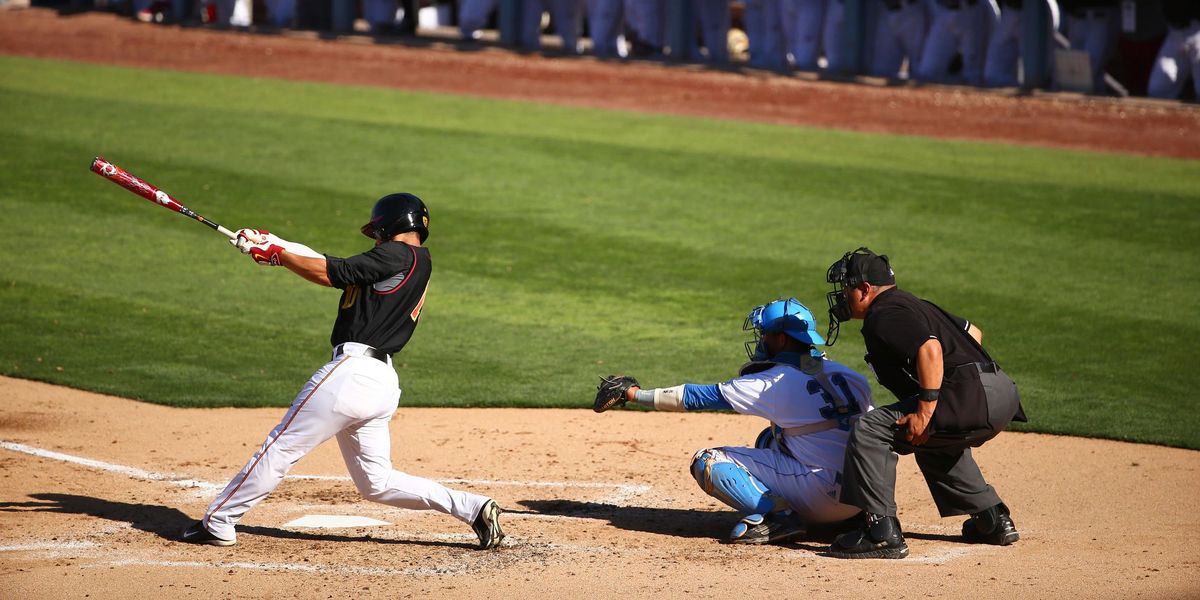
Home runs are up 39 percent in NCAA D1 baseball, at an even 0.5 per game through March 29, thanks to new flat-seamed baseballs. Through the same stretch of season last year, they were at 0.36 per game, and finished at a record-low 0.39. So, this is good news, at least for hitters.
The drop in power came after a 2011 introduction of what's called the bat-ball co-efficient of restitution standard (BBCOR), which was meant to make it so that bats don't trampoline the ball into the mesosphere every time you make contact. They don't, which is probably for the best since baseball games with football scores are no fun for anyone, but the drop in power had gotten out of hand. The problem was how to restore some, but not all power. The answer was basically reverse-engineering how soccer has repeatedly screwed up its World Cup balls.
For more than a decade now, right up until this previous World Cup, the exclusively designed balls used at the tournament have been very bad. The balls were bad because sports rely on physical instruments behaving predictably, and soccer balls have traditionally had a consistent drag and wake effect. Once Adidas started screwing with the seams of the balls, things went to shit and balls started sailing, knuckling, and not acting very much like soccer balls, leading to spectacular-but-come-on-kind-of-bullshit goals, like Tomas Rosicky dropping a flat-faced knuckler into side-netting on the U.S. Only for this past Cup did the shitheads manage to over-engineer their way back to getting a ball that behaves like the ball they set out to improve.
The problem with those soccer balls was that they all reduced the drag areas where air would gather as it passed over the ball. (Very simply, soccer balls need more drag so they can enter "low-drag" state at high RPM, which is how you bend a shot or pass.) For soccer balls, this effect is created by dips in the seams of the ball; but with baseballs, the seams are raised, creating—simplistically but essentially—the same effect. And what soccer was trying to avoid, college baseball was looking to recreate. So, college baseball flattened out the seams.
Here are the test results, as reported by baseballnews.com:
The test was conducted with an average ball exit speed from a machine at 95 mph with a spin rate of 1,400 RPM and a launch angle of 25 degrees. These parameters were set because they replicate the settings of a typical home run or a hit that could become a home run.
The average distance the raised seam ball traveled was 367 feet while the average distance the flat seam ball traveled was 387 feet — 20 feet further.
Basically, it worked.
One of the background concerns, though, has been how it would affect pitchers early in the season when weather is cold and pitchers have problems with grip. But by the NCAA's D1 numbers, there hasn't been any bump in batting average, at least:
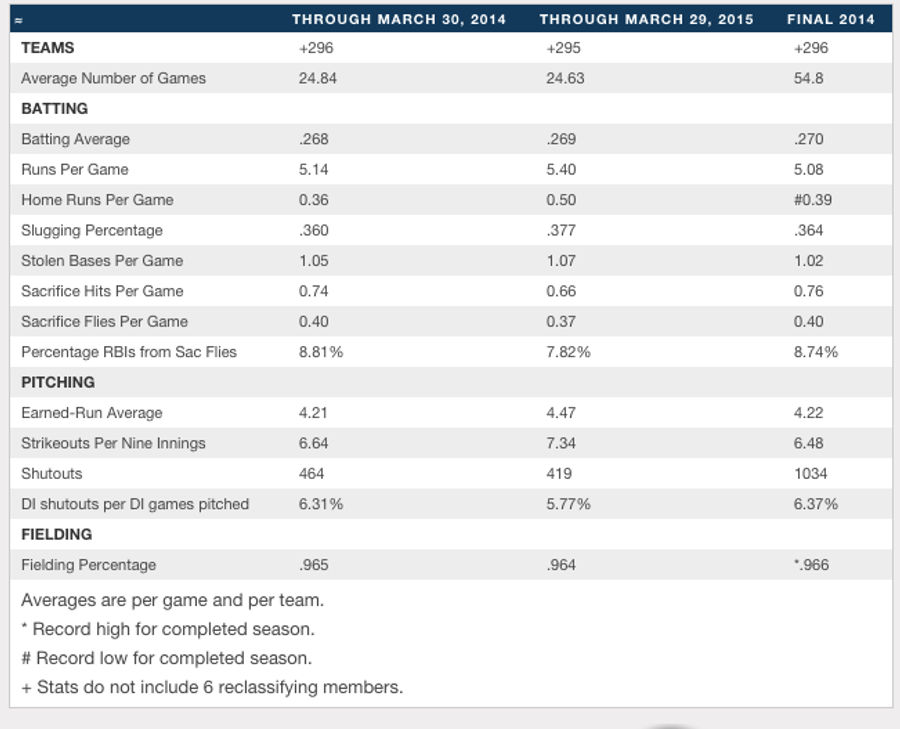
Ideally, we'd have some data about contact rates, swing-and-miss rates, or whatever, but this at least seems like evidence that the only thing that's really changed is the outcome when a batter really gets ahold of one.
So, good job, college baseball. Those are good balls.
Related


Two MLB Playoff Bets Stand Out on Monday

UFC 332 Was One of the Most Violent Cards in Recent Memory
Yankees vs. Rays Prediction: Best Bets for ALDS Game 2

New Orleans Could Send a Big Message on Monday Night


Mississippi State Looks Ugly in First Big Test

Why This Cheating Scandal Could Break Online Poker for Good
- MLB Playoff Picks: Padres vs. Brewers and Braves vs. Dodgers
- Lions vs. Panthers Prediction: Best Bet for Sunday Night Football
- UFC 332 Betting: Best Bets for Silva vs. Wang and More
- MLB Playoff Picks: Rays vs. Yankees, Padres vs. Brewers
- Week 5 College Football Betting: Three Picks That Stand Out
- Two UFC 332 Fights Are Seeing Major Line Movement
- UFC 332 Underdog Pick: King Green vs. Esteban Ribovics