You won’t have 15-year old figure skaters to kick around anymore

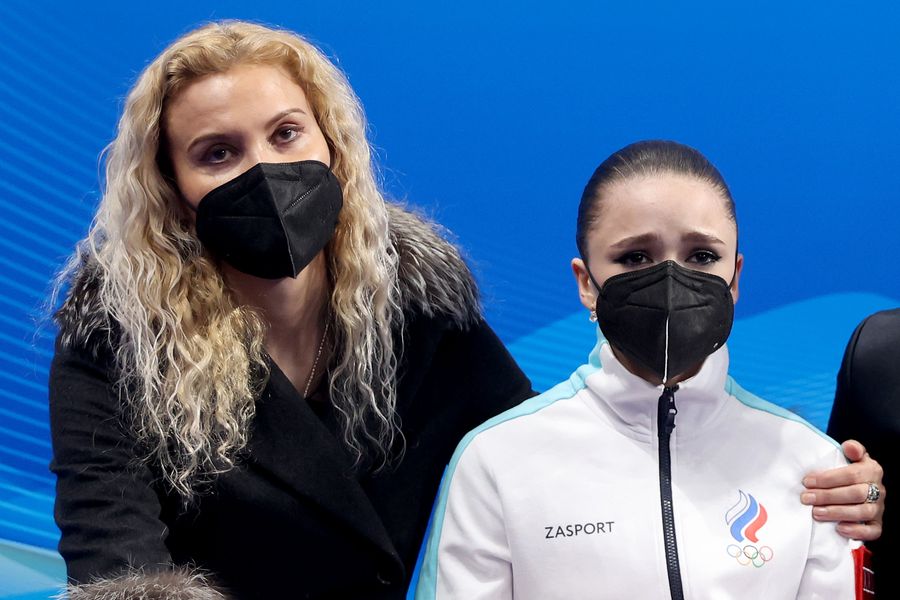 Kamila Valieva (r.), who was at the center of an Olympic PED controversy earlier this year. source: Getty Images
 Anyone remember the hot garbage fire that was the Olympic figure skating finals in February? For those who don’t, allow me to jog your memory — 15-year-old star Kamila Valieva, the center of a Russian Olympic Committee doping scandal, sobbing after falling twice as the pressure of the PED investigation got to her, scolded by coaches for her mistakes. The 17-year-old gold medalist, Valieva’s teammate, sitting quietly and alone on the sidelines, telling reporters that she felt empty after the win. The 16-year-old silver medalist, another Russian girl, crying and yelling that she hated the sport and never wanted to skate again. A once-in-a-lifetime experience destroyed for three young teenage girls.
Today, the International Skating Union announced that, in light of the debacle in Beijing, they will raise the minimum age for Olympic-level skating from 15 to 17 years old. The shift will be gradual, moving to 16 for the 2023-24 season and then to 17 for the 2024-25 season, allowing current young figure skaters to age into the requirements. The change is an effort toward “protecting the physical and mental health, and emotional well-being of Skaters.” The change will go into effect for figure skaters, ice dancers, speed skaters, and synchronized skaters.
The extremely public and painful Valieva saga certainly affected this decision. She was deemed a “protected person” because of her age and allowed to compete after testing positive for banned substances — essentially, the governing body decided that she didn’t seek out and take the drugs of her own free will and volition — but that allowance proved to have an enormous impact on the rest of the competition, as she and her Russian Olympic Committee teammates clearly felt the stress of their situation on a very deep and ugly level that they showed to the world in the aftermath of the final skate.
This raise in the age minimum for high-level competition has received positive responses from several active figure skaters. The change has long been demanded by current and former athletes throughout the sport who believe that a higher age minimum will allow the skaters more autonomy in their decision-making and better perspective on their situations. A great deal of athletes have been open about their struggles with body image issues, eating disorders, mental and emotional well-being, and an abusive coaching culture that leads to things like, for instance, being given PEDs and used as an unwilling pawn on your country’s quest for glory.
While this change won’t stop the abusive culture of the sport completely, as 17-year-olds are still vulnerable and as younger girls will continue to compete in non-Olympic events, it’s largely seen as a positive shift for the sport. One skater pointed out that it may even allow skaters to make the sport more of a profession, rather than only having a single shot at 15 or 16 years old to make their Olympic run.
And hopefully, this will stop another Valieva situation. Three things in life are guaranteed: death, taxes, and the Russians doping their athletes. At least the doped skaters won’t be young kids anymore.




Five WWE Superstars in the Spotlight Ahead of Wrestlemania

Best NBA Betting Picks and Predictions for Monday April 6th



Five Early 2026 MLB Takes That Might Already Be True


- NBA Betting Picks April 4th: Three Best Bets for Saturday's Slate
- Michigan vs. Arizona Bets: Wolverines Hold Edge in Final Four Showdown
- Best NBA Betting Picks Today: Friday April 3rd Expert Predictions
- MLB Pitcher Props Today: Best Baseball Bets for April 3rd
- MLB Picks Today: Brewers vs Rays and Reds vs Pirates Predictions
- NBA Picks Today: Celtics vs Heat, Hawks vs Magic, Nuggets vs Jazz Bets
- MLB Best Bet Today: Los Angeles Angels vs Chicago Cubs Betting Pick