The Impending Death Of The Salary Cap Won't Be Doomsday For The NFL

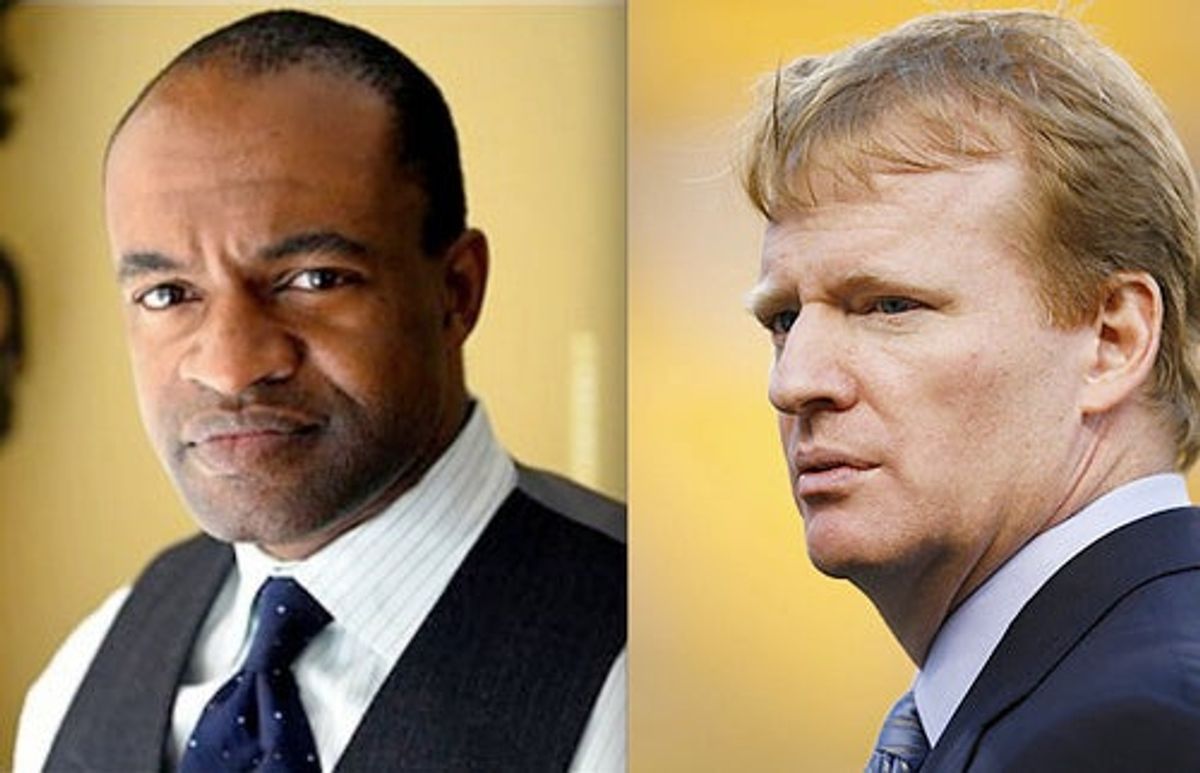
Roger Goodell said that with labor talks stalling, a new CBA is not in the near future and next season will likely see the NFL without a salary cap. Say goodbye to that famed parity? The short answer: no.
The NFL has the weakest player's union in sports. Inadequate retirement plans, mandatory slotting for rookie signing bonuses, no guaranteed contracts, etc. It's a tired story. But the upside is that it's an owner's league, and the NFLPA has little leverage to force a better CBA. And those owners are just fine without one.
We are not headed toward a labor apocalypse, where, like baseball, a select few teams have the ability to grab up all the top players while two thirds of the league has no shot at competing. I'm no economist, but neither are you, so here's the answer in simplest terms: there's an ungodly amount of money flowing, and it's more than enough for everyone.
The average team brought in $59 million in ticket sales and concessions last year. That's the kind of thing that varies by the quality of the team's play. But the real source of NFL parity is in the TV deals. Contracts with the networks paid each and every team $94 million in 2008. A DirectTV deal landed them $22 million more. And that gets paid out equally, across the board. A CBA, or lack thereof, will have no impact on that. ESPN's deal, for example, runs through 2013.
These are numbers in the middle of a recession, too. Revenues actually went down last season for some teams, the first time in a decade that this has happened. Yet only two teams were in the red, including the Raiders, who still have a franchise valued at $797 million. And that's the lowest in the league, so they're more valuable than all but three baseball teams.
All told, NFL revenues totaled $7.6 billion. And because it's coming from TV deals, it's very hard for one team to pull in much more money than another. The highest grossing team (Washington) only pulls in 66 percent more than the lowest (Detroit). In MLB, it's 270 percent. Starting to see why uncapped football would be a different story?
The two sides differ on just how much of those revenues the players see: the league says 75 percent, the union says 60. It's a moot point. With NFL teams averaging 32.3 million in operating income — that's after expenses, so it's pure profit — there's plenty of cash for each team to lure top free agents if bidding wars develop. No one's going to be left out due to lack of funds.
I admit I've oversimplified things, and one concern about having no cap would be the accompanying lack of a salary floor, which could induce cheapskate owners to hoard their money without putting a decent product on the field. But it's indisputable that the economic realities of football couldn't be more different than those of baseball, and even without a CBA in place next year, the league as we know it isn't going to change.
So relax.
Goodell: Slow Labor Negotiations Likely Mean No Salary Cap In 2010 [AP]
NFL Team Valuations [Forbes]
The 5-0 49ers Are Finally Getting the Respect They Deserve
Jorge Masvidal Makes $100K Pick to Beat Islam Makhachev
Dana White's Contender Series Week 10 Predictions and Picks
Guardians vs. Rays Prediction: Picks, Odds for ALCS Game 1
- Three Longshot NFL Futures Worth Betting in Week 5
- Falcons vs. Ravens Odds, Prediction and Best Bet for Sunday Night Football
- White Sox vs. Guardians ALDS Game 5 Betting Pick
- UFC Vegas 122 Betting Odds: The Biggest Line Moves Before Allen vs. Duncan
- UFC Vegas 122 Picks and Predictions: Three Bets for Allen vs. Duncan
- College Football Week 6 Bets: Three Picks for Saturday’s Biggest Games
- UFC Fight Night Underdog Pick: Why Kai Kamaka III Is Worth a Bet