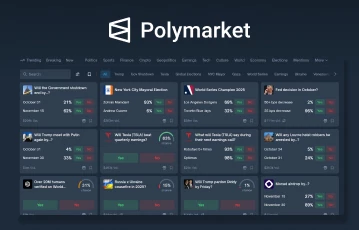
During this Polymarket review, I found that the site is currently running a limited beta. This means it isn’t yet open to all US traders, but a select few can trade on outcomes across sports, politics, culture, cryptocurrency, and economics.
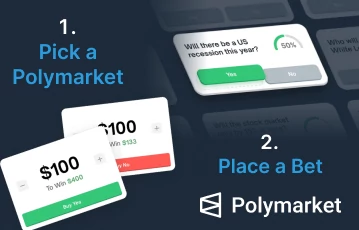
Once Polymarket fully launches in the US, eligible traders will be able to make predictions using Yes/No outcome contracts. For example, you could trade on “Will the US confirm that aliens exist in 2026?” If your prediction is correct, each share pays 1.00 USDC when the market resolves. Read on to learn how Polymarket works and performs overall.
| Support Types | E-Mail, Live Chat |
|---|
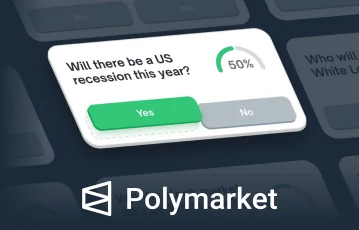
Polymarket isn’t your typical betting site. Quite the opposite, in fact. It’s a place where you buy and sell shares tied to future event outcomes across sports, politics, pop culture, economics, and cryptocurrency. Every market comes with two sides, Yes and No, and you choose the side you think will match the final result.
Each share stays between 0.00 and 1.00 USDC, and the price you see shows how confident other traders feel about an outcome. For example, a 0.70 USDC for “Yes” suggests the market leans toward that result happening, while a 0.30 USDC for “Yes” suggests the opposite.
Two key factors shape the price:
Polymarket typically shows the midpoint between these two numbers as the event’s displayed probability. For example:
If the gap between the bid and ask price grows too large, Polymarket switches to showing the last traded price, providing a clearer sense of where the market last agreed. When the market resolves, if your shares match the outcome, you receive 1.00 USDC per share. If your pick doesn’t match, the shares lose their worth.
All new Polymarket traders who use the promo code SPIN can claim an exclusive welcome offer when signing up. Simply enter the promo code during registration and make a qualifying deposit of at least $10 to receive a $50 trading bonus. This gives new users the extra funds needed to explore Polymarket’s prediction markets and even place their first trades.
18+ Only. Restrictions and eligibility requirements apply. Not available in all jurisdictions. Trading involves high risk and may result in loss of your entire investment. See polymarket.us/tos for more information. The Polymarket US App serves as an independent software provider and affiliate of Polymarket US and Polymarket Clearing, the CFTC-regulated derivatives exchange and clearing organization.
You won’t find any other welcome bonuses for the Polymarket prediction site. You will, however, find another two reward programs for all Polymarket traders. Here’s how both programs work:
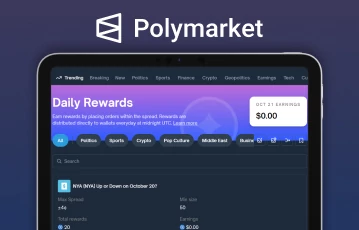
Polymarket refers to this as the Liquidity Rewards Program. You get rewards daily by placing limit orders that help keep the market active and balanced. The closer your order is to the market’s average price, the higher your reward will be. Moreover, the minimum daily payout is $1; anything below that won’t be paid. Plus, the amount you receive depends on how much your orders contribute to the market in both size and price. Therefore, if your limit orders beat others, you’ll receive more rewards.
You can check your accumulated rewards on the Rewards page, see which markets offer rewards, and track how much you’ve accumulated. Rewards are paid automatically every day at midnight UTC.
During this Polymarket review 2026, I also found that the prediction market offers Holding Rewards, which provide a 4% annualized return on eligible positions. This is calculated based on your “total position value” in specific markets, using the most recent mid-price for your Yes and No shares. Some of the events currently eligible for the program include:
Polymarket plans to launch a new reward and oracle-resolution system later this year. When that happens, you’ll be able to move your existing positions to the updated system with a simple 1-click migration.
For a prediction market site covering such a wide range of events, I wanted to ensure that trading remains seamless. Therefore, how does Polymarket perform in terms of usability?
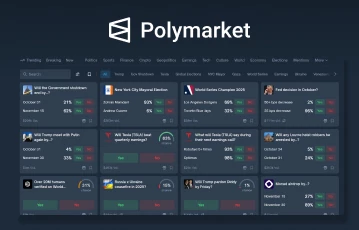
Once I signed up, my profile icon appeared at the top right corner, with the notification button right beside it. The portfolio and cash options are also located at the top right, making key account information easily accessible. Just below that, there’s a horizontal lineup of all the available Polymarket prediction markets, including Sports, Politics, Crypto, and Culture. The lineup also features Trending, Breaking, and New options. When I clicked on “Trending,” I could see the top markets on the site, along with their trading volume.
Below these categories, a search bar lets you jump directly to any event you want. For example, when I searched for the “Super Bowl,” it returned multiple results for that event. Considering how vast the prediction markets are, this search tool is a real time-saver. The interface does change slightly depending on the section you’re browsing. For instance, when I clicked on “Economy,” the search bar appeared at the top, whereas in “Crypto,” it didn’t. Still, categories remain easy to browse across the site.
I also noticed that switching between sections is seamless. Pages loaded in under three seconds with a stable network, and trading on prediction markets felt lag-free. There’s a static bottom menu with options like Home, Search, Breaking, and Portfolio, so the search icon is always within reach, no matter where you are on the site.
In terms of color, Polymarket offers a dark blue theme, with “Yes” and “No” clearly marked in green and red. This makes it quick to see which side of a market you’re looking at. Overall, Polymarket is easy to use, despite its extensive coverage of markets. I agree with other Polymarket reviews that rate the site highly for usability.
The Polymarket app I found on the Google Play Store seems to focus only on politics, and when I launched it, it redirected me to the main site. This suggests a dedicated mobile app might be in development. However, it’s not a dealbreaker. Polymarket offers a progressive web app (PWA) that functions similarly to the mobile site, providing the convenience of trading outcomes on the go. Aside from minor layout differences in the side menu, the PWA functions almost exactly like the desktop site.
Polymarket currently supports USDC, a stablecoin, for both deposits and withdrawals. You can buy USDC using MoonPay with a Visa, Mastercard, or bank account. Moreover, you can deposit USDC directly from exchanges like Coinbase or from other wallets. Polymarket supports several networks, including Polygon, Ethereum, Arbitrum, Base, and Solana. When you deposit via a supported chain, your tokens are automatically bridged to USDC.e on the Polygon network.
Withdrawals are completed in USDC. Polymarket supports Hop withdrawals, which let you move USDC from Polymarket to another Ethereum address quickly and securely. During my review, I found that there are no Polymarket fees for depositing or withdrawing USDC, or for trading shares. However, third-party services like Coinbase or MoonPay may apply their own transaction fees.
If you’re wondering what customer support is like on Polymarket, reliable is the word. The brand offers assistance across several channels. When I clicked the blue chat icon in the bottom right of the site, I was connected to a live agent who was polite and offered the guidance I needed.
You can also reach out via Discord: join the Polymarket Discord server, go to the Support sidebar, and select #open-a-ticket to start a private conversation with a team member. A quick security tip: don’t share personal info. True Polymarket support staff will never DM you first, and they’ll never ask for your private keys.
Outside of chat, Polymarket also offers email support. When I submitted a question, I received a thoughtful and complete reply within 24 hours. If you’re just getting started or prefer self-help, Polymarket’s FAQ center is a goldmine. It provides detailed guides on how the site works, including instructions for depositing, withdrawing, and placing trades. There are even video tutorials that guide you through key processes, such as making your first deposit or trade. To access this, click your profile and tap Documentation.
What’s especially helpful: on the FAQ page, there’s a question bar. Click “How do I contact support?” to open an interface where you can type your question. This way, you can access AI assistance and relevant documentation links quickly, without having to search manually.
I wanted to confirm whether Polymarket is legit, and my research shows that it has received approval from the Commodity Futures Trading Commission (CFTC). This comes through its acquisition of QCX, which lets Polymarket launch new markets in a way that complies with regulations. I also noted that the brand only permits traders who are 18 or older.
The Polymarket site is secure, but you can add even more protection by enabling Two-Factor Authentication (2FA). I did this by tapping my profile icon, choosing Account, and enabling 2FA from there.
I didn’t see any responsible-play tools during my assessment, no limits, reminders, or self-controls. I’m hoping that once the site fully goes live, those tools will be available because they’re important for maintaining a healthy level of activity.
If this Polymarket safety review gives you the confidence you need, you can join Polymarket and claim your welcome bonus using the code SPIN for a trading bonus of $50 when you deposit $10.
As mentioned earlier, Polymarket covers a wide range of prediction markets. These include sports prediction, politics, culture, the economy, and cryptocurrency. Here’s what I found under each category during my review.
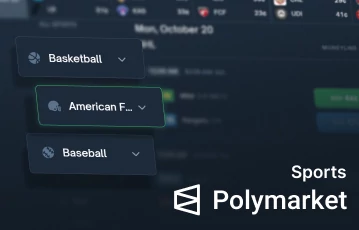 When I opened the Polymarket sports prediction section, I counted 12 sports you can trade outcomes on. These include football, cricket, golf, tennis, and soccer. If you’re into esports, I found markets for CS2, LoL, Dota 2, Valorant, and Mobile Legends: Bang Bang as well.
Polymarket also lists live sports prediction markets. During my review, I came across live markets for NFL, NBA, and NHL games. I even saw a live cricket market for India vs. South Africa. In that case, you could trade on India to Win or South Africa to Win through simple Yes/No outcome contracts.
Because everything on Polymarket is structured as outcome shares rather than point spreads or parlays, this isn’t traditional Polymarket sports betting; it’s rather sports prediction. Therefore, you’re trading on whether an outcome will happen, not placing a sportsbook wager.
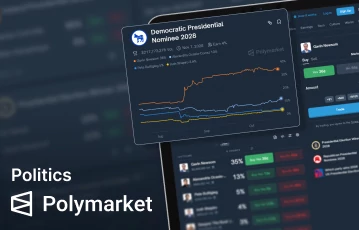 I also spent time inside the Polymarket politics prediction market, and it was packed with categories. Some of the topics I saw were tied to Trump, the Trade War, the Chilean Election, Global Elections, and the US Election.
To show you how it works, I opened the US Election section. Inside, I found markets such as:
In the Presidential Election Winner 2028 market, JD Vance showed a 30% price, and Gavin Newsom showed 18% during my review. If you wanted to buy Yes for JD Vance, the price was 30¢, and buying No sat around 71¢. These prices move as traders buy and sell shares, depicting the market’s confidence in each outcome.
Keep in mind that even though Polymarket lists several election-related markets, it’s not the same as Polymarket election betting. That’s because you’re trading outcome shares in a prediction market, not placing sportsbook wagers just like I explained earlier.
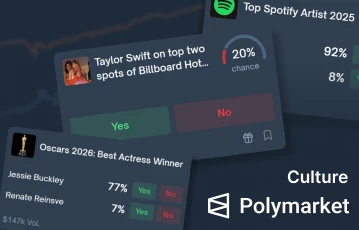 Checking out the Culture section on Polymarket was enjoyable for me because the markets covered a lot of buzzy topics. I saw categories tied to Tweet Markets, Movies, YouTube, the Oscars, and the Grammys. There were also sections dedicated to MrBeast, Best of 2026, and Music, which pulled me in quickly.
To test it out, I opened the Top Spotify Artist 2026 market. During my review, Bad Bunny sat at 96% Yes, and Taylor Swift sat at 3% Yes. Here’s what those probabilities meant in prices:
These prices shift in real time based on how confident other traders feel about each outcome. Other Culture markets I came across included:
Each one uses the same Yes/No event-contract structure that defines Polymarket prediction markets.
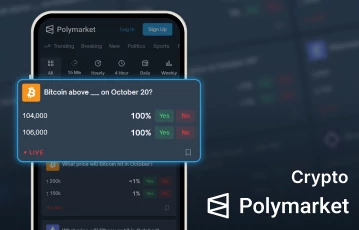
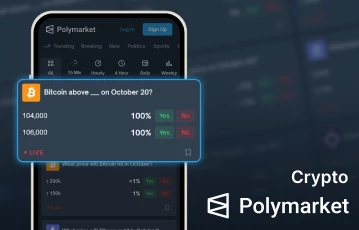 This Polymarket section focuses on major cryptocurrencies and crypto-related developments. I came across markets linked to Bitcoin, Ethereum, Solana, XRP, Dogecoin, and MicroStrategy. Here are some of the notable event contracts I found:
Polymarket’s economics prediction markets kept my attention because they touch on real policy moves and major macro storylines. I saw categories tied to Trade War, Fed Rates, Inflation, Taxes, Macro Indicators, and Treasuries. When I tapped into the Trade War section, the markets covered questions like:
I also saw high-volume markets such as:
Under Inflation, I had the option to trade on several ranges. For example, in the December Inflation Argentina – Annual market, the <24% bracket was priced at 1% Yes, while the 24-26.9% bracket sat at 3% Yes. Those tiny prices showed the market didn’t see either range as likely at that moment.
Another market I checked was How high will inflation get in 2026?
When Polymarket fully launches in the US, you’ll want to get the most out of your time on the site. Here are some tips I found especially helpful:
Polymarket’s terms of use clearly explain what it expects from every trader and how the site operates. Going through them ensures your account stays in good standing. For example, during my review, I saw that you have to be at least 18 years old to trade. Breaking that rule could lead to account termination. Simply put: stick to the rules, and you won’t run into avoidable issues.
The Polymarket Discord has over 64,000 members. Joining gives you access to help when you need it and insights from other traders. During my review, I found the community helpful for understanding market trends and discussing strategies, making the experience more social and interactive.
If you’re new to prediction markets, Polymarket’s Documentation tab in your profile is useful. The help center explains how Polymarket works and how markets are created. You’ll also find clear instructions on deposits and withdrawals. Spending time here early will save you a lot of confusion and help you trade more confidently.
Trending markets show what other traders are actively monitoring. This can guide your own predictions. For instance, during my review, I saw over $164M in volume on the Fed decision in December. Contracts for a 50+ bps decrease were at 1%, while a 25 bps decrease sat at 86%, showing where the market leaned. Paying attention to trending markets helps you understand market sentiment at a glance.
Enable Two-Factor Authentication (2FA) to prevent unauthorized access. If Polymarket eventually adds responsible-play tools, make use of them to keep your trading experience balanced. Using these features ensures your account stays secure and your activity stays under control.
With Polymarket still a relatively new platform, especially with its re-entry into the US, new features are being introduced all the time. Here, we’ll highlight some of the latest exciting aspects of using Polymarket as your prediction markets platform.
Ahead of the NFL season, Polymarket announced on September 8 the introduction of a “Squads” feature on its platform. This feature is all about enhancing the social aspect of using prediction markets. Instead of having to use your messaging app or social media to discuss your favorite picks, you and your betting buddies can bring your group chat to the world’s largest prediction market platform.
Your “Squad” is private and can only be accessed through invitation. When you and your friends are in, you can chat about upcoming games or markets, share positions, see what other members of your “Squad” are trading, and trade alongside directly from shared positions.
Polymarket isn’t available to all US traders yet, but the site is working toward full regulation to offer access to a wide range of Polymarket prediction markets. From what I can see on the beta mode, these markets will cover sports prediction, politics, culture, crypto, and the economy.
In terms of usability, the website already provides an intuitive interface for trading outcome contracts. There’s also a progressive web app that lets you stay active on the go. Customer support is reliable, with live chat on the site and help through Discord. The FAQ center is thorough, offering guides and even video tutorials on common tasks like signing up, depositing, and withdrawing funds.
Payments are done using USDC, but traders can also buy USDC using providers like MoonPay with Visa, or transfer it from crypto exchanges. Polymarket supports deposits over multiple networks, including Polygon, Ethereum, Arbitrum, Base, and Solana, which are automatically bridged to USDC.e on Polygon. Security is great, with the option to enable Two-Factor Authentication (2FA) to protect your account. Don’t forget to claim the latest Polymarket welcome offer; deposit $10 and get a $50 trading bonus when signing up and meeting the promotion requirements.
If all of this sounds like something you’d like to try, click the banners on this page to visit Polymarket and claim your welcome bonus.
Yes, Polymarket is available in the US. So far, only a few states have put some restrictions on Polymarket:
Polymarket isn’t a traditional betting site. Instead, you trade outcome shares on events using simple Yes/No contracts. Each share settles at $1.00 if your prediction is correct.
No. Polymarket doesn’t charge fees for trading outcome contracts, deposits, or withdrawals. However, intermediaries you use to buy USDC, such as MoonPay, Coinbase, or other crypto wallets, may charge standard transaction fees.
Yes. Polymarket is safe and operates with approval from the Commodity Futures Trading Commission (CFTC). For extra account protection, you can enable Two-Factor Authentication (2FA).
Absolutely! There’s a great Polymarket welcome offer. Simply deposit $10 get a $50 trading bonus. Make sure you read all the terms and conditions before you attempt to join, and check above to see where Polymarket is legally available in the US.
Loading …