NFL Won't Chip In On A $100 Million Football Brain Study At Harvard

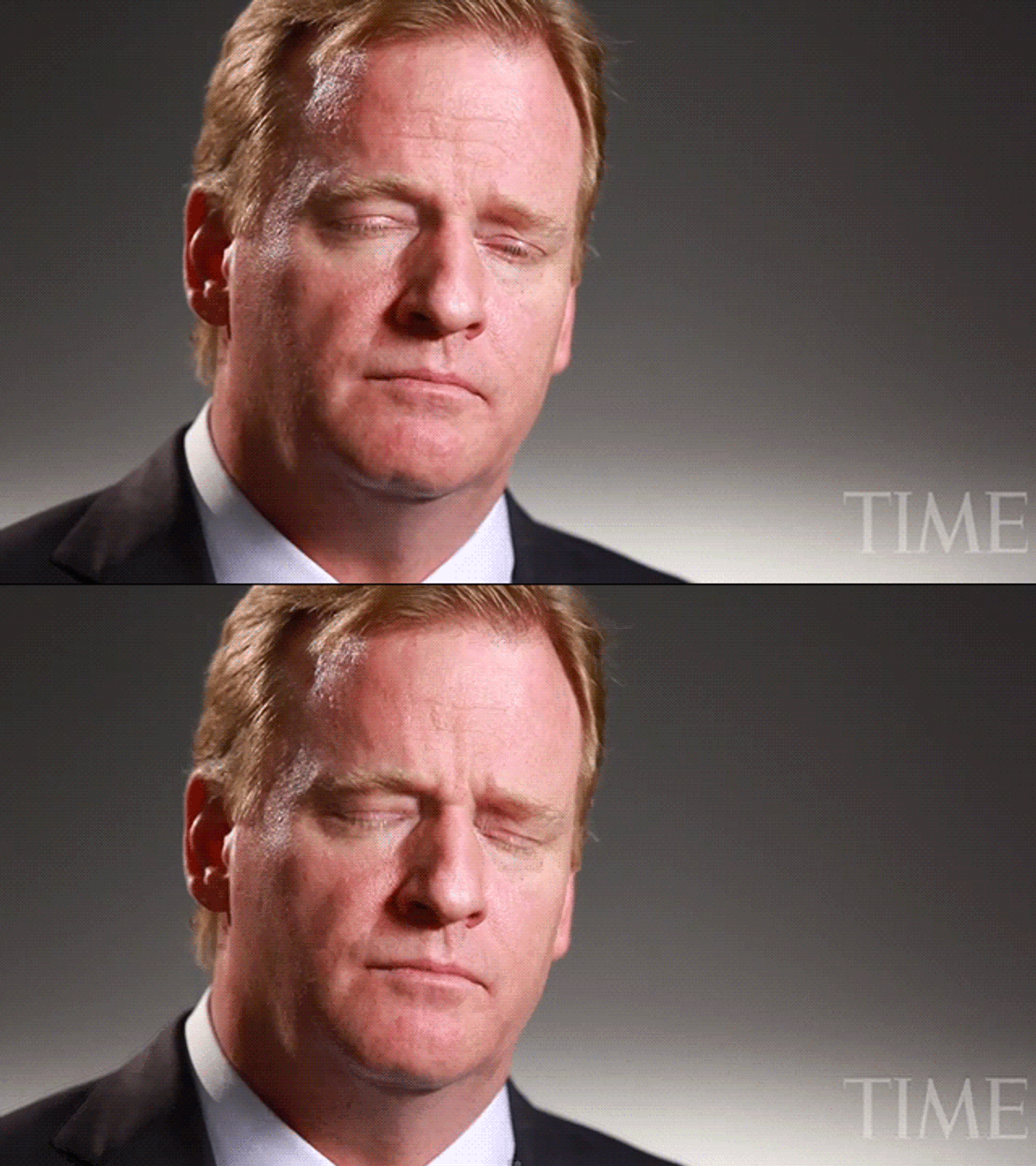
According to Outside the Lines, a $100 million grant to fund a Harvard study that would take a long-term look at CTE and brain trauma in former players has been changed into, essentially, an NFL contract.
The "grant" was never actually a grant, by strict definition. It was a promise and a PR ploy intended to get the NFL to acquiesce into putting up half of the money. It didn't work out, and now Harvard has to hit a specific set of benchmarks every year (though what those are still unclear) to continue to be funded.
But the NFLPA never intended to give $100 million to Harvard, "Outside the Lines" has learned. The announcement was a public relations gambit by the union to pressure the NFL into putting up half of the money for a study that would address fundamental questions about player health, including the long-term impact of concussions.
The ploy backfired, touching off a behind-the-scenes power struggle between the NFL and the NFLPA over tens of millions of research dollars and leaving Harvard officials struggling to explain how an initiative that involves 10 schools, 16 medical centers, dozens of researchers and 1,000 retired NFL players will be funded.
So the NFLPA was trying to get the NFL to pay up, and it ended up blowing up in its face, so now it's got to scale back expectations on the study. But the question is, why would the NFL not want to fund this study? After all, since its come-to-Jesus heel-turn on brain trauma, it's invested a large sum of money with the military and other private groups to do research on brain trauma.
One theory is that this particular kind of study, a long-term, longitudinal look at exclusively football players, is not something the NFL is interested in, even though it's exactly the kind of thing that is missing from contemporary CTE research.
Here's :
"The NFL, they're not necessarily in the business of the public good, they're in their business," said Eric Nauman, a professor of biomedical engineering at Purdue University who has studied the effects of football-related head trauma on kids and whose colleagues have received some funding from the league. "So I can understand why they might not be pushing some of the research."
Daniel Perl, a professor of pathology at the Uniformed Services University of the Health Sciences in Bethesda, Md., and a neuropathologist who has studied the brains of former NFL players, said he does not believe current research will address the doubts raised by the league or establish the prevalence of CTE.
That would require the kind of long-term study that is not currently funded by the NFL — or anyone else.
So here we have a seemingly perfect mix of scope and platform to further the study of just what the hell the NFL, and by proxy all sorts of other sports and activities, actually does to your brain. And we're pumping the brakes, possibly because the NFL is abiding by the old cross-examination rule: Never ask a question you don't know the answer to.
[ ESPN]
Why the UFC Released Undefeated Bantamweight Farid Basharat
Why the Milwaukee Brewers Are Built to Win the World Series

The Most Shocking WWE Moments Fans Never Saw Coming
- Cowboys vs. Packers Prediction: Best Bet for Sunday Night Football
- UFC Edmonton Best Bets, Predictions and Fight Picks
- Rays vs. Guardians Game 4 Best Player Props Betting Picks
- College Football Week 8 Best Bets: Ohio State, Alabama and More
- Joaquin Buckley Plummets From -300 Favorite to Underdog at UFC Edmonton
- WNBA Finals Picks: Dream, Valkyries and Gabby Williams Best Bets
- UFC Vegas 122: 5 Underdogs Drawing Sharp Money This Weekend