Retired NFL Players Shown To Have Humongous Brain Deficits

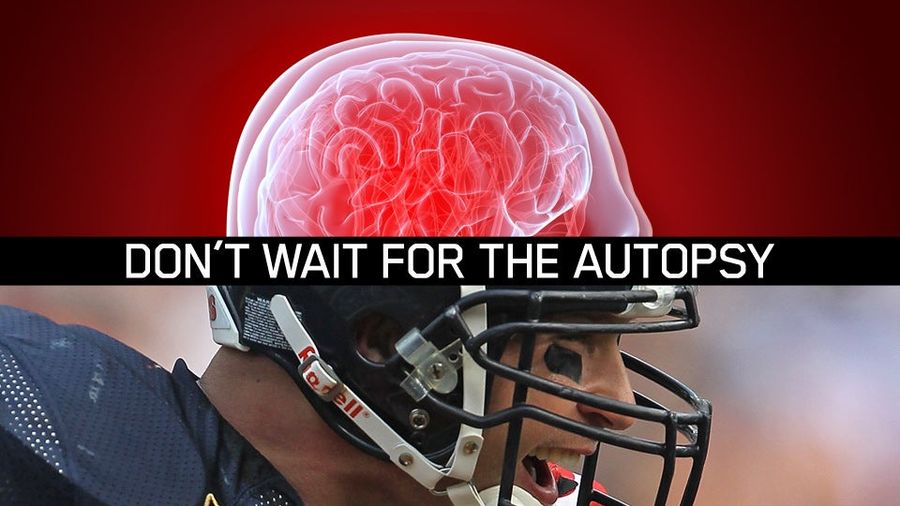
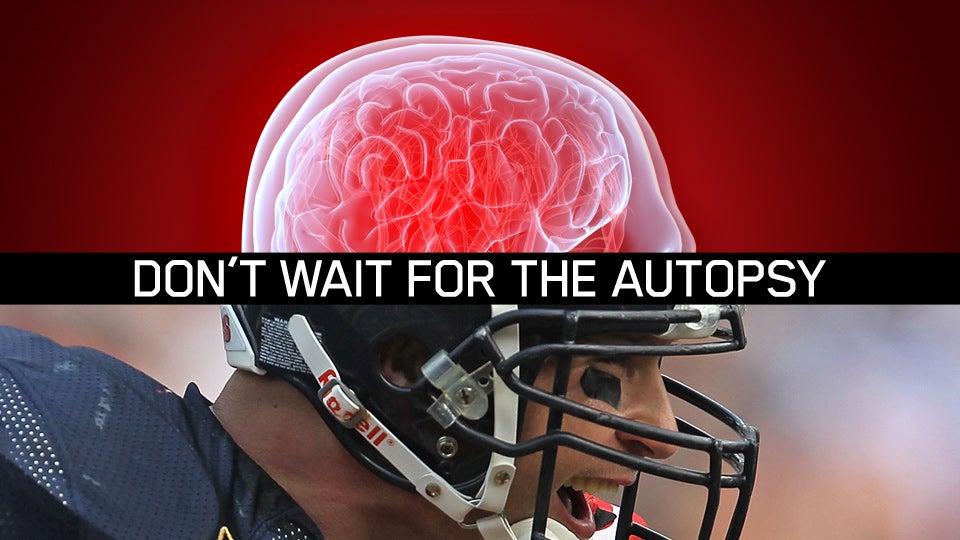
Retired NFL players' brains don't work nearly as efficiently as they should. And while that sounds like one more brick on the wall of evidence that football is awful for your brain, it actually goes a little deeper.
In a new study out of London's Imperial College, researchers used fMRI scans to measure brain activity while the retired players (and a control group) rearranged colored balls in tubes in as few steps as possible. The NFL players' brains had to work much harder than the control group's, particularly in the frontal lobe.
Here's Dr. Adam Hampshire, the lead author on the study:
The results tell us something very interesting about the human brain, which is that after damage, it can work harder and bring extra areas on line in order to cope with cognitive tasks. It is likely that in more complicated real world scenarios, this plasticity is insufficient and consequently, the executive impairment is no longer masked. In this respect, the results are also of relevance to other patients who suffer from multiple head injuries.
Observing the frontal lobe is an important distinction. That region of the brain is responsible for what's called executive function. That includes things like reasoning, planning, and problem solving—the tasks that actually make your brain work. Other tests looking at living players have failed to determine whether or not executive function was affected in retired players more than in the general population, so this is a positive step, though very early for this line of research.
On that note, actually, you should be cautious of taking this study at face value. The players observed here consisted of 13 former players "who believed they were suffering from neurological problems affecting their everyday lives as a consequence of their careers." Thirteen isn't the biggest number to begin with, but that's the most obvious selection bias in the world. Of course you're going to find issues in a group of players that has already noticed symptoms on their own. It's entirely possible that once it branches out further with random players, the results seen here will be less pronounced, or even nonexistent.
Here's why the study matters, though: The testing wasn't for chronic traumatic encephalopathy (CTE), which outside of one PET scan trial can't be diagnosed in living patients. Instead, it's getting out and looking at living patients. And it's doing that by opening a new thread in the discussion. As much as science needs to bolster the body of research around CTE, it also needs broader studies that look at other ways the brain is affected. Different angles in, converging on the question of what the hell goes on with a consistently traumatized brain.
The next step of this study needs to look a a larger and more random sampling of retired and active players, preferably across multiple seasons after establishing a baseline. Of course it does. And maybe it ends up being a dead end at that point. But either way, it's important to find out.
Related

- Best NBA Betting Picks and Predictions for Monday April 6th
- National Championship Bet Pick: Why Michigan Has the Edge Over UConn
- UFC Vegas 115 Betting Picks: Moicano vs. Duncan Headlines April 4th Card
- NBA Betting Picks April 4th: Three Best Bets for Saturday's Slate
- Michigan vs. Arizona Bets: Wolverines Hold Edge in Final Four Showdown
- Best NBA Betting Picks Today: Friday April 3rd Expert Predictions
- MLB Pitcher Props Today: Best Baseball Bets for April 3rd