Serena Williams Is Back, And She's Not In The Mood To Talk Drugs

 credits: Kevork Djansezian | source: [object Object]
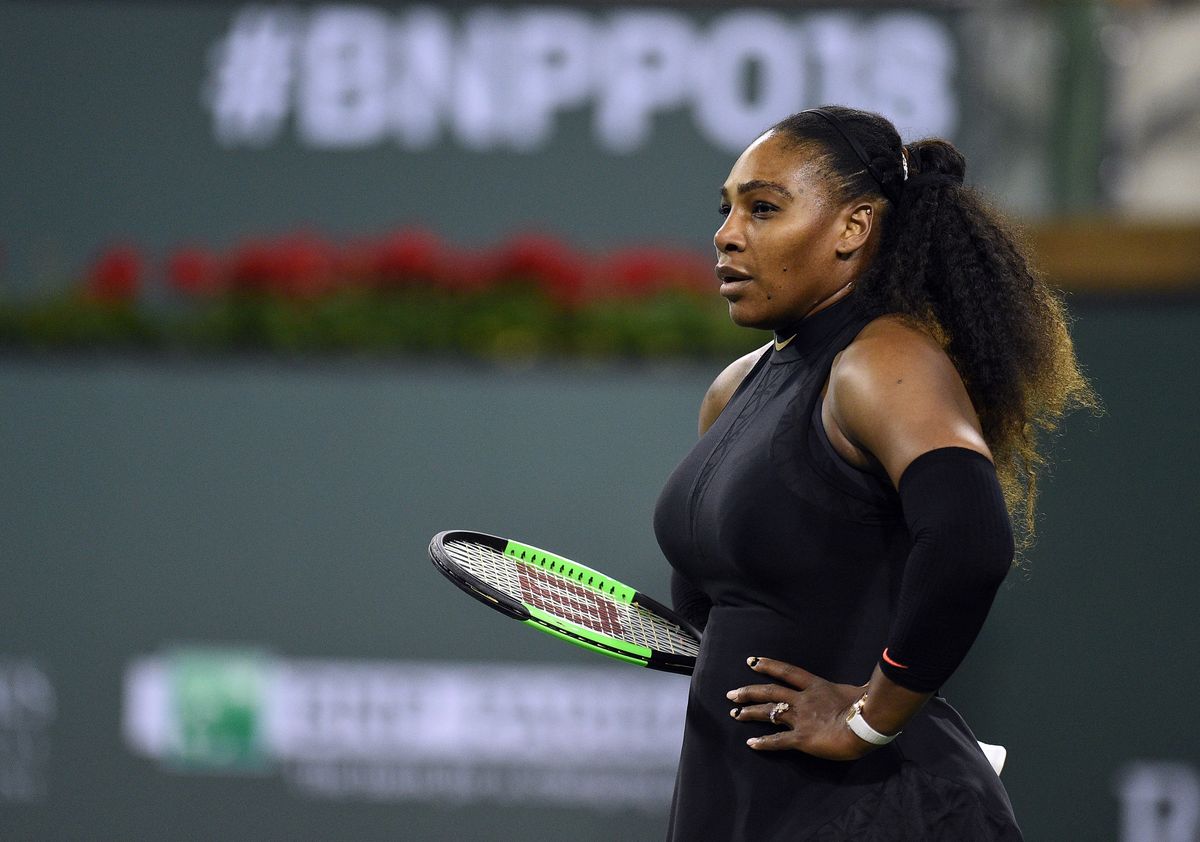
 INDIAN WELLS, Calif. — The first two points of Serena Williams’s comeback ended on unforced errors, and the arena, just over half-full on a cool desert night, was silent, totally, as if smothered by a heavy quilt. Maybe they weren’t sure to expect, after the childbirth, the complications, the blood clots, the recovery. Maybe errors, and uncharacteristic losses, would be part of the process. Then her strokes started to fill out into their familiar power and precision. Then she won a tight first set, and a second riddled with breaks of serve on both ends, and thus the whole match against world No. 53 Zarina Diyas, 7-5, 6-3.
“You’re my queen, Serena,” howled one fan in a quiet moment in the first set. This was also largely the tenor of questions asked of Williams in the post-match press conference. The first post-baby match was the first step in what Williams often referred to as a “journey,” and she explained that some things feel different than they used to feel.
Serena didn’t mind watching tennis while she was off the tour, though she used to find that painful when out with injury.
Serena now felt the urge to cry right before a tennis match, because she wasn’t with her six-month-old, she said, laughing.
Serena now feels like a plucky upstart testing herself against the top players, something she hasn’t felt since she was young.
Serena now smiles when entering the arena, even though she used to keep her gaze fixed on the ground to maintain her focus.
One thing has not changed, though, and that’s her reaction to a certain line of questioning. Last night a report, speaking barely above a whisper, interrupted the party to ask something inaudible even to me, just three rows back. Serena said, “Can you talk louder, so everyone can hear you ask me about my drugs?”
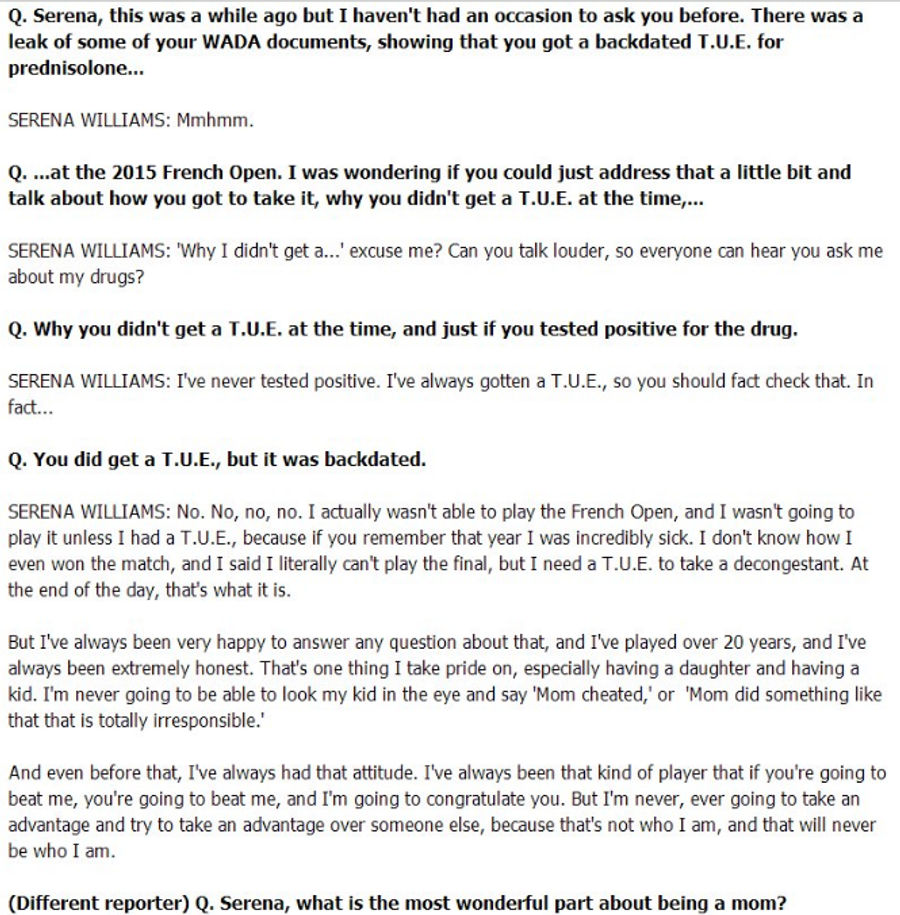
At the time it was unclear what had been asked, except that it was sensitive enough to make Williams raise her voice. A transcript reveals what appears to be a fair question, asked in a fair manner, although admittedly about 18 months too late.
 credits: [object Object]
 The question dealt with therapeutic use exemptions, situations where the tour permits an athlete to use otherwise-banned substances. Serena has received T.U.E.s in her career, as revealed in a 2016 Russian hacking operation. The event she is referring to was the 2015 French Open, where a visibly sick Williams battled to the final, and won. As revealed in the hack, she had been granted a T.U.E. in the second week of the tournament to use the corticosteroid called prednisone. (Retroactive exemptions are permitted in certain cases, e.g. where emergency treatment was necessary, or there was insufficient time to submit and have approved a usual application.)
Tennis reporter Ben Rothenberg offers some context in a thread, noting that Serena’s T.U.E. has never attracted any suspicion, but that she hasn’t exactly been open in previous discussions about the issue.
If the journalist’s question had a point—and it may well have—Williams didn’t let it get there.
UPDATE: The exchange about the T.U.E. begins at 10:17.



- Top MLB Props and Picks for Saturday May 30th's Biggest Matchups
- MLB Betting Picks for Friday, May 29: Phillies and Marlins Featured
- UFC Macau Best Bets and Fight Predictions for May 30
- MLB Picks Today: Best Pitcher Props for Friday’s Baseball Slate
- Top MLB Picks for Thursday: May 28 Baseball Betting Predictions and Props
- MLB Betting Picks for Wednesday: Two Totals for May 27 Slate
- MLB Picks and Predictions: Why Chase Burns and the Nationals Offer Betting Value