In Praise Of Dr. Z

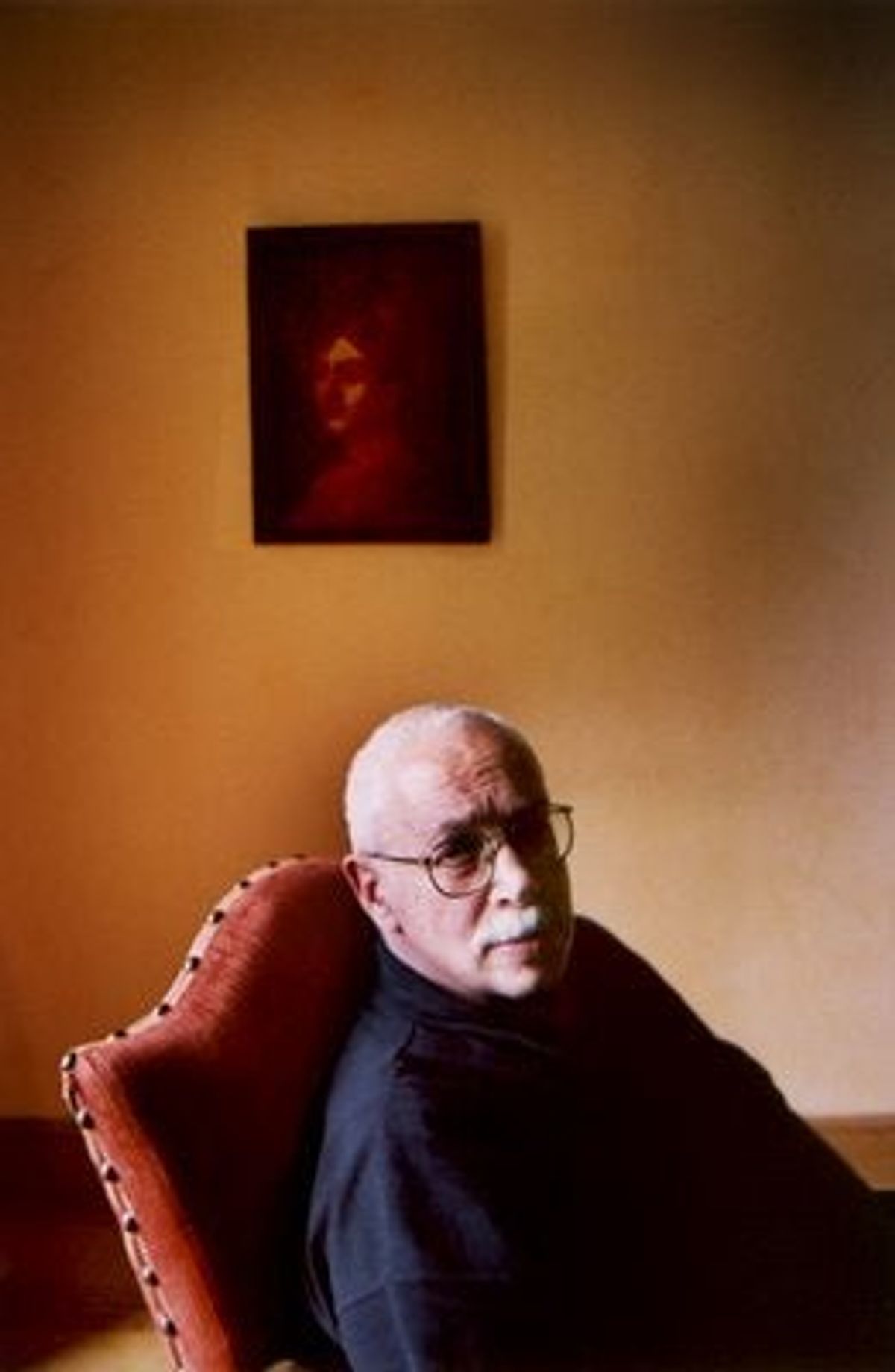
In an otherwise touching account of Monday's benefit for the stricken Dr. Z, Peter King shares this depressing detail: "It's been almost six months since he's spoken, and he can't write, and he can't read."
This is a cruel fate for anyone, not least for a communicator on the order of Dr. Z (né Paul Zimmerman), who cracked the game wide open for his readers in much the same way that John Madden did for his viewers. Even in King's sunny telling, the benefit, which raised more than $150,000 to help offset the considerable costs of Dr. Z's treatment, nevertheless begins to sound a great deal more like a wake:
Where to begin?
How about when Coughlin approached Paul Zimmerman — who looked fantastic, resplendent in a dark suit, goateed, trimmer than I'd seen him in years — at the start of the night and said, "Missed you at the league meetings this year. You didn't chew me out about anything.''
Yogi Berra and Dick Ebersol sat next to each other at the NBC table. When I introduced Yogi as the greatest living baseball player in the United States, everyone began clapping, and Ebersol stood, and then everyone stood. Standing O for Yogi at the Zim function. Only in America.
Rex Ryan, who is going to be good at the story-telling part of the job, believe me, spun a good yarn about Zim — the New York Jets' beat man for the Post when Rex was a kid and his dad, Buddy, an assistant to Weeb Ewbank — telling the ball boys in camp how to cheat on the pinball machine without making it tilt. "Now those are the important things!'' Ryan said.
SI group editor Terry McDonell and SI.com senior producer Dom Bonvissuto eloquently feted Zim, Terry intro-ing a Brooklyn Decker welcome from afar on DVD (Brooklyn and Dr. Z had that Z Said, She Said online game-picking thing going a couple of years ago) and Dom reading some get-well-soon-you-old-curmudgeon e-mails from all of you out there.
Coughlin: "Oh, I've had my ass ripped by Dr. Z, and I'm in good company.''
It's nice to see all corners of the sports world emerge to pay tribute to Dr. Z, especially his bosses at Sports Illustrated, who, last we checked, were all but pushing Zimmerman's stretcher out the door. At the very least, it's a reminder of the vastness of his influence, which reached across eras and genres and the whole sports landscape. Steve Sabol attended the benefit on Monday, and so did Football Outsiders' Aaron Schatz. The distance between the two men is precisely the distance the culture of football has traveled in the past half-century, and Dr. Z was around for the whole ride.
Most of you probably think of him now as the cranky, self-styled eccentric who timed national anthems, littered his columns with doggerel and offered atrocious football betting advice, all of which he did, in spades. But he was also very much a product of the sport's age of enlightenment (or maybe it's the other way around), which changed football in the 1970s just as surely as Bill James and sabermetrics changed baseball, many years later. As he wrote in 1970 in his indispensable Thinking Man's Guide to Pro Football:
The fan is being lifted to new levels of awareness. He can see it surrealistically, in the art galleries, or artistically in the beautifully packaged Sabol Productions' "NFL Football" TV shows every week. Television, with its instant replay and stop action, has tried to unlock some of football's inner mysteries. And the fan who once played the game is astute enough to realize that the precise, destructive operation he now watches bears little resemblance to the sport he knew back at Old Nassau.
Reading the book now, you're amazed not just at how well it holds up, but at how progressive it would seem if it came out today. He wasn't much of a stylist, but Zimmerman had an offensive lineman's instinctive empathy for the overlooked and underapperciated (he played on the o-line in semi-pro ball in New Jersey), and as much as anything the book is an exercise in elevating the anonymous, the thoughtful eccentrics, the violent technicians who gave their best years and a knee or two to football.
The final chapter, "Strictly Personal: The Greatest Player," about Marion Motley, should be required reading in this current culture of disposability (to crib a phrase from Stefan Fatsis), one in which Bill Belichick is regarded as a cum laude genius for treating his players like so many replaceable cogs and sprockets. I read the chapter again last night, and this paragraph, which conveys so much of the fragility of the game, seems almost unbearably sad now:
I watched Motley right up until his last, hopeless days when he tried a comeback with the Pittsburgh Steelers in 1955, and if there is a better football player who ever snapped on a helmet, I would like to know his name. There's a statistical table at the end of this chapter, detailing the numbers that made up Motley's professional chapter, but it's a kind of meaningless way of evaluating this remarkable player. It would be like trying to describe a waterfall in terms of gallons per second, or a sunset in terms of light units.
Monday Morning Quarterback — Tuesday [SI.com]
Related

- Seattle Seahawks vs. Denver Broncos TNF Betting Pick
- Brewers vs. Dodgers Game 3 Predictions, Picks and Odds
- Dana White's Contender Series Week 10 Predictions and Picks
- Guardians vs. Rays Game 2 Prediction: Picks, Odds and Best Bets
- Bills vs. Rams Odds, Prediction and Best Bet for MNF
- Three Longshot NFL Futures Worth Betting in Week 5
- Falcons vs. Ravens Odds, Prediction and Best Bet for Sunday Night Football