The NCAA's Last True Believer

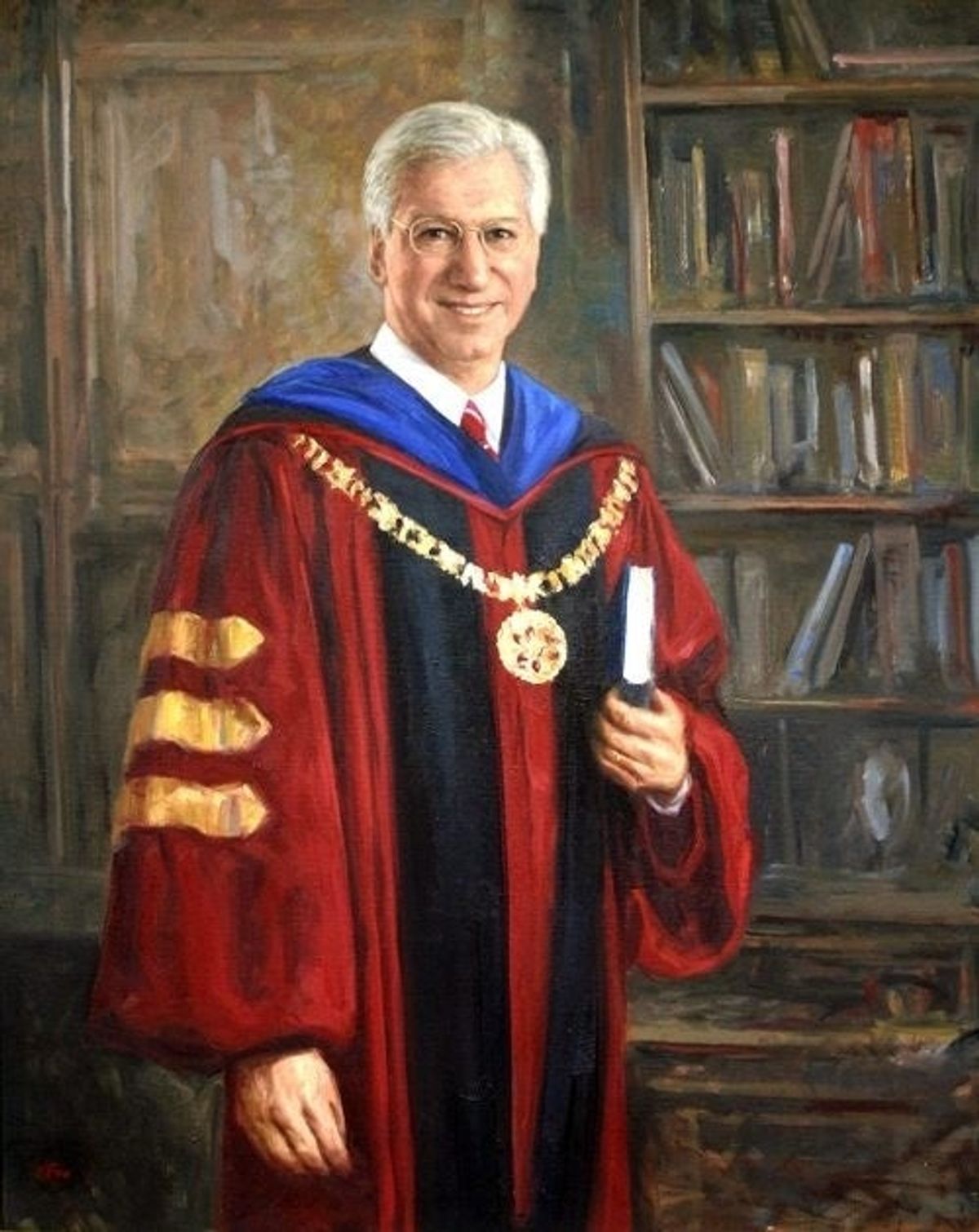
Myles Brand, the career academic who shitcanned Bobby Knight and became the NCAA's fourth president and maybe its last true believer, was the perfect salesman for an organization that pretends, against all evidence, not to be selling anything.
Brand died yesterday of pancreatic cancer. He was 67, having spent most of the last decade of his life in a well-meaning but ultimately pointless effort to reform the NCAA. We're already hearing talk that he "transformed the NCAA." What he really did, despite his good intentions, was widen the gap between how the association talked about itself and how it actually behaved. He didn't transform the NCAA so much as double down on its fundamental hypocrisy.
"College sports is not a business," Brand once claimed, and somehow he didn't get laughed out of the room. He was a slumming academic, and he could get away with a certain amount of willful naivete. But even so, it was a staggering claim to make — especially for the president of an organization to which CBS had paid $6 billion for the rights to its men's basketball tournament and which slaps a corporate sticker on every surface in the room. Even the ladder that players climb to snip down the nets is sponsored. And all the while, the athletes, on whose backs all this fabulous money is made, are told time and again, by people like Brand, of the simple grace in playing for nothing but dear old Alma Mater. That's the NCAA's sustaining self-mythology, and Brand believed in it to the hilt.
He was smart enough to see some of the problems here but just clueless enough to propose all the wrong remedies. He didn't like the NBA's minimum-age rule, which created all sorts of bad incentives for one-and-done players to work the game's back channels and recoup some of the money they should've been making in the pros. That's all to the good. (Brand himself pointed out that the rule would likely be illegal if it hadn't been collectively bargained.) His solution was all wrong, though: He lobbied the NBA to increase. Leave aside the obnoxious paternalism of telling young, highly employable men that what's actually good for them is an unpaid internship under the likes of John Calipari. What Brand was begging for, in effect, was an additional year of rule-fudging and outright cheating. He was asking for a bigger black market.
Brand made for a poor reformer because he believed deeply in the NCAA's purpose and purity of motive. A good one, like Sonny Vaccaro, would simply advocate blowing the place up. Only an academic could earnestly believe that the values of higher education could somehow be reconciled with those of big-time sports. "What you saw was a moral man," Wally Renfro, a former NCAA spokesman, told Andy Katz. "He changed the way we talk about intercollegiate athletics." This is a nice way of saying Brand was a very good piano player in a very big whorehouse that was unworthy of the man.
Brand changed the way we look at the NCAA [ESPN] Myles Leaves Indelible Brand on NCAA [FanHouse]
Chad Tracy Should Be a Lock for AL Manager of the Year
The Buccaneers Have Worse Vibes Than Any NFL Team Right Now
WNBA Best Bets: 2 Picks to Target Monday Night
Orioles vs. Twins Prediction, Odds and Best Bet for Monday
The Yankees May Be Turning Things Around at the Perfect Time
Triple H Has 9 Weeks to Fix WWE After SummerSlam
- WNBA Best Bets: Three Picks for Friday's Slate
- Panthers vs. Cardinals Best Bets: 3 Picks for the Hall of Fame Game
- MLB Best Bets Today: White Sox vs. Red Sox and Twins vs. Royals Picks
- Mets vs. Guardians Prediction, Odds and Best Bets for Tuesday
- 3 MLB Futures Bets to Make After the Trade Deadline
- WNBA Best Bets for Monday: Aces, Storm and Mercury Picks
- Pirates vs. Brewers August 3 Prediction, Odds, Best Betting Picks