How Crazy Was The Pacquaio-Bradley Decision? Bradley Had A 0.03 Percent Chance Of Being Randomly Judged The Winner.

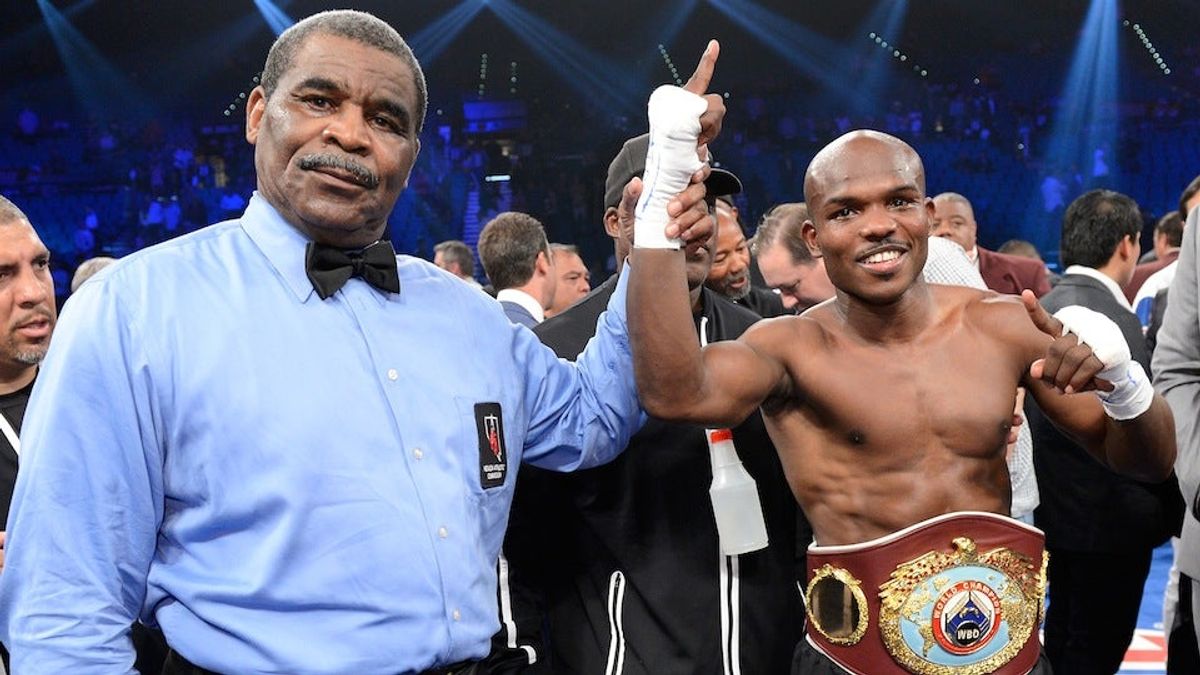
Republished from KenPom.com.
Even if you have no interest in boxing (like me) you've heard about the bizarre decision by the judges of the Manny Pacquiao-Tim Bradley fight on Saturday night. Despite nearly everybody believing Pacquiao won the 12-round fight convincingly, two of the three judges gave the fight to Bradley, prompting disbelief among observers. This caused me to wonder just how unlikely such a decision was. (Disclaimer: I know next to nothing about boxing and didn't watch the fight. If I henceforth sound completely ignorant regarding the sport, you know why.)
In order to determine this I wanted to get an estimate of how likely it was for the rational judge to score a particular round for either fighter. I found 18 reporters of varying reputation that scored the fight round-by-round. Here's how many of those people gave each round to Bradley.
Rd 1: 8 Rd 2: 2 Rd 3: 0 Rd 4: 0 Rd 5: 2 Rd 6: 1 Rd 7: 3 Rd 8: 7 Rd 9: 4 Rd 10: 11 Rd 11: 4 Rd 12: 8
This gives us a rough idea of the chances that a random, somewhat informed, observer would score each round for Bradley. I'm going to estimate that chance using (Bradley+1)/(18+2) because I don't think it's fair to assume there's truly no chance that a rational judge would score either Round 3 or 4 for Bradley. Doing this results in the following chances that a judge would score each round for Bradley.
Rd 1: 45 percent Rd 2: 15 Rd 3: 5 Rd 4: 5 Rd 5: 15 Rd 6: 10 Rd 7: 20 Rd 8: 40 Rd 9: 25 Rd 10: 60 Rd 11: 25 Rd 12: 45
Treating the judges as robots who will adhere to these percentages when judging each round, we can calculate the chances that Bradley would be judged the winner purely by random bad judging, thus answering the question posed in the title of this post.
Pacquiao wins: 99.38 percent Draw: 0.59 percent Bradley wins: 0.03 percent
If the judging were truly random and the percentages calculated for each round are accurate—which, keep in mind, are more generous to Bradley's chances than what was observed by those who bothered to post their scorecards online—Pacquiao had about a 0.6 percent chance of getting screwed out of the decision and Bradley had a 1-in-3,300 chance of winning outright.
The figure for Bradley is so low that it forces me to reexamine the assumptions. The fact is that judging the winner of a particular round is probably not independent from what was judged in previous rounds. For instance, the eight amateur judges who gave the first round to Bradley gave an average of 2.6 remaining rounds to him. The 10 who gave the first round to Pacquiao gave just 2.1 remaining rounds to Bradley. The sample size is pretty small, so it's tough to read too much into this, especially when you consider that two of the three ringside judges gave the first round to Pacquiao. But it stands to reason that judges might have a small unconscious bias toward a fighter for various reasons.
The other issue is whether to accept the calculated estimate of a judge's chance of favoring Bradley in each round. It's possible that the scorecards used to produce these estimates weren't exactly independent either. While the judges themselves are insulated from live commentary and opinion, folks in the media are not, and this may produce a slight tendency toward groupthink.
Of course, this all assumes that the judges are trying their best. I don't buy into conspiracy theories, but I do understand that boxing has been prone to corruption from time to time. Depending on what you read, this was either the best thing to happen to promoter Bob Arum, or the worst thing.
Boxing apparently has a history of controversial decisions. There's a simple way to fix this: Use more judges. While it's not feasible to use seven judges in all fights, it's doable for title fights given the money they generate, and it would greatly reduce the chance of a bad decision. I simulated a million cases using seven judges, and none had Bradley winning on at least four of the cards. (In the three-judge simulation, Bradley was favored by at least two judges in 304 cases.)
If boxing wanted fair decisions more often, they would increase the number of judges. Sure, this would make Michael Buffer's job more difficult at the end of the fight, but I think it's a worthy trade in order to reward the better fighter more often. Given the amount of publicity the sport gets for controversial decisions, maybe this isn't in its best interest. Fewer people would have been talking about the Pacquiao decision on Sunday and Monday had the proper decision occurred, and I definitely wouldn't have written about it.
Ken Pomeroy operates the advanced statistical site KenPom.com. Follow him on Twitter @kenpomeroy.
Mike Tomlin’s Minecraft City Is Taking the Internet by Storm

3 NFL Futures Bets to Make After a Wild Start to the Season
The Dodgers Have One Big Problem Heading Into the NLDS

- 3 NFL Futures Bets to Make After a Wild Start to the Season
- Red Sox vs. Yankees Game 2 Prediction: Best Bets for AL Wild Card
- Red Sox vs. Yankees Game 1 Prediction: Best Bets for AL Wild Card
- Rangers vs. Bruins Prediction: Best Bets for NHL Opening Night
- MLB Playoff Futures: Three Best Bets for the 2026 Postseason
- Eagles vs. Bears MNF Week 3 Betting Total Picks and Predictions
- Rams vs. Broncos Sunday Night Football Best Betting Pick