How Curt Schilling's Video Game Company Was Doomed From The Start

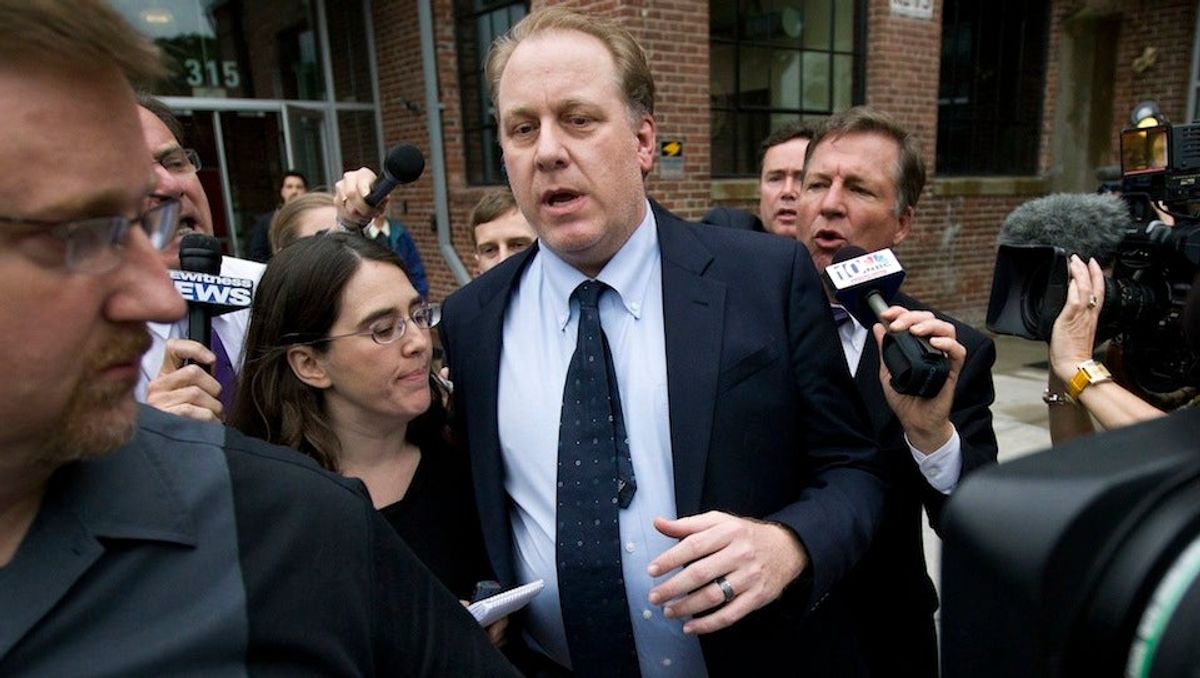
Boston of the late, lamented 38 Studios, which went under earlier this year amid unpaid employees and defaulted loans and federal investigations and one very angry Rhode Island governor. After reading it, you may not feel any more sympathy for Curt Schilling (save that instead for employees like the pregnant woman who found out from her doctor that her health care had been cut off), but you'll better understand how things came crashing down so suddenly.
Project Icarus might have been a more appropriate helio-relevant title for the MMORPG codenamed Project Copernicus, as Schilling's singleminded quest to create a successful game from scratch, in the amount of time he had, with the inexperienced staff he had, flew in the face of all industry logic.
Successful MMOs are incredibly lucrative, but they're also the hardest type of game to build. You're programming not just a game, explains Dan Scherlis, the first CEO of Turbine, a maker of MMOs, but a complex social system for thousands, if not millions, of users. A normal video game might require a couple of years to develop, but an MMO takes at least twice as long. Because of that, many gaming entrepreneurs start small, working their way up from something simple for a mobile device, or perhaps a single-player game for PlayStation or Xbox. But Schilling had grander ideas. He was going to challenge World of Warcraft. His fantasy world would be similar (you want elves and wizards, you've got elves and wizards), but he envisioned deeper plot lines and more-striking visuals. He persuaded R. A. Salvatore, the bestselling novelist from Leominster, to dream up the fictional universe, and the famed comic artist Todd McFarlane, a noted baseball fan, to conceive its artistic vision.
Industry experts often compare making video games to filming movies, given their similarly long production cycles and hit-or-miss nature. In movie terms, then, Schilling was attempting to start a studio from scratch, but instead of beginning with a low-budget indie flick, he was going straight for the summer blockbuster. His first time behind the camera, he was going to make Avatar.
Schilling knows games, but he sounds like he doesn't know management. Colleagues and co-workers describe a founder who gave employees top-of-the-line benefits and perks (Schilling estimates he spent $2.5 million of his own money just on gifts like gym memberships, tote bags, and laptops) hired and promoted right and left (including his wife's uncle, who became COO without any video game experience), and generally plowed through life as if the books would eventually balance themselves.
Schilling says it was his dangerous optimism that others would believe in the project as much as he did that did him in. Desperate to gain outside funding, Schilling used his fame to gain meetings with investors "practically every week for the company's first three or four years." But no one bought in, scared off by the company's amateurish business plan and lack of experience. So when Rhode Island came calling with a sweetheart business development loan, 38 Studios jumped at the chance—even if it meant opening up a new office and hiring more employees, which hastened its demise.
After missed payroll and a declaration of bankruptcy, Schilling has taken a leave of work from ESPN. He's being sued by Citizens Bank, and might be liable for employees' back wages. His wife defends him against angry former workers on Facebook, writing, at one point,
"50 million its not a fucking joke. It's gone. You have no idea what that last two weeks were like. Hope and hell. We hung on every telephone call. My husband couldn't function. My kids saw their father cry more in that month then [sic] any child should see."
And all of it because he couldn't conceive of there being a field where he couldn't will himself to success. He loved baseball, and was great at it. He loved video games, thus he believed he would be great at creating them. As Schilling puts it,
"I had to beat the Yankees three times in nine days. I never doubted I was going to do it. My whole life was spent doing things that people didn't believe were possible, because God blessed me with the ability to throw a baseball. And I carried that same mentality into everything I did here."
End Game [Boston magazine]
Related










- Commanders vs. 49ers Picks: Best Bet for Monday Night Football
- Rays vs. Guardians Game 5 Predictions: Best Bets for ALCS
- Cowboys vs. Packers Prediction: Best Bet for Sunday Night Football
- UFC Edmonton Best Bets, Predictions and Fight Picks
- Rays vs. Guardians Game 4 Best Player Props Betting Picks
- College Football Week 8 Best Bets: Ohio State, Alabama and More
- Joaquin Buckley Plummets From -300 Favorite to Underdog at UFC Edmonton