Someone Please Remind Andy Katz That ESPN Had A Hand In The Big East's Demise

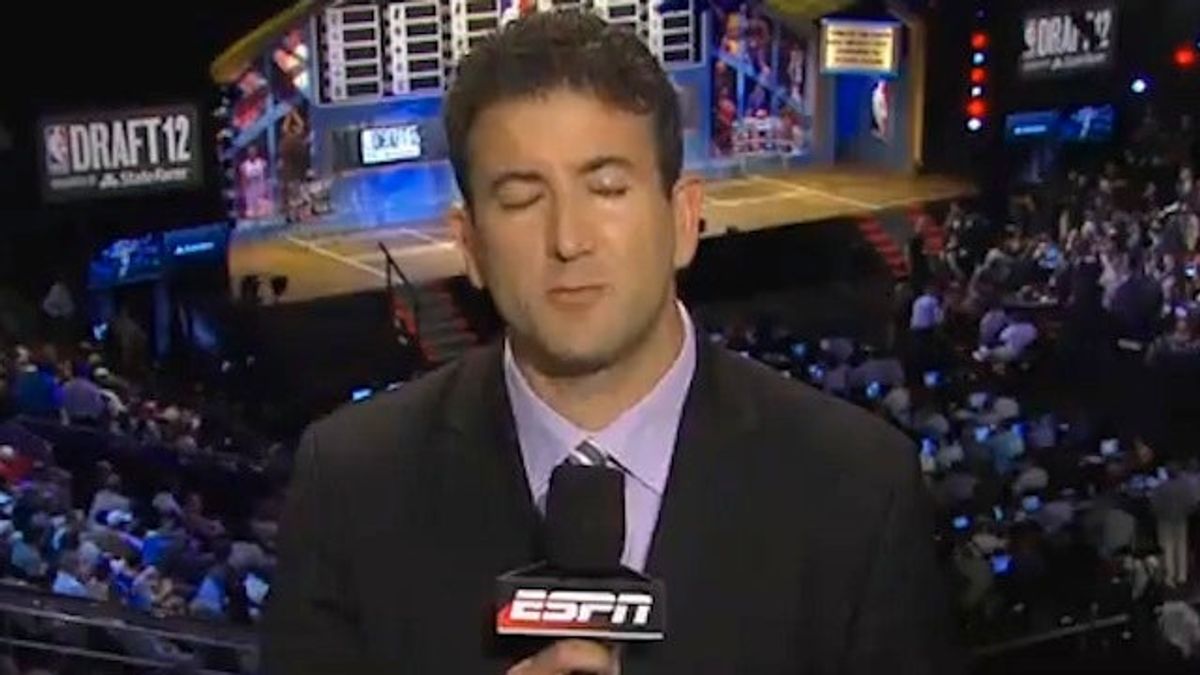
Now that the Big East's non-football schools have decided to ditch the Big East, ESPN senior college basketball writer Andy Katz is among those waxing nostalgic about the Big East's heyday as a hoops league. But at the end of his paean published early this morning, Katz gets a little defensive about the role played in all this by the folks who sign his paycheck:
On a sidenote, the notion that ESPN wanted the Big East to fade is rubbish. ESPN had a huge deal on the table that the Big East rejected. Had it taken the deal, Syracuse and Pitt might never have left for the ACC.
Ah, yes. ESPN had offered the Big East a nine-year, $1.4 billion extension in May 2011. The Big East turned it down, gambling that it could get a better deal from Fox or NBC, with Pitt among the schools leading the charge against taking ESPN's offer. This was right around the time the Pac-12 had raised by the bar for TV rights deals by signing a 12-year, $3 billion contract with ESPN and Fox. And football—not basketball—was the source for most of this money. Here's the the Hartford Courant on the terms of the Big East's current deal with ESPN, which is soon set to expire:
The Big East has never divulged how its money is split. It has been speculated 60 percent is divided among all the members and 40 percent among the football schools. Right now, that would give the basketball schools $4.6 million and football schools about $10.3 million. By contrast, the SEC, Big Ten and Pac-12 schools get about $21 million a year.
The Big East also rejected the ESPN extension because the basketball and football schools could no longer agree on how to divvy up the pot. With or without a new TV deal, the league was already splintering, as the football schools wanted more of what they were bringing in. As ESPN's Andrea Adelson wrote earlier this year:
One of the biggest stumbling points has been how the television money would be divided among the basketball and football schools. Last year, at the spring meetings in Ponte Vedra Beach, Fla., one proposal suggested a 75/25 split—75 percent of the money going to football schools, and 25 percent going to basketball schools. One athletic director at a basketball school raised his hand and wondered why the numbers were not flipped, since hoops is the reason the Big East exists in the first place.
You can imagine how well that went over in the room.
A short time later, Syracuse and Pitt bolted for the ACC, and then-Boston College AD Gene DeFilippo essentially said the ACC poached those schools on orders from Bristol:
"We always keep our television partners close to us. You don't get extra money for basketball. It's 85 percent football money. TV—ESPN—is the one who told us what to do."
It made perfect business sense: The ACC already had a billion-dollar deal with ESPN, and ESPN knew the Big East was divided. By further weakening the Big East, ESPN made the Big East less attractive to its competitors before they could so much as schedule a meeting. DeFilippo, who recently retired, eventually took back his comment a couple of days later, but by then it was too late. His candor had already told us everything we needed to know. Andy Katz just doesn't want to believe it. Wonder why.
Related

Los Angeles Chargers Shouldn’t Resist Justin Herbert Trade

5 Fights to Make After UFC Vegas 112

Brewers vs. Dodgers Game 3 Predictions, Picks and Odds
The 5-0 49ers Are Finally Getting the Respect They Deserve

Jorge Masvidal Makes $100K Pick to Beat Islam Makhachev
Dana White's Contender Series Week 10 Predictions and Picks
- Bills vs. Rams Odds, Prediction and Best Bet for MNF
- Three Longshot NFL Futures Worth Betting in Week 5
- Falcons vs. Ravens Odds, Prediction and Best Bet for Sunday Night Football
- White Sox vs. Guardians ALDS Game 5 Betting Pick
- UFC Vegas 122 Betting Odds: The Biggest Line Moves Before Allen vs. Duncan
- UFC Vegas 122 Picks and Predictions: Three Bets for Allen vs. Duncan
- College Football Week 6 Bets: Three Picks for Saturday’s Biggest Games