Cal Investigation Finds Assistant Coach Sexually Harassed Reporter Who Accused Him Of Trying To Trade Sex For Access

![Hufnagel coaching the team (far left); Photo via [object Object]](https://images.deadspin.com/tr:w-1200,fo-auto/qspfmtfhpu5svfhli2cv.jpg) Hufnagel coaching the team (far left); Photo via [object Object]
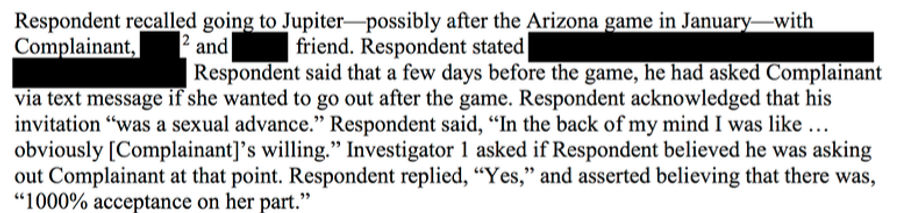
Hufnagel coaching the team (far left); Photo via [object Object] Yesterday, the University of California-Berkeley fired assistant basketball coach Yann Hufnagel for violating the school’s sexual harassment policy. Hufnagel tweeted that he would soon be exonerated of a “fruitless claim by a reporter.” However, Deadspin has obtained a copy of Cal’s investigation into the matter, and even Hufnagel’s own statements make it appear that he attempted to trade sex for access, and shut her out when she tried to keep their relationship professional.
The heavily redacted investigation, conducted by Cal’s Office for the Prevention of Harassment and Discrimination, identifies the complainant as a reporter covering the Golden Bears. She alleged that Hufnagel harassed her via text message and in person beginning in November 2014—two weeks after they first met—and lasting until she lost her job because of Hufnagel’s refusual to cooperate as a source. She even alleged he fed her incorrect information as payback for turning down his advances.
Make no mistake: this is a reporter’s worst nightmare—a source (and in college basketball, with tiny coaching staffs, a single source is the difference between success and unemployment) attempting to leverage his power into a sexual relationship, and spiking her career if she didn’t comply.
The full investigation, which concluded a finding of sexual harassment, can be read at bottom. These are some of its findings.
On July 6, 2015, someone identified as a “head varsity athletics coach” at Cal forwarded an email to an Associate Athletic Director (AAD). The email, sent by the reporter, accused Hufnagel of subjecting her to “frequent and recurrent sexual harassment.” The AAD contacted the Office for the Prevention of Harassment and Discrimination (OPHD), and by the end of August, the investigation was in full swing. It conducted interviews with the complainant and with Hufnagel, as well as a witness, and collected scores of text messages exchanged between Hufnagel and the reporter.
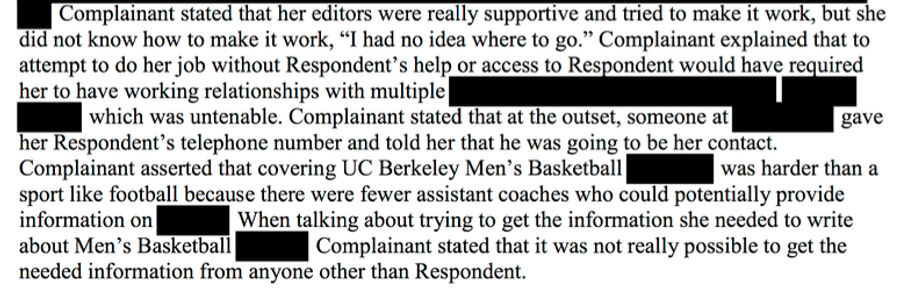
She alleged that Hufnagel had harassed her on a “weekly” or “bi-weekly basis,” and highlights one incident from January 2015. The two arranged to meet, and although she insisted on meeting for coffee, he wanted them to meet at a bar, so they went to a bar on Berkeley’s main drag, Shattuck Avenue. She alleges that he had two beers and told her he wanted her to drive him home. She initially refused, and told him to take a taxi, but he insisted, so she drove his car back to his apartment.
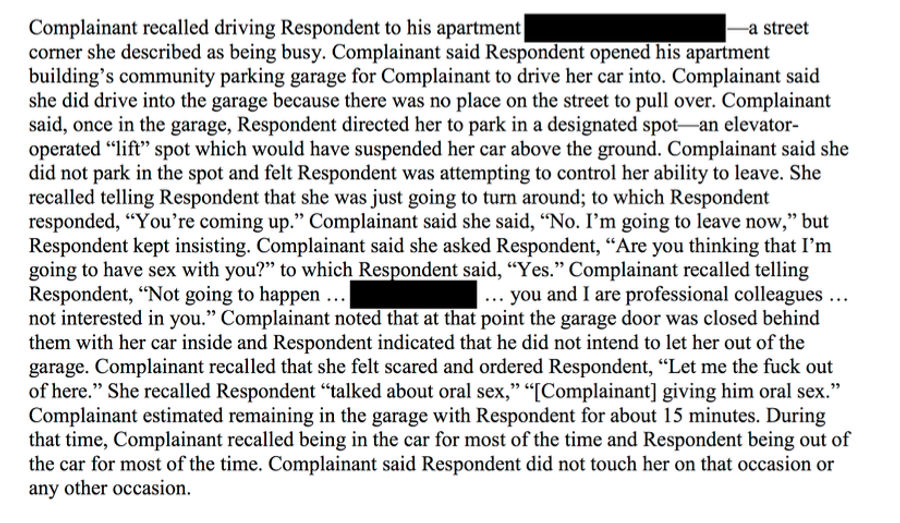
The reporter told investigators that when Hufnagel “informed me ‘you’re coming up,’...he never asked me, as a question. He was asserting that I would come in to his apartment as a statement of fact—another attempt at establishing power.”
In his interview with investigators, Hufnagel told them he believed she would come upstairs willingly.
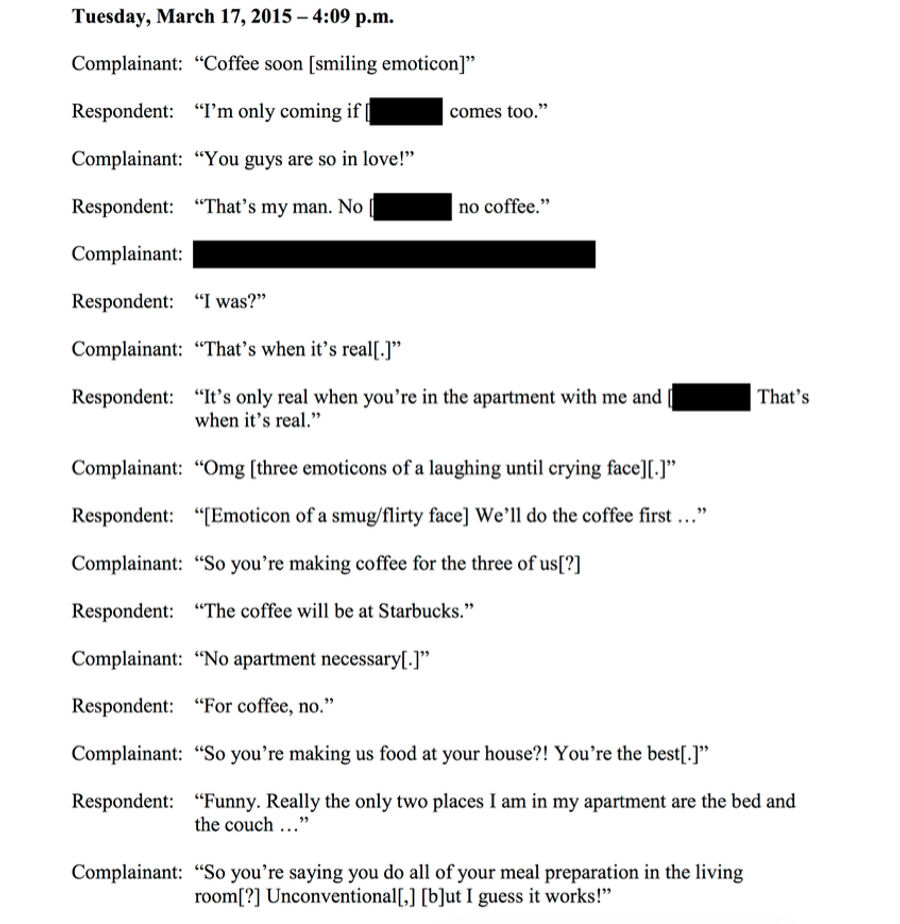
In March, the two exchanged a series of text messages about setting up a meeting to discuss a specific story, at which point Hufnagel made repeated references to participating in a “three-way” with an unnamed person.
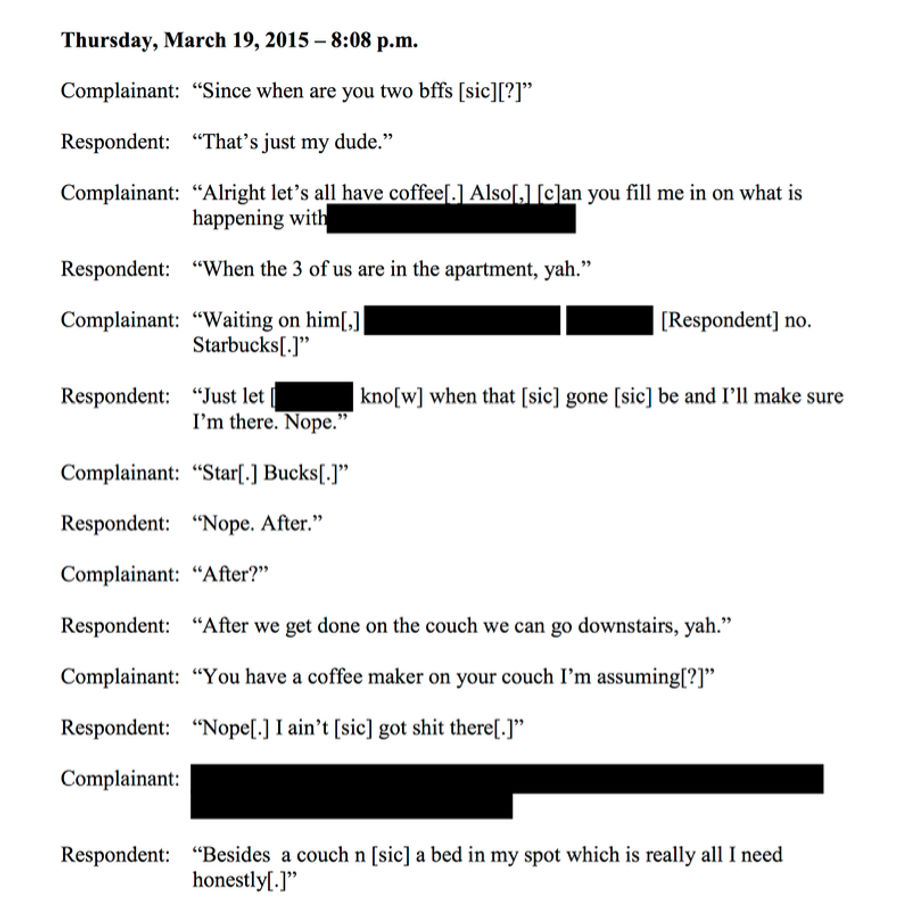
Days later, on March 23, she alleges that he provided her with misinformation on the story she had hoped to meet with him about, which she reported on as if it were true. She told investigators that was revenge for her rebuffing his advances in the garage. Hufnagel admitted that he may have mislead the complainant, but it was not because she refused to have sex with him, but because it was“part of his job to mislead and redirect media.”
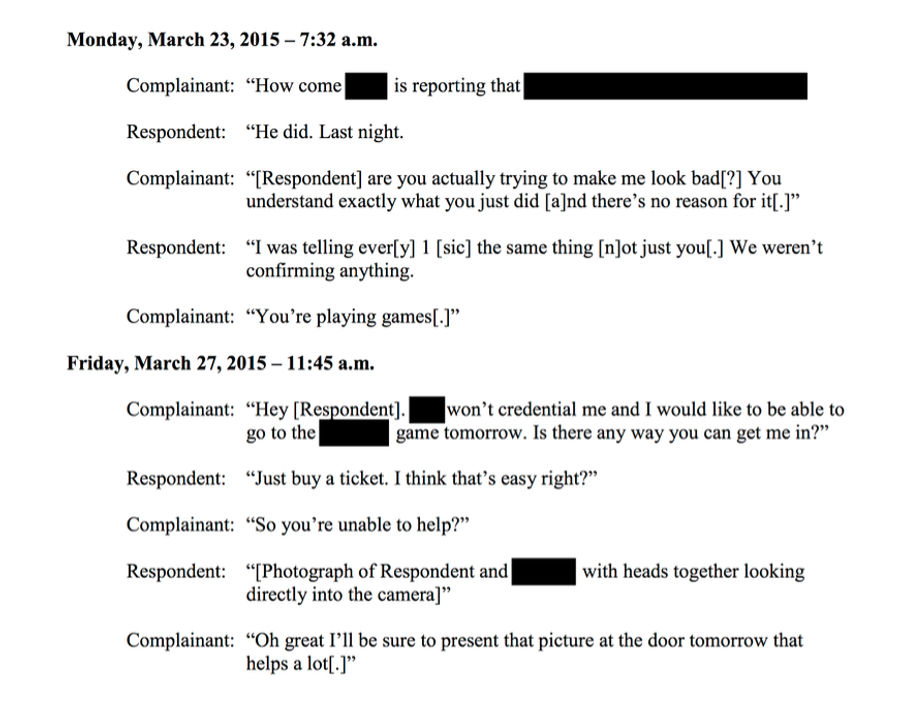
The power dynamic in play here—reporter relies on coach for information, coach exploits that need to his own ends—kept going until May, when she(it appears) published something that enraged Hufnagel. He called her on the 22nd and yelled “What the fuck were you thinking?” at her, which she says “tipped the scales” for her and emboldened her to come forward with her allegations.
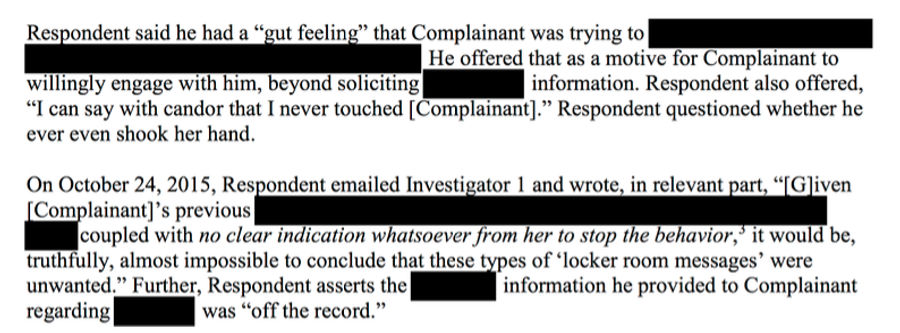
In his meeting with investigators, Hufnagel ascribed a motive to the reporter’s accusations—though that motive is redacted here. But part of his argument was that she offered “no clear indication whatsoever...to stop the behavior.”
The investigators did not buy Hufnagel’s defense. In the report’s conclusion, they found that Hufnagel did act as alleged (and admitted to much of it), and “by a preponderance of the evidence,” found that he violated the university’s policy on sexual harassment.
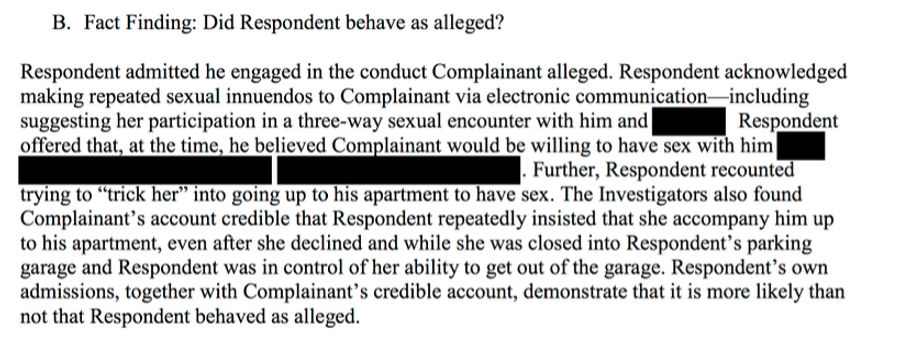
Hufnagel’s actions, as judged by Cal’s Office for the Prevention of Harassment and Discrimination, were found to be “unwanted,” “of a sexual nature,” and “objectively intimidating, hostile, or offensive.” The report was referred to the athletic department on March 14. Hufnagel was fired within hours.
Related
Guardians vs. White Sox Game 4 Bet Picks, Prop Bets
The Yankees’ 17-Year Title Drought Is on Hal Steinbrenner
Luke Fickell Has Wisconsin Football Rolling Again
Buccaneers vs. Cowboys Odds, Prediction and Best Bet for TNF
The Biggest Disappointments of the MLB Playoffs So Far
Three Non-Power College Football Playoff Contenders
Why Doesn’t the NFL Have Full-Time Referees?
- WNBA Playoff Bet Picks: Aces, Valkyries, Liberty and Dream Predictions
- MLB Playoff Picks for Wednesday: HR Props, ML Picks and More
- Milwaukee Brewers vs. San Diego Padres Game 3 Bet Picks and Predictions
- Dana White’s Contender Series Week 9 Predictions: Picks for Every Fight
- Two MLB Playoff Bets Stand Out on Monday
- Yankees vs. Rays Prediction: Best Bets for ALDS Game 2
- Falcons vs. Saints Prediction: Best Bet for Monday Night Football