ESPN's Stuart Scott Dead At 49

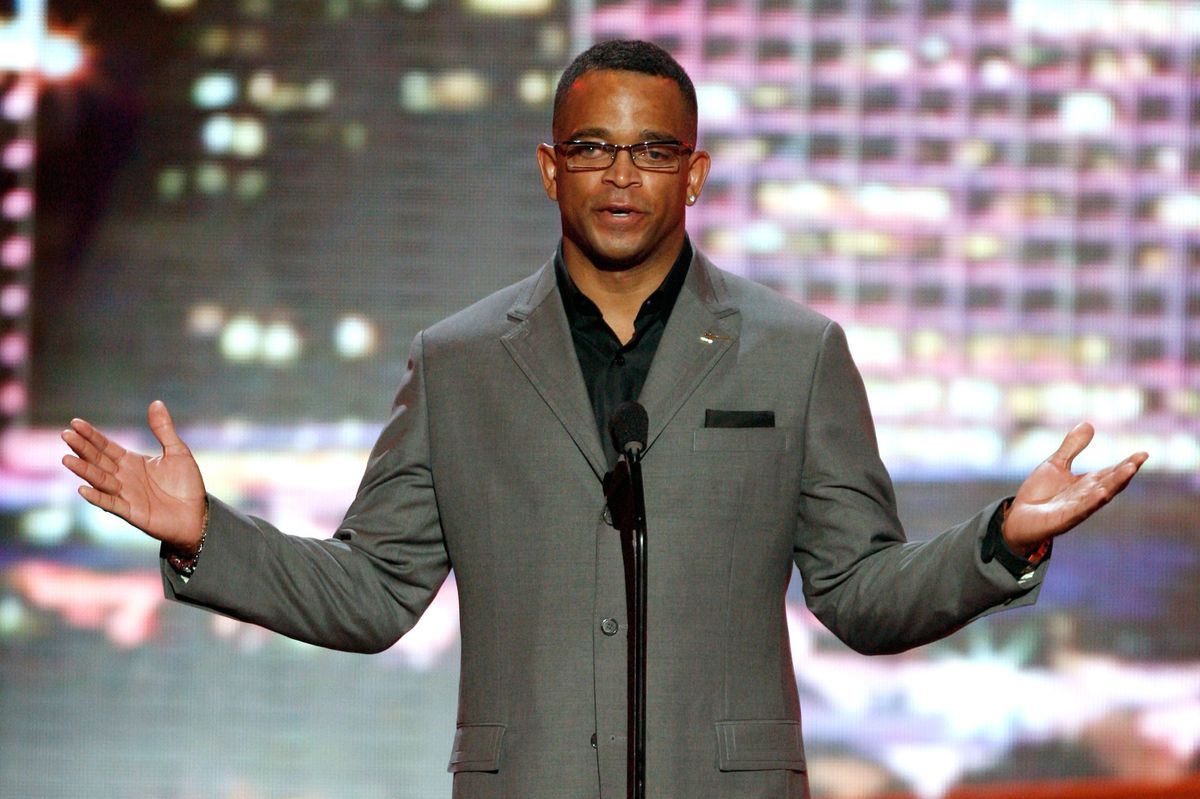
Stuart Scott died this morning at the age of 49. Scott was diagnosed with cancer in November 2007. ESPN has a lengthy obituary up, and ESPN2 spent much of Sunday talking with current and former ESPN personnel about their friendships with Scott.
Here's ESPN's 15-minute video package about Scott:
And here's Scott's excellent Jimmy V Award for Perseverance acceptance speech from 2014:
Scott joined ESPN in 1993, and was one of the most conspicuous black presences on the network. Here ESPN SVP Keith Clinkscales in the 2011 ESPN oral history, Those Guys Have All The Fun, explaining that effect:
I do not believe Stuart Scott was the first African American on ESPN, but he certainly was influential because on SportsCenter, early on, he used hip-hop vernacular; he said things on the air that I knew when I heard them that the white producers who had approved it didn't know what he was talking about. So it was like our own little codified thing. It was almost like, "If he's cool enough to say that on the air, and no one's stopping him, then this network is cool enough to watch."
I don't want to commit hyperbole here, but Stuart's delivery on SportsCenter—his willingness to stick with it despite getting complaints, and the producers letting him stick with it—is one of the greatest cultural moments that African American culture has ever had. It made us relevant in sports.
Sports journalism's record on hiring minorities is abysmal, and network television's record is abysmal. If you look at some of the greatest sports media institutions we have before you even get to ESPN, they didn't hire a lot of people of color, especially black men. And black women.
And here's Scott, in the same book, talking about early backlash and how he dealt with it:
I've heard and read things, you know, people who say, "Stuart tries to be black, but he's not really black, he's blah blah," or "He's as vanilla as so-and-so," or "He's trying to be too black." Can I really be concerned with what other people think about me who don't know me? What I've done on television is try to work hard, try to be factually correct, try to write creatively and compellingly. I want to be myself, and anyone who says, "Oh well, he's a hip-hop anchor," well, that's what I grew up on. I grew up mostly on hip hop and show tunes. I grew up on West Side Story, The Wiz, Godspell, but also Public Enemy.
I didn't pay a lot of attention to ESPN before I got here. I knew who Chris Berman was, I knew who Dan Patrick was, but I didn't watch them regularly. I looked up to John Saunders because he was an African American, actually an African Canadian. Tom Jackson is one of my favorite people ever. I recognize that I was one of the first African Americans of prominence here. One of them—not the first, but one of them. Mike Tirico was here. If I can open eyes and if someone feels like I can open doors, good, because it was done for me.
I think that, more than most people, as an African American you have to make sure that you can carry yourself wherever you go and keep it real What I do on television is part of who I am. I'm not trying to be anyone else. I've always been of the mind-set, "Be who you are; just do the work and work hard."
Photo via Getty
Is Any College Football Team Actually Good This Season?

Five Fights the UFC Needs to Make After UFC 333
Cowboys vs. Eagles Prediction: NFL Week 7 Best Bet and Odds
Ole Miss' CFP Hopes Take a Hit After Loss to Texas
- Seahawks vs. Chiefs Betting Pick: SNF Best Bets
- WNBA Finals Game 4 Picks: Back Atlanta Dream, Angel Reese Rebounds
- Rays vs. Brewers Prediction: Why Tampa Bay Can Steal Game 2 on the Road
- UFC 333 Betting Lines Are Tightening Across a Wide-Open Fight Card
- UFC 333 Betting Splits: Where the Sharp Money Is Landing This Weekend
- NBA Best Bets Today: Pacers, Grizzlies and Trail Blazers Picks
- College Football Week 8 Best Betting Picks, Predictions