Tip-In Or Not, The Nixed FGCU Miracle Bucket Was Shot In Time

College basketball has determined that three-tenths of a second, while a barely blinkable unit of time, is enough to tap in a legal shot. It is not, however, enough time to shoot a basketball if the player touches it with a second hand — at least, that seems to be the definition of a non-tap shot (called a "throw" in the NCAA men's hoops rulebook).
All of this is a longish way of explaining how it was that Florida Gulf Coast's Chase Fieler got jobbed on what should've been a game-tying shot in the dregs of double overtime.
Down 68-66 to South Florida with 0.3 on the game clock, FGCU's Jamail Jones lobbed the ball the length of the court into the hands (plural) of Fieler. The 6-foot-8 senior forward caught, spun and released in precisely half an instant. The referees waved off the shot just as the ball fell in the hoop, and Fieler sprawled on the floor behind the basket. No bucket, game over, Bulls win.
Oh-point-three is enough only for a tap, per Rule 5, Section 1, Article 18 of the rule book:
In any period, when the game clock displays 10ths of seconds and play is to be resumed by a throw-in or a free throw when 3/10 (.3) of a second or less remains on the game clock, a player may not gain possession of the ball and try for a field goal. Such player can only score a field goal by means of a tap of the pass or of a missed free throw.
But what, then, does it define as a "tap"? Same rule and section, Article 7:
A tap is a type of try for field goal whereby a player attempts to score two or three points by directing a live ball into his team's basket with his hands or fingers.
Did Fieler "gain possession," thereby changing his shot from a "tap" to a "throw"? Maybe, but you could argue that Fieler's shot looked like a legit tap, even if he did cock his elbow to push the ball forward. Frankly it's a strange distinction to make when a player is airborne throughout the entire live-ball portion of the play. When you think about it, how could a player do anything other than "tap" a ball — that is, direct it with his hands or fingers — when he has no feet on the ground during the catch-and-shoot?
At any rate, it was ruled a non-tap, making the more interesting question academic: Was the shot good? Well, the still frame over at FGCU Eagles Nest indicates yeah. Ball was out of his hands before the backboard lit red.
Not that it's likely to happen for a road team, but the obvious concern then becomes whether the clock operator waited a beat to start the game clock. ( Exactly such doubts led to making 0.3 the minimum a player needs to take a legal shot.) Deadspin's grand master of video Tim Burke went frame-by-frame and made this determination: "He holds the ball for six frames at 30fps, which is 0.2 seconds." And Burke's a South Florida fan, for what it's worth. In a just world, that sumbitchin' shot shoulda counted.
h/t Liam
MLB Picks Today: Best Bets for Saturday's Baseball Slate
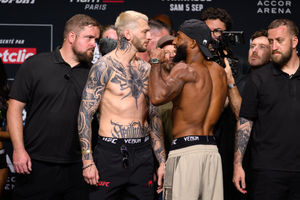
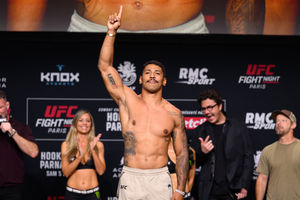
UFC Paris Odds: The Biggest Line Moves Bettors Need to Know
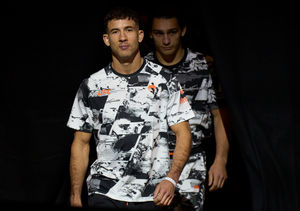

- UFC Paris Underdog of the Week: Axel Sola Is Worth a Look at Plus Money
- UFC Paris 2026 Betting Picks: Best Bets for Parnasse vs. Hooker and More
- Where the Sharp Money Is Landing This Weekend at UFC Paris
- UFC Paris by the Numbers: Hooker-Parnasse Headlines a Historic Main Event
- Angels vs. Pirates Best Bets: Strikeout Props Lead Friday's SGP
- College Football Best Bet Tonight: Hammer Georgia Tech Against Colorado
- Top Value Betting Picks for UFC Paris on Saturday