DraftKings shares fell to their lowest level in more than three years on Oct. 1, extending a difficult stretch for the online sportsbook operator and reflecting broader concerns across the sports betting sector.
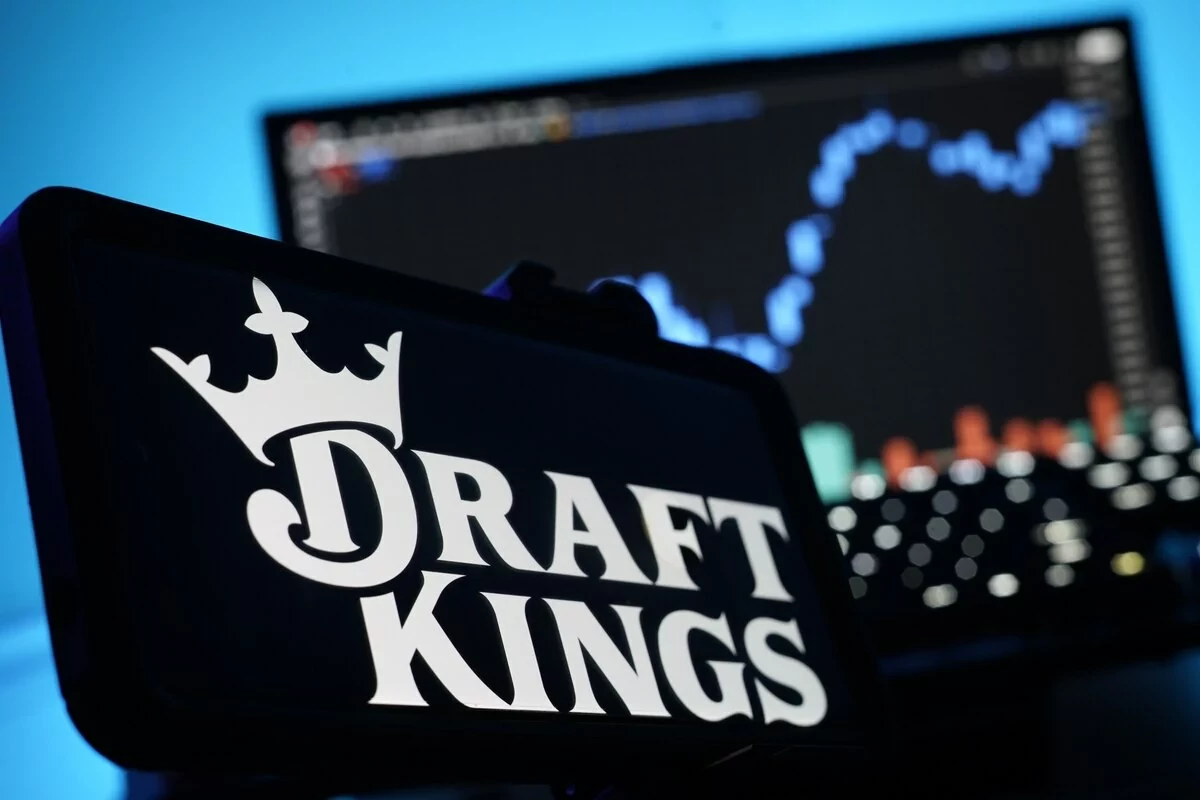
The company’s stock dropped as low as $18.58 during trading after closing the previous day at $19. According to industry reports, that marked the stock’s lowest closing level since April 2023. The decline continues a sharp downward trend that has seen DraftKings lose roughly half of its market value over the past year.
Investors have increasingly focused on slowing growth rates, profitability concerns and growing competition throughout the online sports betting industry. Those challenges have not been limited to DraftKings, as other major gaming companies have also experienced significant pressure on their stock prices in recent weeks.
The recent selloff comes after DraftKings reported financial results that fell short of Wall Street expectations. While the company continues to generate billions in annual revenue, its latest earnings report highlighted some of the obstacles facing sportsbook operators in a maturing market.
DraftKings reported a net loss of $67.6 million, a significant shift from the $157.9 million profit it recorded during the same period a year earlier. The company cited increased promotional spending and betting outcomes that favored customers as factors that negatively impacted results.
Sportsbooks generate revenue by retaining a portion of wagers, but periods of bettor-friendly outcomes can create short-term financial pressure. Several operators have pointed to those results throughout 2026 as a challenge to revenue growth and profitability targets.
Despite the disappointing quarter, company executives have maintained that the sportsbook business remains on track to generate approximately $1 billion in adjusted EBITDA this year. However, investors appear focused on whether that goal can be achieved amid rising costs and new competitive threats.
One of the largest topics facing investors is the rapid expansion of sports-related prediction markets. Platforms such as Kalshi and Polymarket have attracted increasing attention by allowing users to trade contracts tied to sporting outcomes.
DraftKings entered the sector with the launch of DKeX earlier this year, but analysts say the company is still working to establish a meaningful position in the market. Industry estimates suggest rival operators continue to control the majority of trading volume.
The company has also indicated it expects to spend between $200 million and $300 million this year on prediction market initiatives. While executives view the category as an opportunity for long-term growth, investors are watching closely to see whether those investments produce meaningful returns.
The stock’s three-year low reflects a combination of short-term financial challenges and broader uncertainty about where the sports betting market is headed next.
While sportsbook handle reportedly increased 15% year over year during the first three weeks of September, stronger wagering activity has not yet been enough to improve investor sentiment. Market participants continue to debate how quickly the industry can grow, how much competition prediction markets will create, and whether operators can balance expansion with profitability.
For DraftKings, the coming quarters could play a key role in determining whether recent declines represent a temporary setback or part of a larger shift in market expectations.