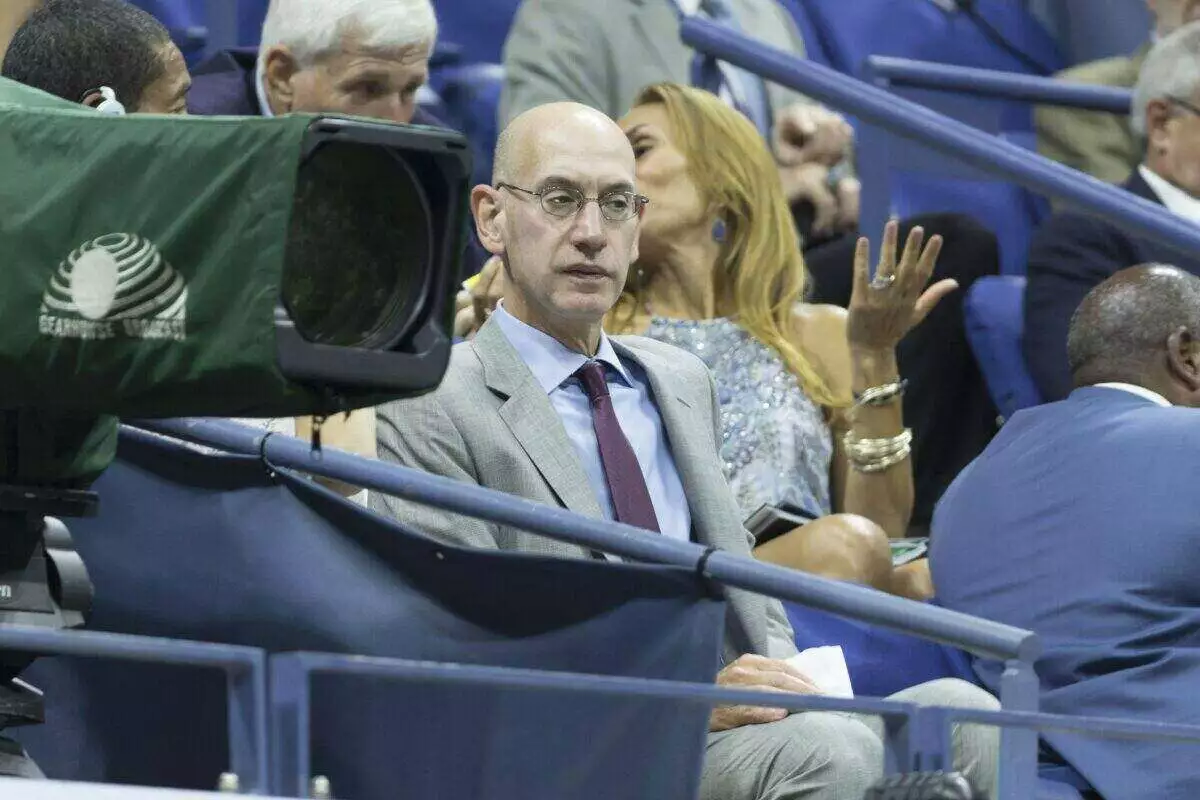
Golden State Warriors forward Draymond Green defended NBA Commissioner Adam Silver as criticism continues to mount over the league’s ongoing gambling controversy. Speaking on his podcast, The Draymond Green Show, Green said the NBA is taking the right steps to protect its integrity and argued that isolated incidents involving betting don’t reflect the league as a whole.
He pushed back on claims that the NBA’s partnerships with sportsbooks like FanDuel and DraftKings show a lack of concern about gambling, calling those accusations unfair and “ridiculous.”
While Draymond Green didn’t say it outright, his comments about the NBA’s integrity echo a larger truth about the rise of regulated sports betting. It has made scandals, such as ther Terry Rozier case or the Chauncey Billups case easier to detect, not more common.
By defending Commissioner Adam Silver and emphasizing the league’s efforts to monitor gambling activity, Green indirectly highlighted how today’s tighter oversight and partnerships with licensed sportsbooks have created a more transparent environment.
In the past, questionable betting behavior often went unnoticed because most action flowed through offshore sportsbooks and illegal bookies, where there was no data tracking or reporting. Those unregulated markets operated in secrecy, allowing insider betting or game manipulation to go unchecked.
Now, with legal operators required to share data and report suspicious activity, it’s much easier for leagues, regulators, and law enforcement to spot irregular betting patterns and respond quickly. Green’s defense of the NBA reinforces this shift. That regulation hasn’t made gambling a bigger problem; it’s simply brought long-standing issues out of the shadows and into the light.
As the debate over sports betting’s influence on the NBA grows, the solution isn’t to end gambling partnerships altogether but to set clearer limits on how fans and players can engage with betting markets.
One of the main concerns centers on prop bets, particularly microbetting, which allows wagers on in-game moments such as the outcome of a single possession or an individual player’s next shot.
Microbetting refers to player prop wagers on singular outcomes, such as an at bat in baseball or first basket wagers in basketball. These are a lot easier to manipulate because doing so wouldn’t impact the overall outcome of the game. There has already been a push for a microbetting ban in Ohio, so there’s a chance that this could gain momentum nationwide.
A balanced approach, keeping regulated sportsbooks while restricting high-risk betting types, could strike the happy medium the NBA (or any other sport) needs. It would allow for continued transparency and oversight while reducing the risk that comes with betting on every play, every moment, and every stat.
The NBA now faces a challenge: how to keep benefiting from the massive revenue and fan engagement tied to legal sports betting while protecting the credibility of the game.
Partnerships with sportsbooks have brought in sponsorship money and boosted viewership, especially among younger fans who engage through betting apps. But every new gambling controversy threatens to erode public trust.
To maintain balance, the league must double down on education, transparency, and enforcement. That means continuing to train players and staff on gambling rules, investing in integrity monitoring systems, and cooperating with regulators to track betting data in real time. By promoting responsible wagering and tightening oversight on high-risk betting markets, the NBA can preserve its reputation while adapting to a sports world where gambling is here to stay.