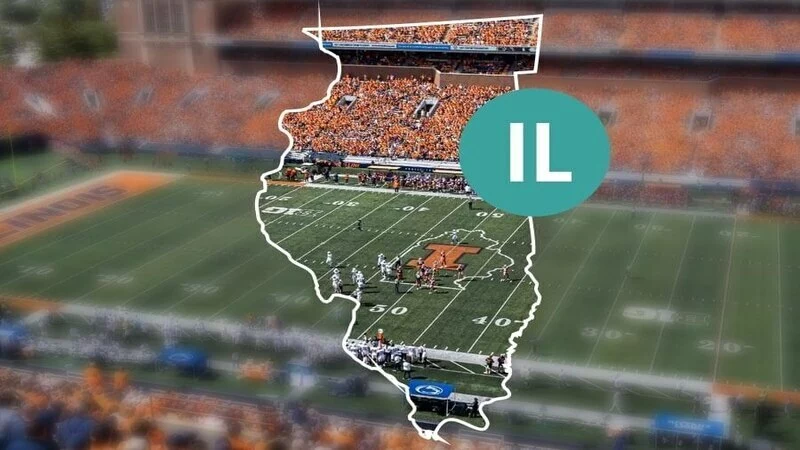
Starting this fall, Fanatics Sportsbook will charge a $0.25 fee on every bet placed by customers in Illinois. This fee comes from a new state tax, effective July 1, 2025, which charges sportsbooks $0.25 per bet for the first 20 million bets each year. After that, the tax rises to $0.50 per bet.
Fanatics expects to stay below 20 million bets, keeping its fee lower than competitors like DraftKings and FanDuel. The company said it will remove the fee if Illinois cancels the tax. This change shows how sportsbooks are handling new costs in the state.
The $0.25 fee raises costs for Illinois bettors. A $5 bet will now cost $5.25. Fanatics’ fee is cheaper than the $0.50 fee from DraftKings and FanDuel due to their aforementioned bet volume level, which could attract more customers. However, the Sports Betting Alliance says the tax hurts small bettors the most.
Some worry higher fees might push people to illegal, offshore betting sites with no consumer protections. Since sports betting became legal in Illinois in 2020, the state has seen $48 billion in bets, showing a strong market despite new costs.
Illinois passed a new per-wager tax in a $55.2 billion state budget signed by Governor J.B. Pritzker. The tax helps fill a $1 billion budget gap. Last year, Illinois bettors lost $1.12 billion, with $700 million from parlays—bets that combine multiple outcomes for higher payouts.
The state also raised its sports betting tax rate from 15% to up to 40% for big operators.
The Illinois Policy Institute questions the state’s reliance on betting revenue. Lawmakers expect more gambling losses to fund state programs. In 2024, parlays led to big losses for bettors, as they can be addictive due to the thrill of near-wins.
The new tax should bring in $36 million a year. Fanatics’ lower fee aims to balance these concerns while keeping customers in a competitive market.
DraftKings CEO Jason Robins called the decision “incredibly ill-conceived.” The introduction of the tax prompted DraftKings to establish a political action committee in Washington, D.C., to more effectively lobby for its interests.
Meanwhile, the CEO of Circa Resorts & Casino, Derek Stevens, referred to the tax model as “not a good, logical, well-thought-out design.” He also indicated that the tax could have significant consequences for sportsbooks accepting lower-value bets, as sportsbooks will incur heavy taxes on a bet of $1.
Other organizations, such as the Sports Betting Alliance, a group lobbying for the best sportsbooks, have highlighted that the charge could force operators to provide lower odds and reduced promotional offers.