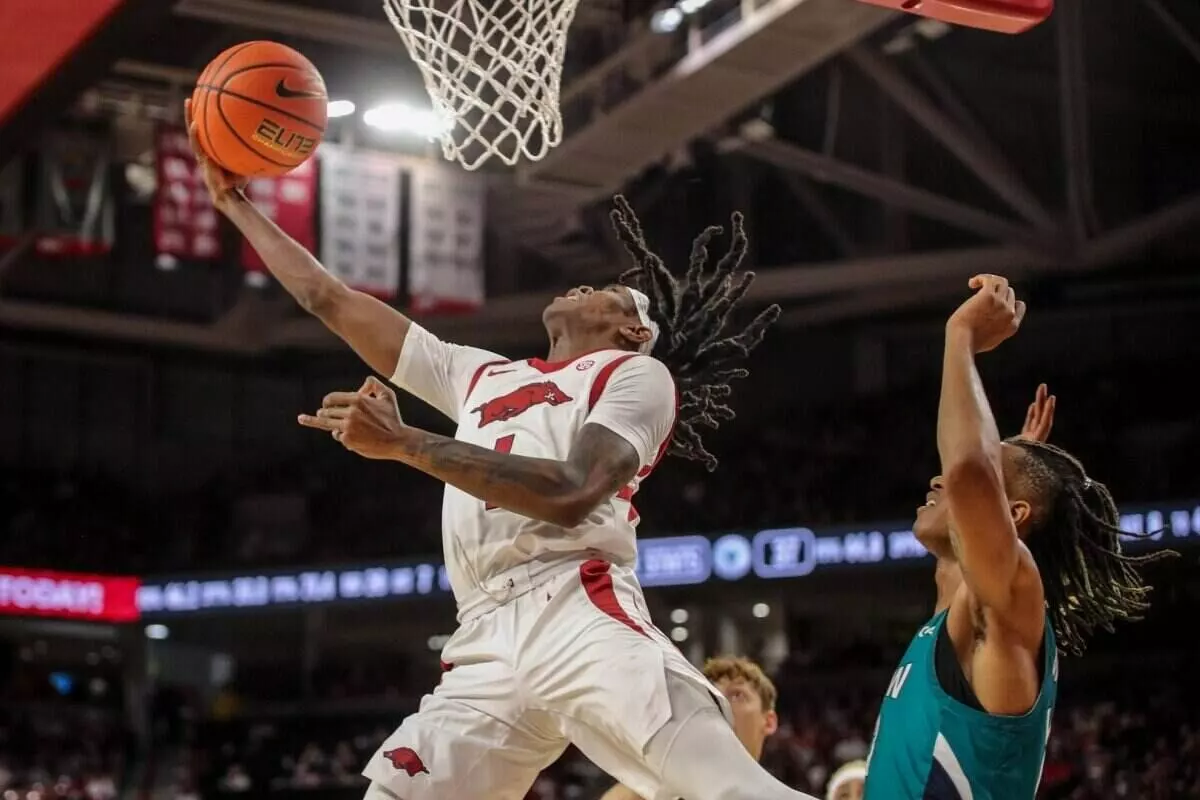
A former DraftKings trader has been charged in connection with an alleged betting scheme involving Fresno State men’s basketball. The case adds to growing scrutiny over the risks tied to college sports betting, specifically player props.
Nevada prosecutors have charged former DraftKings sports trader Samuel Silverman with commission of a fraudulent act in a gaming establishment and conspiracy to cheat at a gambling game. The case also names former Fresno State players Mykell Robinson and Steven Vasquez, as well as former DraftKings employee Matthew J. Martin, in an alleged scheme centered on Robinson’s player statistics.
According to investigators, Robinson discussed placing a $200 parlay on his own statistical unders and later claimed in a separate group chat that a former roommate had placed the wager on his behalf. Before Fresno State’s Jan. 7, 2025 matchup against Colorado State, BetMGM reportedly identified three unusual bets backing the under on Robinson’s points, rebounds, assists, and made 3-pointers. Records allege Martin placed the wagers, totaling $2,200 at +625 odds.Robinson finished with three points, two rebounds, no assists, and one made 3-pointer, allowing the parlays to cash.
Investigators allege Martin won a net $15,950 before distributing portions of the proceeds. Court records state that Vasquez received a $1,225 electronic payment from Silverman immediately after the game, representing the winnings from the alleged $200 parlay placed on Robinson’s behalf. Vasquez then transferred $1,425 to Robinson’s mother, who had reportedly provided the original $200 used for the wager. Authorities also outlined the alleged distribution of the proceeds: Martin received $11,325, Silverman $3,000, Robinson $1,425, and Vasquez $200.
Silverman has pleaded not guilty, while the Nevada Gaming Control Board has said additional suspects remain under investigation.
The allegations highlight the integrity risks that can arise when individuals with industry knowledge are connected to athletes, especially in college. It shows how insider relationships can create opportunities to exploit player props.
While the allegations have not been proven in court, the case is the latest example of why sportsbooks, regulators, and integrity monitoring firms continue to closely monitor unusual wagering activity. It also reinforces the importance of surveillance systems that flag suspicious betting patterns, along with the need for safeguards designed to protect the integrity of sporting events.
This case is likely to renew debate over whether sportsbooks should continue offering player prop markets involving college athletes. It follows another high-profile college basketball point-shaving investigation earlier this year, adding to a growing list of integrity cases involving player props rather than game outcomes.
Because a single player’s statistics can be influenced more easily than the result of an entire game, player props have become under scrutiny. If these incidents continue, sportsbooks could choose to eliminate college player props altogether or restrict markets to overs only, making it more difficult to profit from intentionally underperforming.
It has become a growing problem that needs to be addressed.