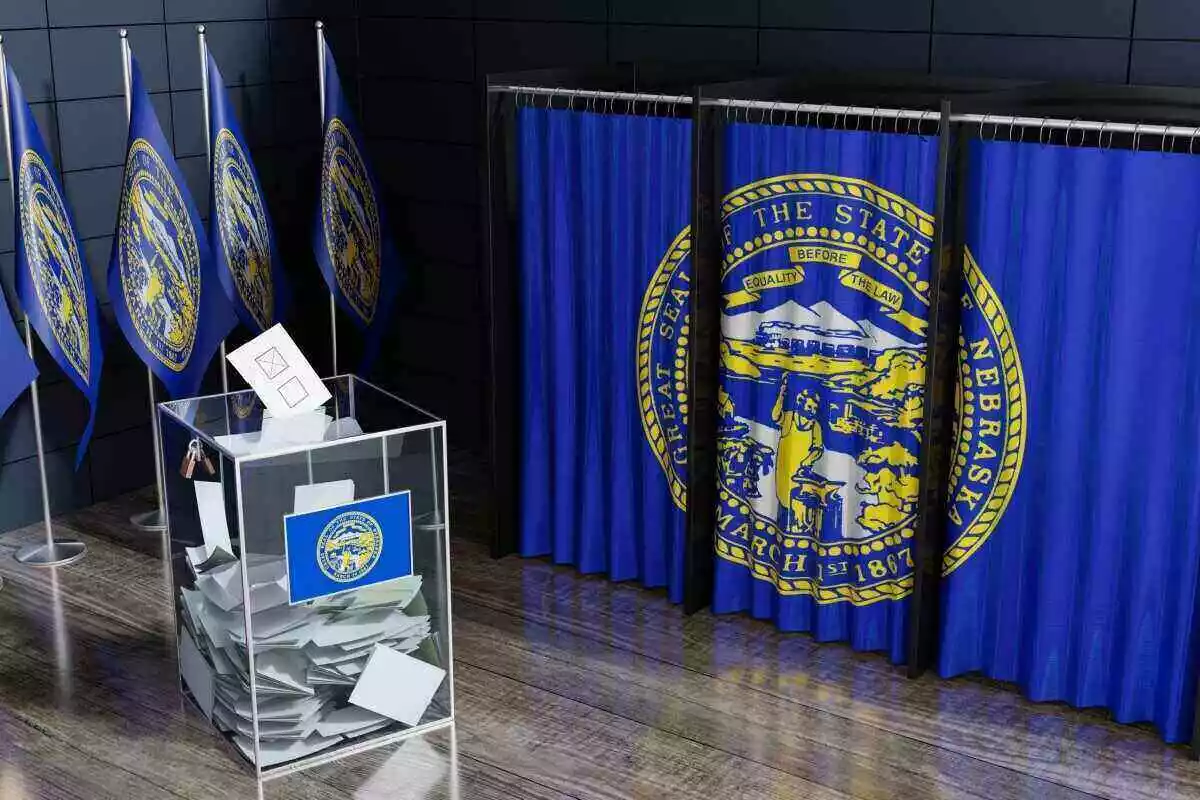
Nebraska could soon join the growing list of states that permit online sports betting. A ballot initiative backed by industry-supported groups is expected to qualify for the November election, giving voters the opportunity to determine whether mobile wagering should be legalized and regulated statewide. If approved, Nebraska would become one of the latest states to expand sports betting beyond retail sportsbooks.
Currently, Nebraska allows sports betting only at physical locations. While retail betting has been available since the state expanded gambling laws earlier in the decade, lawmakers have not approved statewide mobile sportsbook apps. As a result, Nebraska remains among a relatively small number of states that permit in-person wagering but not full online betting.
The campaign to place online sports betting before voters has received significant financial support from companies with interests in the online wagering industry. According to reporting, Tax Relief Nebraska has received millions of dollars in combined backing from FanDuel and DraftKings as it works to collect the required signatures.
The initiative requires enough signatures to place both a regulatory measure and a constitutional amendment before voters. Supporters have indicated they are on track to meet the necessary thresholds. If both measures pass, online sportsbooks would likely be authorized under a state licensing and regulatory framework, although implementation would not be immediate. A launch would likely occur sometime after the rules are finalized and licenses are awarded.
Advocates for legalization argue that Nebraska is missing out on economic activity that is already taking place in neighboring states. Several states bordering Nebraska, including Iowa, Colorado, Kansas, Missouri and Wyoming, offer legal online sports betting platforms. Residents can cross state lines and place bets through mobile apps where those services are available.
Supporters contend that a regulated online market could keep more wagering activity within Nebraska while generating additional tax revenue. Estimates cited by proponents have suggested legalization could produce tens of millions of dollars in tax collections over several years. They argue that those funds could be directed toward public priorities and benefit the state’s finances.
Not everyone supports the proposed expansion. Critics argue that easier access to sports betting may increase gambling-related harm. Some responsible gambling advocates have expressed concern that mobile wagering allows bettors to place wagers at any time and from virtually any location, creating greater potential for problematic behavior compared to retail-only betting.
Opponents have also questioned whether projected revenue benefits fully account for the social costs associated with gambling expansion. Others remain skeptical that legalized gambling consistently delivers the level of tax relief or public funding that is often discussed during expansion campaigns.
Nebraska has gradually expanded its gambling framework in recent years, including voter approval of casino gambling and the introduction of retail sports betting. The online sports betting proposal represents another significant step in that evolution.
If the initiative reaches the ballot and gains voter approval, Nebraska would establish a pathway toward regulated online sports wagering. If voters reject the proposal, sports betting would remain limited to physical locations. Either outcome would provide a clearer direction for the state’s gambling landscape and determine whether Nebraska follows the broader national trend toward mobile sports betting.