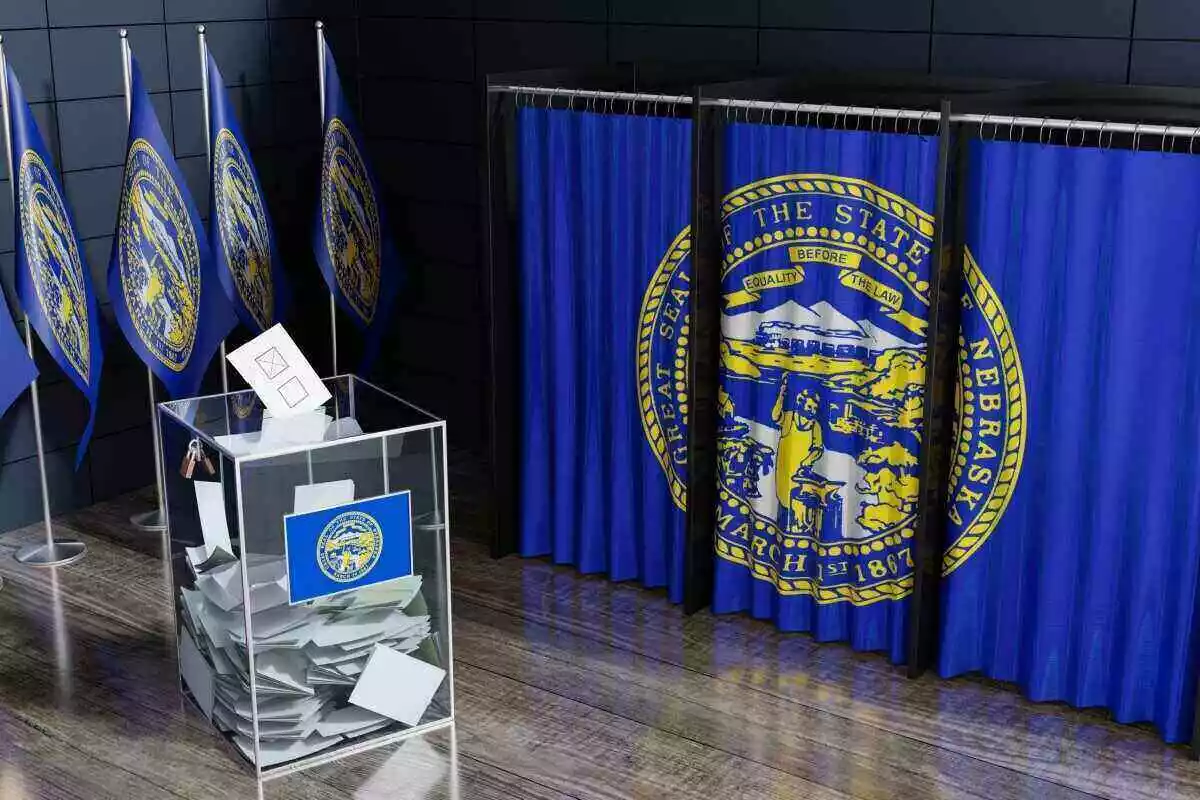
WarHorse Casino and its partners have initiated a ballot campaign that could alter the future of sports betting in Nebraska. The effort follows multiple unsuccessful attempts to expand wagering beyond physical locations through the state legislature, redirecting the issue to a public vote instead.
Nebraska legalized retail sports betting in 2021, but wagering is currently limited to in-person bets at licensed racetrack casinos. While sportsbooks opened in mid‑2023, mobile betting remains prohibited, placing Nebraska behind most neighboring states that already allow online wagering.
The bottom line is you’re allowing tax money to go to Iowa, Kansas, and Colorado. People are using VPNs, and they’re disguising their location, pretending they’re in Iowa,” Lynne McNally, director of government relations at WarHorse, told Nebraska Public Media recently.
Backers of online sports betting argue the ballot route became necessary after a proposed constitutional amendment stalled in the unicameral legislature in 2025. Because gambling expansion requires a change to the state constitution, lawmakers needed a two‑thirds majority, a threshold the proposal failed to reach due to a filibuster.
Rather than waiting for another legislative session, WarHorse Gaming, the commercial arm of the Winnebago Tribe of Nebraska, filed two separate ballot measures. Nebraska law requires each initiative to address only a single subject, necessitating a dual‑petition approach.
The first initiative would ask voters to approve mobile sports betting statewide, limited to platforms that partner with existing licensed casinos. The second proposal outlines how revenue would be distributed, directing 20% of online betting proceeds to local governments based on where wagers are placed.
Organizers must collect signatures from roughly 10% of registered voters to place the measures on the ballot. If successful, Nebraskans would decide the issue during a general election, bypassing further legislative debate.
Supporters estimate mobile betting could generate tens of millions in additional annual tax revenue, partly by reducing cross‑border wagering in nearby states such as Iowa and Colorado. WarHorse representatives have cited out‑of‑state betting as an ongoing drain on Nebraska’s potential tax base.
Opponents, however, continue to raise concerns about problem gambling and the social impact of easier access to wagering through smartphones. These arguments played a central role in previous legislative resistance and are expected to resurface during the campaign. As the petition drive moves forward, the outcome will likely hinge on how voters balance projected revenue gains against perceived social risks.