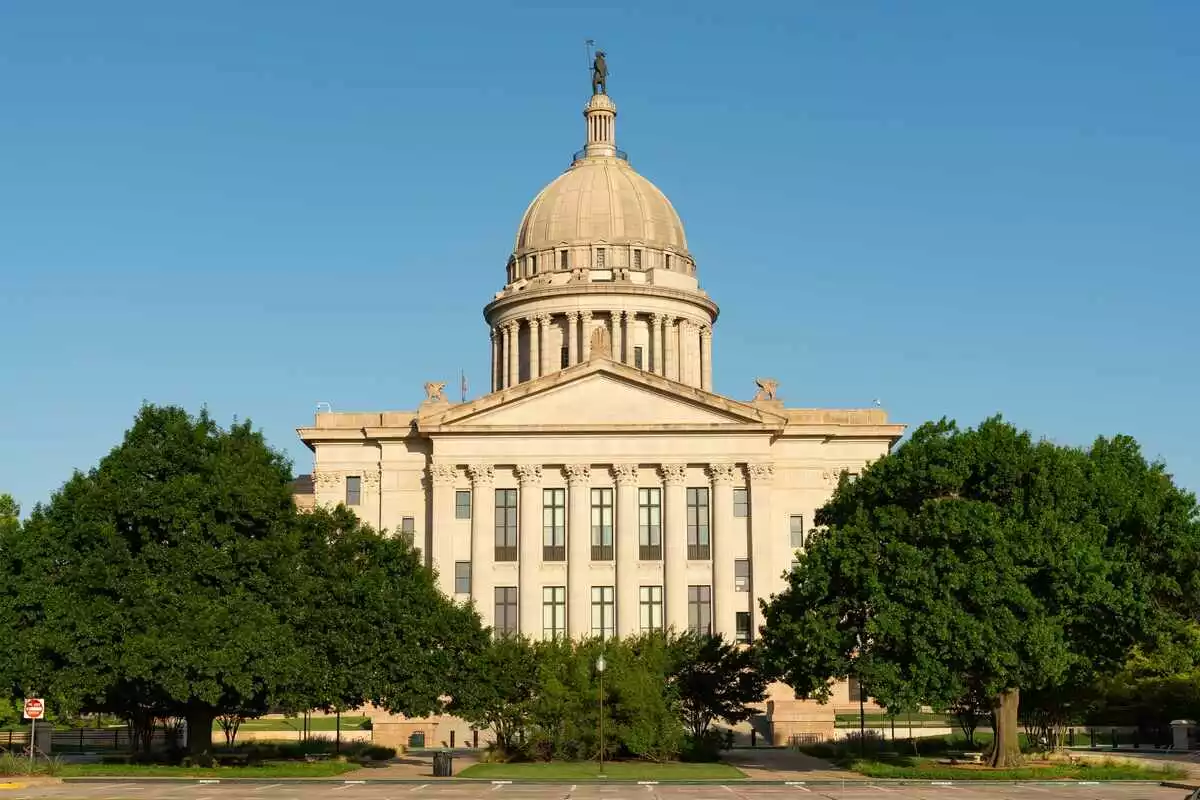
After Governor Kevin Stitt vetoed the Oklahoma bill that would ban sweepstakes casinos, the state legislature decided to override this decision. Senate Bill 1589 is now law in Oklahoma, so sweepstakes casinos are now banned.
Oklahoma lawmakers moved forward with a statewide crackdown on sweepstakes casinos after both chambers voted by large margins to override Gov. Stitt’s veto of Senate Bill 1589 on the final day of the 2026 legislative session. The Senate approved the override in a 34-10 vote, while the House passed it 68-19, officially turning the measure into law.
While online casino gambling was already considered illegal under Oklahoma law, sweepstakes casino platforms had operated in a legal gray area because they offered free-to-play mechanics alongside purchasable virtual currencies. SB 1589 closes that loophole by specifically banning online casino-style games that use “representatives of value,” including token-based dual-currency systems commonly used by sweepstakes operators.
The legislation also includes protections for tribal gaming activities authorized under the Indian Gaming Regulatory Act (IGRA), ensuring that approved tribal casino operations are not impacted by the new restrictions.
Under the new law, operating or facilitating sweepstakes casino games in Oklahoma will now be treated as a Class C felony offense. Violators could face fines ranging from $500 to $2,000, along with potential jail time upon conviction.
The passage of SB 1589 marks another major setback for the sweepstakes casino industry in the United States. Operators that relied on dual-currency systems to avoid traditional gambling laws are now forced to exit the Oklahoma market.
Because the law specifically targets online casino-style games using virtual tokens or other “representatives of value,” sweepstakes casino business models now fall under Oklahoma’s definition of illegal gambling.
The decision in Oklahoma also reflects a broader trend across the US, where lawmakers and regulators have started taking a closer look at sweepstakes casinos. Several states have introduced bills or taken enforcement actions targeting these platforms, arguing that they function too much like real-money online casinos despite technically using promotional currency systems.
For the gambling industry, the new law could increase pressure on sweepstakes operators to seek clearer regulation or licensing frameworks instead of relying on legal gray areas. It may also encourage other states to pursue similar legislation, especially in jurisdictions with strong tribal gaming interests or strict online gambling laws.
With sweepstakes casinos now banned and no regulated online casino market available in Oklahoma, some players could shift toward offshore gambling websites instead. These platforms accept US players despite operating outside American regulatory oversight, creating additional risks for consumers.
Unlike regulated gambling operators, offshore casinos are not required to follow Oklahoma or US consumer protection standards. This can expose players to issues such as delayed withdrawals, unfair gaming practices, and weak data security. Players may have little legal recourse if an offshore operator refuses to pay winnings or suddenly shuts down.
The Oklahoma sweepstakes ban could also unintentionally increase traffic to unlicensed operators that continue targeting US customers online. When gray-market alternatives disappear, demand does not necessarily go away. Instead, players may migrate toward riskier platforms that exist outside state enforcement and taxation systems.
This is the issue that arises with a sweepstakes ban and an absence of a legal, regulated platform. Perhaps it could lead to increased momentum for legalization of Oklahoma iGaming, but there hasn’t been a push just yet.