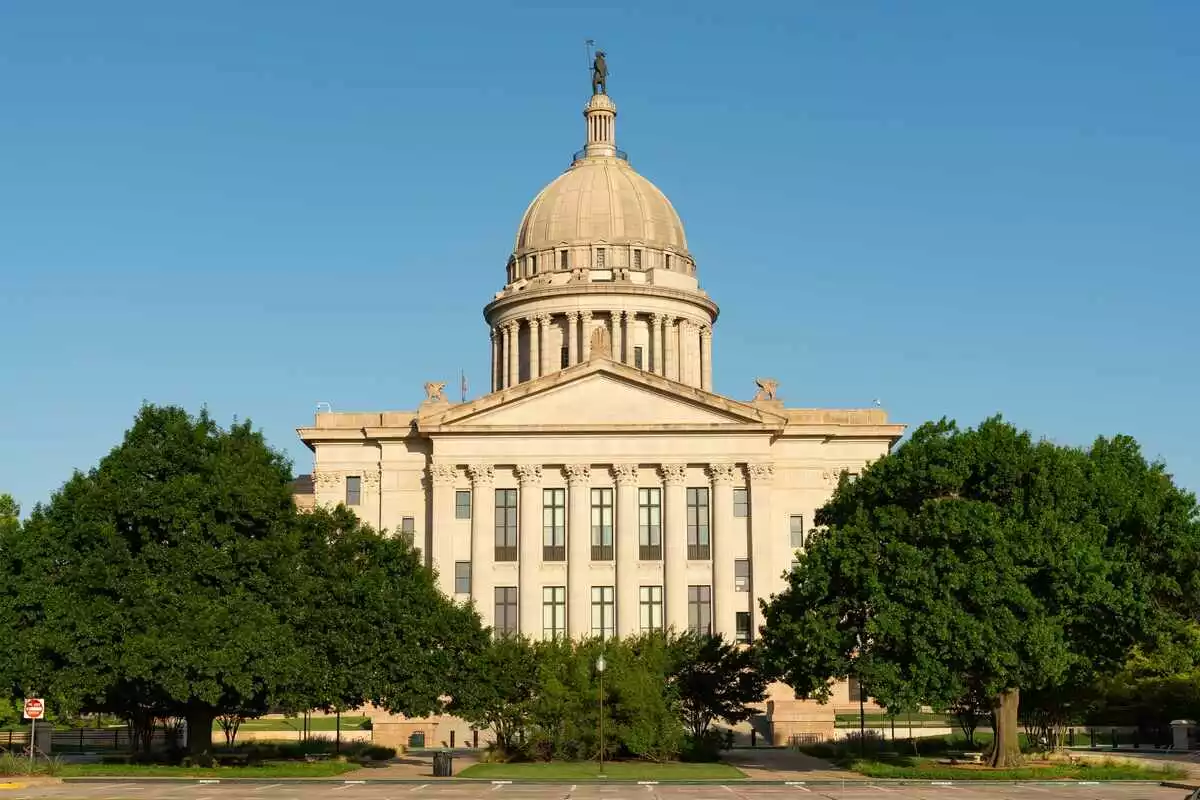
House Bill 1047 failed to pass the Oklahoma Senate by a 27-21 vote, effectively rejecting the proposal for regulated sports betting in the state.
HB 1047 was rejected despite receiving support from the NBA’s Oklahoma City Thunder and the Oklahoma Indian Gaming.
This bill would have given access to tribes to partner with operators to run in-person and mobile sports betting as a supplement to the 2004 State-Tribal Gaming Act.
A spokesperson for Oklahoma Governor Kevin Stitt stated that he did not support this bill. That means that even if it got through the Senate, it would have been likely vetoed by Gov. Stitt.
The main counterargument to HB 1047 is that it would grant gaming exclusivity to tribal nations, which wouldn’t be a favorable market for Oklahoma sports betting. There are also concerns that the bill would contribute to addiction concerns.
The rejection of HB 1047 keeps Oklahoma on the sidelines within the U.S. sports betting market. While many neighboring states have embraced legalized wagering, Oklahoma now remains in a holding pattern with no clear timeline for change.
Gov. Stitt’s makes this a challenging situation. His stance signals a broader disagreement over how gaming should be structured in the state. That means that until there is alignment between the governor’s office and tribal nations, any future sports betting legislation will likely face similar obstacles.
The failure of HB 1047 puts them back at square one. Future proposals will need to strike a more balanced approach between tribal rights and market competition.
With no regulated in-state options available, some Oklahoma residents may turn to offshore sportsbooks, which puts them at risk, since they operate outside U.S. jurisdiction, resulting in limited consumer protections. Unlike regulated markets, there’s no state agency ensuring operators follow transparent rules or honor payouts.
Security is another major concern. Offshore sites may not follow the same data protection standards required of licensed operators in the U.S., increasing the risk of personal and financial information being compromised. Deposits and withdrawals can also be unreliable.
On top of that, responsible gambling measures are often minimal at offshore sites. Regulated sportsbooks offer tools like deposit limits and self-exclusion options, while offshore sites often lack these safeguards.
Until Oklahoma establishes a legal, regulated framework, residents face a difficult choice: travel out of state to bet legally or assume the risks that come with offshore alternatives.
This is the unintended consequence of rejecting HB 1047.