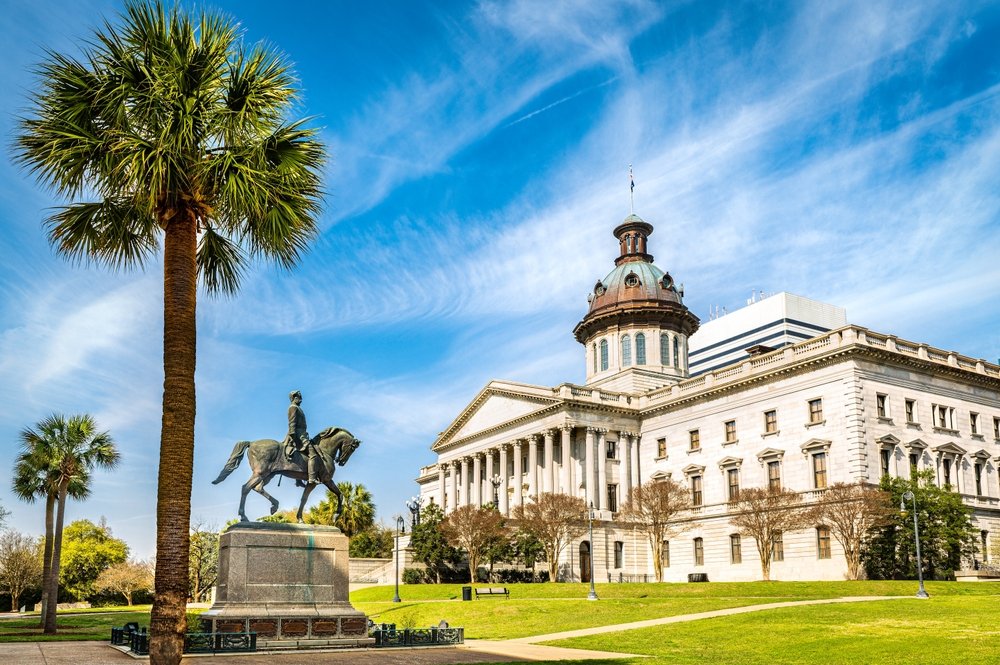
South Carolina’s already slim prospects for legal casino gambling grew even dimmer after House lawmakers sent a proposed casino authorization bill back to the Ways and Means Committee, effectively pausing the effort for the remainder of the session. The move occurred on January 28, 2026, halting any chance of a floor vote this year.
Even if the measure had advanced, its chances were low. State Senate leadership has shown little enthusiasm for expanding gambling beyond the existing lottery system, leaving supporters with few viable paths for approval. Governor Henry McMaster’s longstanding opposition to legal gambling further compounds the challenge, as he publicly maintained he would veto the bill in its current form.
Ways and Means Chairman Bruce Bannister had considered an amendment requiring that 35% of prospective casino revenue fund conservation efforts—an idea meant to appeal to state leaders. However, McMaster made clear that even such revisions would not change his position. Bannister acknowledged the governor’s unwavering stance, noting that without a shift in support, the bill would not move forward in the Senate.
“One of the things that was anticipated was that the governor may be moderating his resistance to the bill. He has come out and said that he would veto it under its current form, even with the amendment that we talked about,” Bannister said in an interview.
Lawmakers returned the bill to committee in hopes of finding a version more acceptable to the governor, though there is no indication his views are softening. As a result, legislators now face an uphill battle if they hope to revisit the issue in a future session. For now, the casino debate remains stalled, reflecting the state’s historically resistant approach to gambling expansion.
The proposed casino project, backed by private developer Wallace Cheves, envisioned a major resort in Orangeburg County along Interstate 95 near Lake Marion. Supporters touted the development’s potential to generate roughly $100 million in annual tax revenue for the state, positioning it as a significant economic driver for the region.
But enthusiasm from local officials and business interests stands in stark contrast to the political climate. While other states have embraced casino gambling as a means of boosting revenue and tourism, South Carolina’s deep-rooted reluctance continues to shape policy outcomes.
McMaster reiterated that opposition, citing a longstanding state position against using gambling as a revenue tool. Given that context, the developer’s ambitions remain tethered not to market potential but to political constraints.
This latest setback comes at a time when some lawmakers have shown openness to discussing gaming reforms, including sports betting and the reclassification of certain games of skill. However, those discussions have not translated into legislative movement strong enough to shift the state’s direction. Previous hearings on related bills ended without votes, reinforcing how difficult it remains to push gambling measures through the legislature.
For now, South Carolina’s casino prospects appear stalled for at least another year. Unless significant political attitudes shift—particularly within the governor’s office—casino supporters face a prolonged wait before the issue gains meaningful traction.