If you're new to collecting basketball cards, it can be overwhelming to select the right fit, as there are several options to choose from. This page will help you cut through the noise and find the best NBA trading cards.
We've put together a list of standout cards, which we ranked after considering factors like the player's popularity, print runs, and market demand. Keep in mind that our picks are not set in stone. As new seasons and issues roll out, this list might change to reflect what's actually worth a spot in your collection. Keep reading for more details.
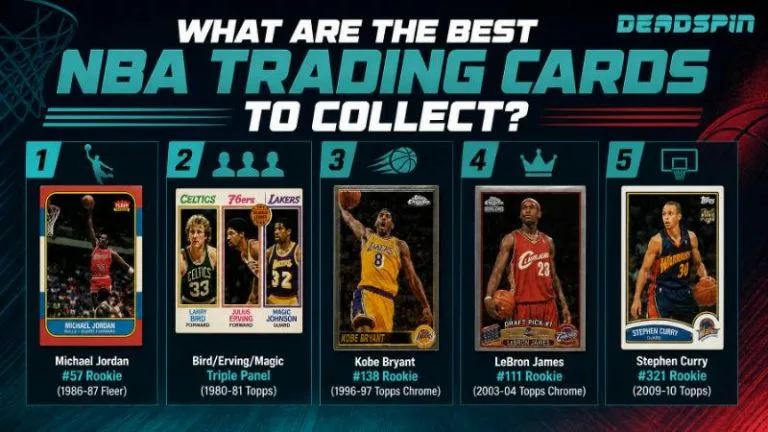
The exact NBA cards to add to your collection depend on your preference. But, to help you get started, here are the five top options right now:
This card, which features Jordan mid-layup in his Bulls uniform, is one of the most famous basketball cards ever produced, so it makes sense that it’s the first on our list. It comes from Fleer’s first modern basketball set and was released during Jordan’s second NBA season. Still, it is considered his official rookie card because it was his first appearance on trading cards.
| Set | 1986-87 Fleer Basketball |
|---|---|
| Team (reflected on card) | Chicago Bulls |
| Player | Michael Jordan |
| Position | Guard |
| Card number | #57 |
| Notable detail | Jordan’s iconic rookie card |
Unlike other cards on our list that feature a single player, this brings together Larry Bird, Julius Erving, and Magic Johnson. It’s from the Topps 1980-81 set, which used a unique triple-panel format with three player panels connected in one strip. The card also captures the beginning of the Bird-Magic era and is more valuable when it’s uncut. It’s a great pick if you’re interested in the storylines behind the NBA, not just player stats or market price.
| Set | 2009-10 Topps |
|---|---|
| Team (reflected on card) | Golden State Warriors |
| Player | Stephen Curry |
| Position | Point Guard |
| Card number | #321 |
| Notable detail | Curry’s rookie card in Topps |
This is Kobe’s rookie card from the 1996-97 Topps Chrome set, released during his debut season with the Lakers. In addition to being a rookie card, it features Topps Chrome’s shiny finish that sets it apart from traditional cardboard releases. Since Kobe passed away in 2020, demand for the rookie card spiked, pushing up the prices of high-grade copies.
| Set | 2009-10 Topps |
|---|---|
| Team (reflected on card) | Golden State Warriors |
| Player | Stephen Curry |
| Position | Point Guard |
| Card number | #321 |
| Notable detail | Curry’s rookie card in Topps |
LeBron James entered the NBA with a lot of hype, and this 2003-04 Topps Chrome rookie card captured that. It is one of the most widely collected rookie cards from his debut season, featuring LeBron before he became one of the greatest players of all time. The Topps Chrome finish gives the card a polished look. Plus, thanks to the player’s popularity, he has a large fan base that increases the card’s demand and makes it more valuable.
| Set | 2009-10 Topps |
|---|---|
| Team (reflected on card) | Golden State Warriors |
| Player | Stephen Curry |
| Position | Point Guard |
| Card number | #321 |
| Notable detail | Curry’s rookie card in Topps |
Stephen Curry’s rookie card from the 2009-10 Topps set didn’t attract major attention right away. That changed dramatically as his career took off with the Warriors. This card is a good example of how a player’s reputation can reshape a card’s market value years after its original release. Plus, since early demand was relatively low compared to other rookies on this list, high-grade surviving copies are harder to find in top condition, and this makes the card more valuable.
| Set | 2009-10 Topps |
|---|---|
| Team (reflected on card) | Golden State Warriors |
| Player | Stephen Curry |
| Position | Point Guard |
| Card number | #321 |
| Notable detail | Curry’s rookie card in Topps |
Our NBA card selection process is identical to what we followed when ranking WNBA trading cards. We considered multiple factors, from the card’s scarcity to the set it’s from. In the following sections, we’ve provided more insight into these factors and why they matter:
Scarcity is one of the major factors that boosts a card’s value. As a result, we always look at how many copies of a card were originally printed and how many surviving copies are still in circulation, especially if it’s an older issue. Cards from small print runs, older sets, and unique formats like the Bird/Erving/Magic triple panel usually rank higher because they are limited.
The larger a player’s fanbase, the higher the possibility that his trading cards are more in demand. However, we look further than the current following. We also compare how that same card has performed over the previous months. This requires us to check sales data across trusted platforms, noting how consistent the card’s prices have been. That way, we know options that can hold their value in the future.
Condition can make or break a card’s value. As such, we check how sensitive the card is to wear, centering issues, and surface damage. When necessary, we also consider if the card has been professionally graded and how easy it is to find options in top-notch condition.
Some cards become popular because of what they represent, not just the player’s statistics. Good examples are rookie cards that show a player in his early days or options that depict a turning point in NBA history. That’s why we factor in the collectibles’ historical weight to determine if they deserve a spot on our list.
A player’s current legacy and performance play a major role in how we evaluate a card. Take Stephen Curry’s #321 rookie card as an example. It was not originally as popular as other rookie cards until Curry became a sensation in the NBA world. That said, we always factor in the player’s career achievements, championships, and overall impact on the game to determine cards that are more valuable.
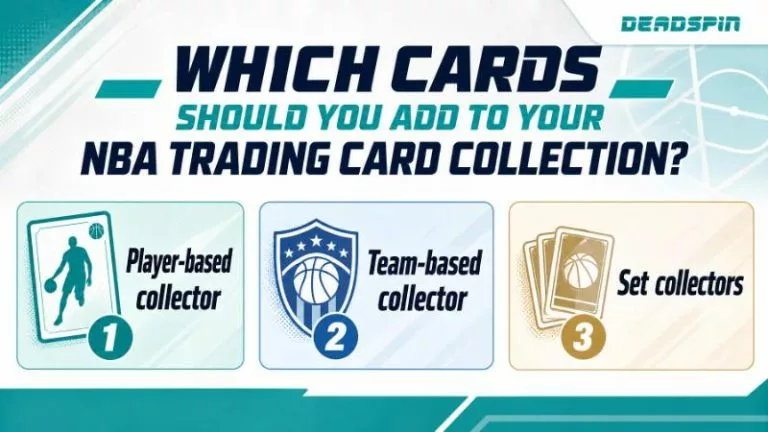
Whether you just want to rip NBA cards online or buy individual cards, it helps to know the kind of collector you are. This information allows you to choose options that align with your collection goals. That said, here are the most common types of collectors for NBA trading cards and the best approach to use based on where you fall into:
Know that you don’t have to fit yourself into one category, especially if you’re just starting out. If you just want to gather NBA trading cards without a specific goal beyond owning them, then do that. You can also participate in basketball card breaks for a more interactive pack-ripping experience.
You now know the top five NBA trading cards in the market right now. Our list combines older options like the 1980-81 Bird/Erving/Magic triple panel with more modern selections such as Curry’s rookie card in Topps. While our list features the most valuable NBA trading cards, you don’t have to get every single one, just those that fit into your collection.
Remember that collecting NBA trading cards is supposed to be fun. There is no set way to get these collectibles, so feel free to explore and find what you like. If you then decide to enter card breaks, check our on-page banners for the best sites that host these events.
Several factors make NBA trading cards valuable. These include the player’s performance and legacy, scarcity, the set the card comes from, and grade.
Generally, a rookie card is a player’s first officially licensed trading card release, usually issued during or shortly after their debut NBA season. They usually have an “RC” logo somewhere on the card, though not all manufacturers use this labeling consistently. You can check the card’s set and year against the player’s actual rookie season.
You can check out our list for the top five NBA trading cards. Still, consider your own preferences when selecting trading cards, so you know which one fits your collection best.
The best place to buy NBA trading cards depends on what you’re looking for, but the most common options are established online marketplaces and card break sites.
Loading …