DOGE prediction markets allow you to buy or sell event contracts on outcomes relating to the price of DOGE. The events tend to be categorical or scalar, with multiple outcomes available, and various time periods are covered.
For example, you could predict the price of DOGE by the end of the day, or project the date by which DOGE will hit $1.00. There are also high-frequency markets, such as the price of DOGE going up or down in the next 15 minutes. The best trading platforms for these prediction markets are Kalshi, Crypto.com, and Polymarket.
First and foremost, prediction markets related to Dogecoin should not be conflated with trading DOGE itself. Rather than buying and selling the actual asset, prediction markets focus on short-term, medium-term, and longer-term outcomes related to Dogecoin, usually the price.
As a trader, you have the opportunity to buy and sell event contracts for these prediction markets. If your prediction is correct, the contracts that you purchased will close at $1.00 each, giving you a profit. On the other hand, if your prediction is incorrect, you lose your entire output plus your trading fees.
For example, if the prediction market is “How high will Dogecoin get in May?”, you would buy event contracts for the outcome that matches your prediction, for example, “Above $0.12”.
This might sound slightly confusing at this stage, but it should become clearer with the visual examples and detailed breakdown that we’ve included in the guide below.
Doge prediction markets come in a variety of shapes and sizes, with binary outcomes, multiple choice, and scalar predictions. To start with a fairly simple example, let’s look at the aforementioned example “How high will Dogecoin get in May?”.
This is how some of the event contracts would look:
| 📈 Prediction markets | 💯 Chance | ✅ Yes | ❌ No |
|---|---|---|---|
| Above $0.12 | 64% | $0.58 | $0.51 |
| Above $0.13 | 31% | $0.30 | $0.76 |
| Above $0.14 | 14% | $0.20 | $0.88 |
The table above might not mean much to you at first reading, so let’s break down the key elements to provide some context:
Let’s use the “Above $0.12” prediction, as it has the highest probability and would therefore have a high trading volume with plenty of liquidity. These are your two options:
The prices for the event contracts on these prediction markets are between $0.01 and $1.00. When first released, they reflect the chance percentage at a one-to-one ratio. However, market activity, including trading volume, liquidity, and the volatile price fluctuation of DOGE itself, can quickly change opinion and alter the prices.
For example, the “Yes” event contracts for the “Above $0.12” prediction market above would’ve opened at $0.64. But trading volume and activity have seen the price slip positively to $0.58.
Once the market is resolved to one of the possible outcomes, the relevant event contract prices close at $1.00, with all others closing at $0.00. This gives you a profit if you bought and held contracts for the correct prediction, and a loss if you backed one that was resolved as incorrect.
For example, if the price of DOGE hit a high of $0.125 in May, the “Above $0.12” market would resolve to a “Yes”, with all of the others resolving to “No”. All of these contracts would go to $1.00 in value, with the others finishing at $0.00.
Therefore, had you bought “Yes” contrast for “Above $0.12” at $0.58 per share, you’d make $0.42 profit on each one. Had you bought “No” on this market, or “Yes” for any of the other outcomes, you’d lose your entire outlay.
When you buy and sell event contracts for these crypto predictions, you need an equal counterpart for the trade to go through. Trading platforms make money by charging you trader fees. These are different on each site, but here are the most common fees that apply:
The example that we used above is just one of many different types of Dogecoin-related prediction markets that you can trade on in the US. There are too many prediction market examples to list, but here are the main types of event contracts you’d find:
Binary: Two-pronged prediction markets, such as “Will the price of DOGE go up or down by XXXX?
Categorical: These prediction markets have three or more outcomes to choose from. The “How high will Dogecoin get in May?” The prediction market that we used above is an example of this.
Scalar: Markets that give you a selection of DOGHE price ranges to choose from. If the market were “The DOGE price range on Friday at 5 am EDT”, one of the event contracts would be $0.105 to $0.109.
High-frequency markets: Prediction markets that focus on a very short time window and therefore recur multiple times per day. An example would be the 15-minute Dogecoin prediction markets that you can find on Kalshi and Polymarket.
Now that you understand how these prediction markets work, let’s take a look at the top three platforms where you can trade DOGE price event contracts in the US right now:
| 📈 Prediction market site | 🧑⚖ Regulation | 🪙 DOGE prediction markets | 🏆 Best feature |
|---|---|---|---|
| Kalshi | CFTC | Yes ✅ | DOGE market variety |
| Polymarket | CFTC | Yes ✅ | High-frequency DOGE markets |
| Crypto.com | CFTC | Yes ✅ | User-friendly interface |

If you’re looking for a diverse spread of binary, categorical, and scalar Dogecoin prediction markets, Kalshi is definitely the best trading platform. There are around 10 DOGE markets every day, covering all time scales, from annual to daily, weekly, and 15-minute.
All of the markets are related to the DOGE price, but there are various approaches. You can predict the closing day price, find High/Low markets, and Up/Down event contracts. When buying and selling event contracts, the interface is user-friendly and allows you to place limit orders to protect your trade against negative slippage.
The prices that this site uses to determine the DOGE prices for the market resolution come from the Real Time Index (RTI) at CF Benchmark. Additionally, CF Benchmark also verifies the outcome once the market resolves.
From a regulatory standpoint, the platform is overseen by the United States Commodity Futures Trading Commission (CFTC). As a result, users aged 18+ can access the platform for all 50 states at the time of writing, though that is subject to change.

Polymarket might not have the same diverse range of long-term DOGE markets as Kalshi, but it’s the best option for high-frequency markets. As well as hourly and 15-minute event contracts, you also have 5-minute Dogecoin prediction markets here. As far as we’re aware, it’s the only trading exchange to offer this.
The interface for trading these high-frequency DOGE prediction markets works well and has plenty of tools to facilitate quick trades. For example, when one 5-minute market resolves, you can click the “Live market” button to see the next one as soon as it opens. There is also a 1-Tap purchase feature, but that’s now restricted in most of the US.
In terms of market sources, Polymarket uses Chainlink for its 5 and 15-minute markets. For all other DOGE price markets, the DOGE/USDT pair on Binance is the resolution source.
Like Kalshi, Polymarket is a CFTC-regulated exchange that’s legally available to adults aged 18+ in all 50 states. However, some functions and markets are restricted in certain regions.

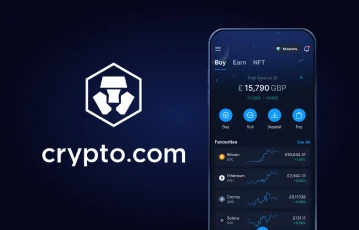
The Doge prediction market trackers and tools on the interfaces of the two platforms above are useful and stacked with features. However, they might confuse or even overwhelm you if you’re new to crypto prediction markets. In that regard, Crypto.com is a better option.
While it only offers four DOGE markets every day, they are straightforward to follow. You have a 20-minute market, a 2-hour market, plus a daily and a weekly one. The only downside is that you’re referred to the CDNA Rulebook to find the agency from where the outcome resolution is spruced. It would be nice to see a bit more transparency here.
When it comes to buying and selling event contracts, the interface is extremely simple and user-friendly. You simply need to enter your contract quality and hit the “Trade” button at the bottom to execute. Before you place the trade, you can transparently see your estimated price total and expected returns for a correct prediction.
The predictions on Crypto.com are a derivatives product that is CTTC-regulated in the US. It is currently legal in all states with the exception of New York and Arizona. Nevada, Ohio, Michigan, Maryland, Massachusetts, New Jersey, and Illinois residents cannot trade on sports events, but DOGE markets are available.
Sponsored by Crypto.com – Not investment advice. Trading prediction markets and crypto involves risk, including potential loss of your stake. Consider your risk tolerance before participating. Crypto.com connects U.S. users to CDNA (regulated by CFTC) for derivatives trading. CDNA membership required. Trading may not be suitable for all—you could lose your entire investment plus fees. Past performance doesn’t guarantee future results. This is not a solicitation or recommendation to trade.
To summarize, Dogecoin prediction markets are not the same as directly trading DOGE. Instead, you’re trading on the short and long-term outcomes based on the price of DOGE.
You can buy and sell event contracts based on your predictions. If you’re correct, you win and make a profit; if not, you lose your money. To clarify once more, Dogecoin prediction markets are risky, but if you want to give them a go, you can access Kalshi, Crypto.com, and Polymarket via the banners on this page.
Prediction markets involve buying and selling event contracts based on outcomes related to DOGE. To use a simple example, you can trade on the Price of DOGE going up or down before the end of the day.
Most prediction market sites offer some DOGE markets at the very least. However, your best options are Kalshi, Polymarket, and Crypto.com.
Firstly, you need to sign up for a CFTC-regulated exchange like Kalshi, Polymarket, or Crypto.com. Then you need to find the market you want to buy contracts for, and use the tool on the screen to set up and execute the trade.
Loading …