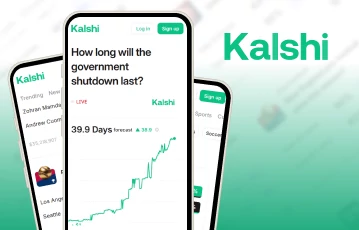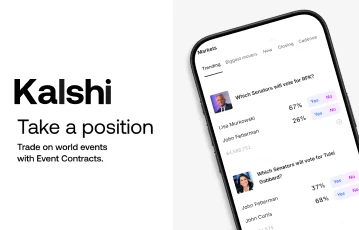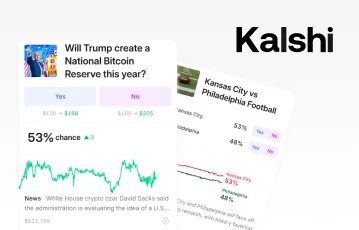
There’s a whole host of Kalshi election markets that you can make predictions on, including the US election, the UK general election, and beyond. Overall, these prediction markets are changing the way that you can participate in elections.
Though there are similarities, making predictions on election markets at Kalshi doesn’t work exactly the same as sports betting.
There’s always a winning and a losing outcome, and the markets can change based on trader analysis. However, prediction markets require an even number of traders for each outcome to work, which differs from the fixed odds sportsbook model.
With the election prediction markets at Kalshi, you can trade on potential outcomes of US elections and those happening overseas. However, it works quite differently from fixed-odds election betting on a traditional sportsbook.
Unlike with traditional sports betting, prediction markets offer you the chance to buy and sell positions on prediction outcomes for elections. This means that, in terms of trading on elections or sports at Kalshi, you need equal numbers in order for the trade to work.
Whereas on a traditional sportsbook, users can place bets at the odds offered regardless of how many people have backed the opposing outcomes. This is because the house sets the odds.
For example, for you to buy a “Yes” position on JD Vance to win the next presidential election, an even number of people would have to have bought the “No” position. You can also sell your prediction market position before the election is concluded.
Here’s a quick rundown of the key points:
And here’s a live prediction market open for the 2028 election, but keep in mind you can find hundreds more at Kalshi:
While you cannot bet on an election at Kalshi, there are some similarities with traditional wagering. For starters, there are winning and losing outcomes, and you need to make the correct prediction to win a payout.
Moreover, the activity and opinions of traders can affect the market movement in real time.
On the other hand, the market price offered at Kalshi is usually a truer reflection of the real probability, as the site doesn’t make money by juicing the odds.
Below is a short summary of the key points that we’ve just covered:
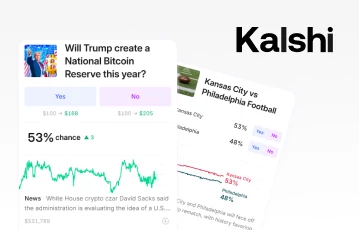
You won’t find any election betting odds at Kalshi. Instead, you will find the “Chance” for each outcome, which displays the probability as a percentage. Next to this, you’ll find a price for the “Yes” and “No” outcome on a prediction market.
Here’s an example of how the Kalshi event contracts might look for the “Next US Presidential Election Winner” prediction market. There could be multiple candidates, depending on when you’re trading, but we’ll take JD Vance as an example.
This is what you would see:
| 💯 Chance | ✅ Yes Price | ❌ No Price |
|---|---|---|
| 30% | $0.31 | $0.70 |
This shows you that right now, the prediction market has JD Vance winning the next US election at 30%. You can buy “Yes” shares for $0.30 and “No” shares for $0.70.
As with traditional sports betting, you need to predict the correct outcome of the market to receive a payout. However, as we touched upon earlier, this works differently from traditional sports betting.
To continue with our example above, the prediction market would resolve to a “Yes” outcome if JD Vance were to be inaugurated as the next US president.
If you had bought “Yes” shares, you’d receive $1.00 for every share you bought. That means if you’d traded at the $0.31 price listed above, you’d make $0.69 profit on each share.
On the other hand, if you’d bought “No” shares, you’d lose your entire outlay once the market was resolved as a “Yes”.
When it comes to buying shares for election prediction outcomes on the Kalshi app, you have two options:
As a short side note, you should always check the wording in the “Rules Summary” section of each prediction market. If we refer back to the example we used above, the rules stated that JD Vance had to be “the next person inaugurated as President”.
This means that you’d have to wait until the inauguration was completed before the market would be resolved as a “Yes” or a “No”. The final outcome would not be concluded immediately following the final count of electoral votes.
Kalshi has an extensive “Elections” section for its users to explore, focusing mostly on the US. To help you, these Kalshi election contracts are categorized into smaller sections, such as the US presidential elections or 2026 US midterms.
Here are the main election market areas we recommend focusing on.
The big one: the winner of the US presidential election. As of our latest update, this market has just over $72 million in trades, even though it’s more than two years out.
At this time, traders can make Yes/No predictions on a huge selection of presidential candidates (14 candidates with over a 1% chance), such as Vice President J.D. Vance, former Vice President Kamala Harris, and California Governor Gavin Newsom. Of course, the field will be whittled down to two candidates sometime between July and September 2028.
But at Kalshi, you aren’t just limited to predicting the exact winner. There are a host of markets related to the US presidential elections, giving users the opportunity to make predictions from a multitude of different angles. Here are some of the major markets.
These markets are centered on outcomes in the US Senate or House. These become super-popular at key times, like the midterm elections, which are slated for November 2026.
As of early October, the Congressional Balance of Power market has earned nearly $35 million in volume. In it, Kalshi users can predict the four outcomes of the Senate and House results (sweep for either side or split each side).
But Congressional-based markets go well beyond just the overall result, just like with US presidential market offers. Kalshi has markets for every individual Senate and House race. These state-specific markets bring in high levels of trading, especially the most closely fought races, such as the battle for the Texas Senate seat.
For traders who want to take a more bird’s-eye view of election markets, Kalshi has you covered. Here are some examples ahead of the midterms.
Kalshi also gives significant coverage to governorships and other key local elections. Of course, there are straight-up winner markets, which gain the most trading volume. Governor races in Ohio, Texas, Florida, and Iowa all have over $1 million in trading, as of early October.
Again, Kalshi provides more in-depth markets on state races. Users can predict which specific county Governor candidates will win, combo bets for state Senate and Governor winners, and overall Democrat-Republican split results.
While US elections get the vast majority of the coverage in Kalshi’s “Elections” section, the rest of the world is far from ignored. The platform has a wealth of options to make predictions on international election results.
These are primarily countrywide general or presidential election results from countries like the UK, Brazil, and France.
But Kalshi also goes granular with its international elections subcategory, and while it’s not as deep as its US election counterpart, it’s still a vast selection for users to dive into. These include exact vote results, winning margins, state results, voter turnout, and smaller elections like mayoral races.
At the time of writing, election and other prediction markets at Kalshi are legal across all of the United States, with the notable exceptions of Nevada and Washington. As they offer the trading of contracts on prediction markets that are determined by outcomes, the activities are regulated by the CFTC and federal laws.
This is distinctly different from traditional online sportsbooks, which are governed by laws and gambling regulators. Things are moving fast, however, and we’ll update you if the situation changes.
As Kalshi is a site that offers trading on prediction markets, it doesn’t make money betting its own odds and taking commission or vig off the top. The price and probabilities offered are set and determined by the market, rather than those operating the site.
Instead, the site makes money by charging a transactional fee that is based on the expected profits for each contract.
You can find out the exact formula for Kalshi fees here in our guide. However, we should note that the fees for special events, including political elections, are different from sports prediction markets and others.
Before we finish, here’s a roundup of the main pros and cons of the election prediction markets and contracts that you can trade at Kalshi:
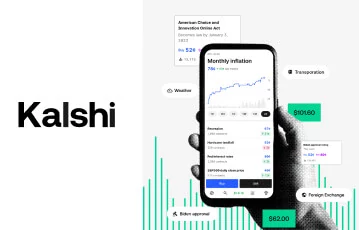
In summary, Kalshi offers prediction markets for many sporting and non-sporting events, including US and foreign elections. You can buy and sell contract positions on “Yes” and “No” outcomes, and receive a payout if the outcome is resolved in your contract’s prediction.
At the time of writing, it’s available in 48 states and Washington DC for US residents aged 18+, with the exceptions of Nevada and Washington. But things are moving fast. You can check the banners here to find our recommended prediction events sites.
No, you cannot bet on elections at Kalshi. Instead, you can make predictions on election markets by buying contracts for “Yes” or “No” outcomes. If your prediction is correct, you’ll receive a payout.
As prediction markets are considered financial activities and are regulated by the CFTC, it’s legal in all 50 states at the time of writing. However, there have been legal challenges, and this could change, so keep yourself up to date.
You won’t find any odds for elections at Kalshi, but you will find contracts for election prediction markets. For each outcome, you will see a chance percentage of the outcome happening and a price for the “Yes” and “No” prediction contracts that you can buy.
Loading …