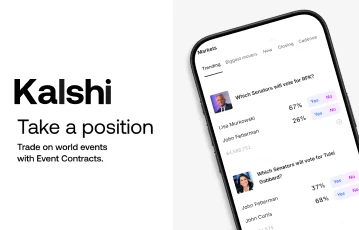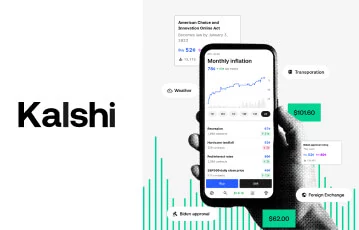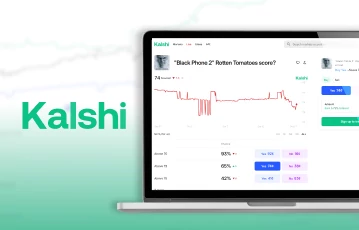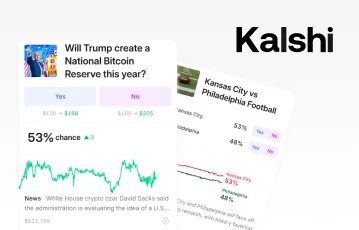
We didn’t find any Kalshi odds when we looked into its platform recently. It operates as a prediction market exchange where people trade event contracts rather than placing bets against the house, as they would with a sportsbook.
Each event contract represents a “Yes” or “No” outcome, and the sentiment of other Kalshi traders determines its price.
We’ll provide more information about how Kalshi’s pricing model works and show you how it differs from traditional sportsbook odds. You’ll also find its pros and cons, along with a couple of answers to relevant questions.
Kalshi is a regulated prediction market exchange where you can trade on a variety of real-world events, such as sports, elections, movies, and economic policies.
The site operates more like a stock exchange than an online sportsbook, and it runs on Kalshi event contracts rather than traditional bets.
Once you’ve signed up to the site and intend to trade contracts in the Kalshi election prediction markets, for instance, the site matches you with another trader who’s willing to trade an opposing contract.
Let’s say you believe the event is likely to happen, and you buy a “Yes” contract. The site pairs you with someone who buys a “No” contract because they believe the event is unlikely to happen.
The contracts pay $1 if the event occurs (“Yes” contracts) but expire if it does not occur (“No” contracts).
Based on its trading policy, the combined investment of both trades must equal $1, and the site takes a commission for facilitating the trade.
As such, you might be required to pay Kalshi fees, which our findings revealed are minimal and transparent.
We also learned that the site is regulated by the Commodity Futures Trading Commission (CFTC), and that its markets are available in jurisdictions where traditional sports betting isn’t.
Since Kalshi is a prediction markets exchange, it doesn’t support any of the odds we described above.
That’s because, although the site may use marketing language that includes terms like “odds,” it doesn’t offer betting odds or traditional gambling.
Rather, its operations are built around trading events with market-assigned probabilities.
Kalshi constantly gauges traders’ opinions on the likelihood of an event resulting in a “Yes” or “No” outcome.
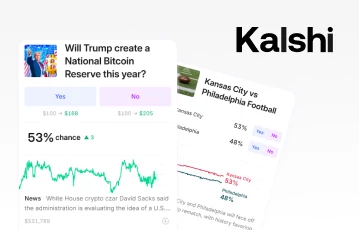
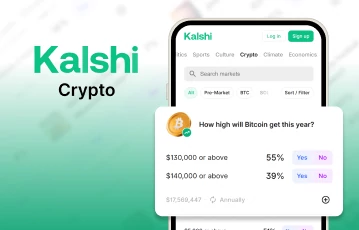
It then expresses this likelihood as a percentage, ranging from 0% (certain not to happen) to 100% (certain to happen), and contract prices are linked to this figure.
So, with Kalshi prediction odds, the more likely a “Yes” outcome is (based on its ‘traders’ sentiment), the contract price for “Yes” increases, and the contract price for “No” decreases.
On the flip side, if its traders believe a “No” outcome is more likely, the contract price for “No” rises, while the contract price for “Yes” falls. Here’s an illustration.
Let’s say you decide to trade in available Kalshi sports prediction markets. If traders in that market believe there’s a 70% likelihood of the event occurring, the contract price for a “Yes” outcome would be 70 cents, and the contract price for a “No” outcome would be 30 cents.
Kalshi doesn’t influence the pricing of its contracts nor influence the outcomes of the events it covers. Instead, it runs on a flexible pricing model driven by its available markets.
The odds available at traditional sportsbooks are determined by the oddsmakers and adjusted as they see fit, unlike Kalshi, which allows market forces to determine contract pricing.
Like some stock trading exchanges that let you bet on stocks and bonds, Kalshi merely serves as a neutral facilitator of contract trading. It operates differently from traditional sportsbooks that set specific odds.
Here’s how the “odds” at Kalshi differ from what’s available at traditional sportsbooks:
| Kalshi | Traditional sportsbook odds |
|---|---|
| Determined by supply and demand | Fixed by a bookmaker |
| Involves trading contracts | Bettors wager against the bookmaker |
| Minimal transaction fees based on contract pricing | Costs are hidden and built into the odds |
| Prices are displayed in percentages or cents | Displayed in different formats depending on the odds type |
There are two sides to the coin when it comes to using Kalshi’s equivalent of conventional sportsbook odds. Here’s a quick look at them:
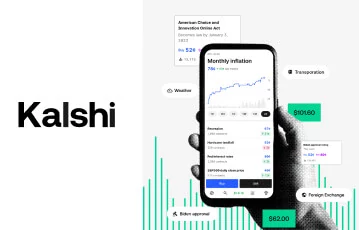
Because of its operating model, Kalshi doesn’t support traditional sportsbook odds. What it offers are event contracts with prices set by market forces.
Its dynamic pricing model sets it apart from traditional odds and offers traders a transparent way to place real-money predictions.
Having a firm grasp of how ‘odds’ work allows you to make better predictions and trade your event contracts more strategically.
We’ve unravelled Kalshi’s contract pricing model and shown how it differs from conventional odds. You can now use the information you’ve gained from this guide to trade better at Kalshi.
If you haven’t signed up already, click the banners on this page to get started.
Kalsi doesn’t offer traditional sportsbook odds. It supports the trading of event contracts at prices that are determined by market forces.
Kalshi doesn’t offer conventional live odds; you trade event contracts on the site’s available live events.
Yes, it is. Kalshi is regulated by the Commodity Futures Trading Commission (CFTC), and its markets are available in jurisdictions where traditional sportsbooks aren’t.
Loading …