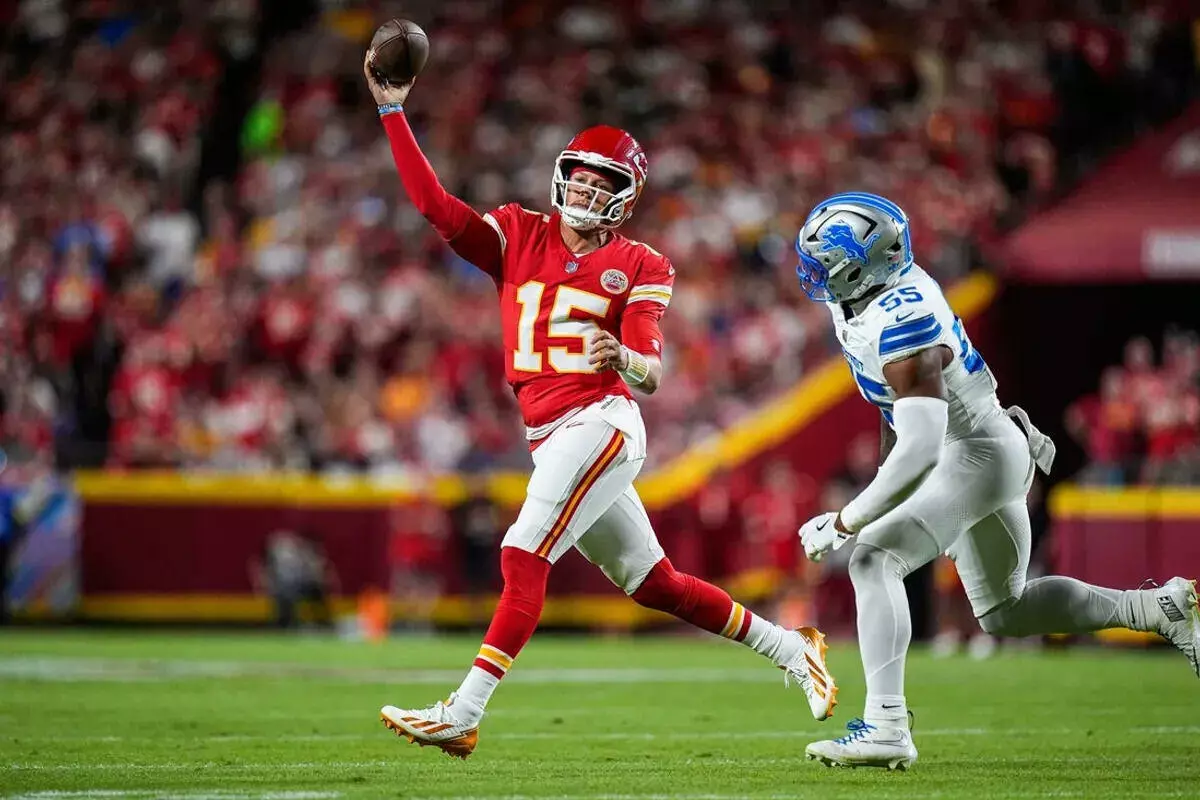
Earlier this week, the American Gaming Association (AGA) released its forecast for legal sports betting handle for the 2026-27 NFL regular season. Although the projected $29.5 billion total wagers figure represents an impressive validation of the popularity of legal, state-licensed sportsbooks, it also shows that NFL sports betting handle is expected to be relatively flat compared to 2025.
The proliferation of prediction market exchanges such as Kalshi, Polymarket, and Robinhood has “siphoned” tax revenue that state-licensed sportsbooks would otherwise generate if not for the “backdoor” market entrance of sports contracts, claims the AGA.
“‘Sports event contracts’ are offering illegal sports betting nationwide,” claims a separate AGA landing page that prominently displays a running count of “state gaming tax dollars” that have allegedly been lost due to prediction market sports contracts. As of Wednesday, the counter module has reached more than $1.4 billion.
Due to how “combo” trades are often calculated separately from single-event contracts, some prediction market proponents claim that sports betting only makes up about half of all trading on prediction exchanges.
However, the 80% number cited by the AGA appears to be much closer to reality. A May 2026 report published by Pew Research estimates that sports contracts have “made up 80% of total trading volume on Kalshi… since July 2024.”
Kalshi’s recent move to suspend market maker fees for uncorrelated NFL combo trades is likely to push that percentage even higher as the 2026-27 NFL regular season progresses.
By pausing maker fees for NFL combos that are uncorrelated (also referred to as “independent event pairings”), prediction platforms that are adopting the policy are arguably taking aim at sportsbooks’ most profitable product just as the NFL and college football seasons begin.
Tighter “bid-ask” trading spreads for products that essentially mirror state-licensed “parlay” wagers are expected to result in significant user migration from sportsbooks to prediction markets this football season. This past Saturday, Kalshi broke its own record by hosting $2.29 billion in total trading volume, according to Ticker Tracker Vitals data.
The AGA has remained consistent in its stance that prediction market sports contracts should be regulated as sports “bets” or “wagers” under state licensing and regulations.
“These ‘prediction market’ platforms are dangerously misleading consumers by marketing sports wagers as an investment, rather than what it is: entertainment,” said AGA President and CEO Bill Miller earlier this week.
Miller added that consumers should differentiate between sportsbook products that are legally authorized on a regional basis and prediction market contracts that do not enjoy the same oversight, encouraging sports fans to “only wager with legal, state- and tribal-regulated operators.”
The AGA’s stance is at odds with the Commodity Futures Trading Commission (CFTC), which has claimed “exclusive jurisdiction” over prediction markets. Exchanges that operate under CFTC oversight are aligned with the federal agency’s regulatory vision that prediction markets, including sports contracts, should be immune to state and tribal gaming enforcement.
Loading …