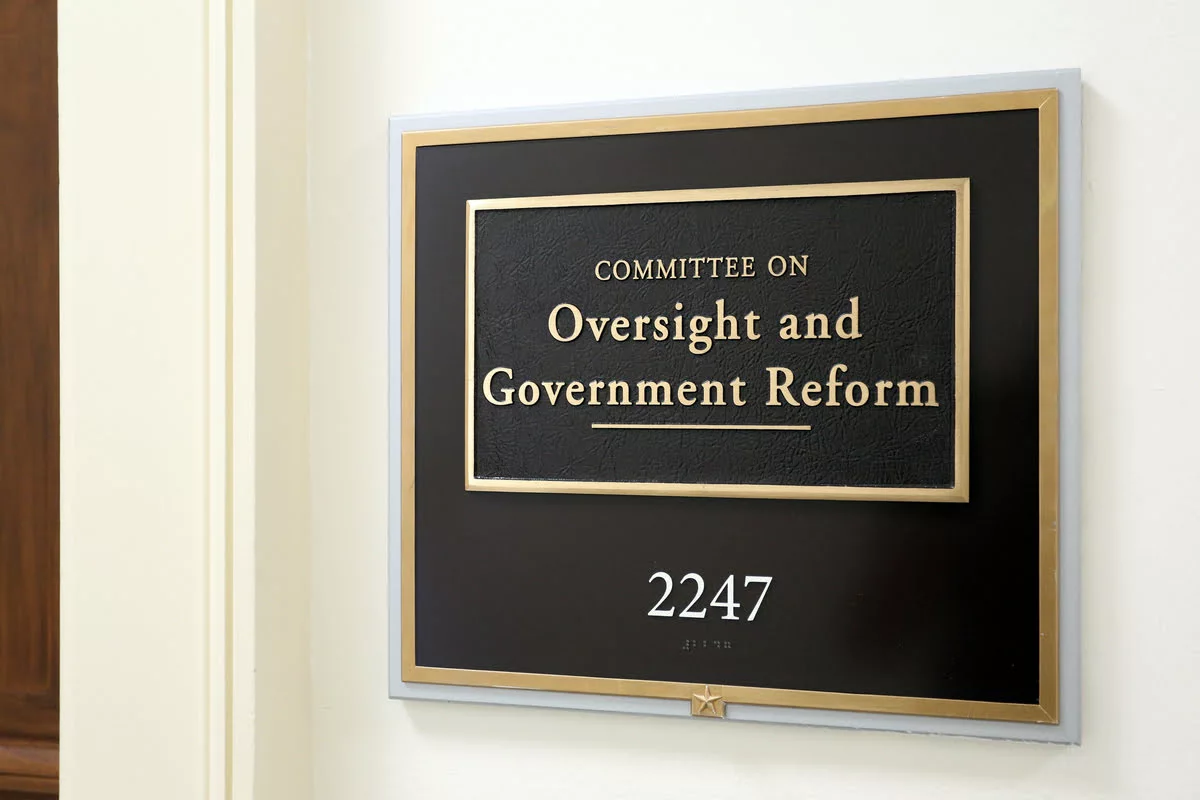
US House Oversight Committee chairman James Comer has opened an investigation into different facets of prediction market security and geo-fencing capabilities. According to an article published by the Wall Street Journal, Comer – a Republican congressman for the 1st District of Kentucky – sent a formal letter on Friday to executives from both Kalshi and Polymarket. Comer is seeking clarification on the effectiveness of geolocation technologies along with user verification mechanisms, according to the WSJ.
“We are examining the adequacy of company safeguards to prevent access to offshore sites to circumvent compliance with applicable U.S. federal regulations governing prediction market platforms,” said Representative Comer. The request for information follows the arrest of US Army special forces soldier Gannon Ken Van Dyke in April. According to the DOJ, Van Dyke used classified intel and a VPN to access Polymarket’s international exchange, ultimately turning a profit of $409,000 for markets tied to last year’s US military actions in Venezuela.
Although Polymarket reportedly did not respond to the WSJ’s request, Kalshi is quoted in the article as being open to cooperating with the House Oversight Committee requests. “As a U.S.-regulated exchange, we are proud of our comprehensive protections against insider trading,” reads a statement from the country’s most popular prediction market platform. “We look forward to engaging with the Committee and its members about the systems and processes that we have spent years building.”
The new investigative action comes after two separate US Senate committees relayed conflicting signals on how prediction market products should be categorized and regulated. The Senate Banking Committee supports the CLARITY Act, which recognizes the CFTC’s exclusive jurisdiction over prediction markets. By contrast, the Senate Commerce Committee is inclined to view sports-related contracts offered on exchanges like Kalshi and Polymarket as “sports bets” that are best licensed by state and tribal gaming authorities.
The debate over prediction markets has resulted in a flurry of legal activity, pitting the Commodity Futures Trading Commission (CFTC) against state and tribal governments across the country. Most recently, the CFTC has sued the state of Minnesota, seeking injunctive relief against an outright state ban on prediction markets that would pursue felony criminal charges against exchanges and their collaborators starting August 1st.
At present, Kalshi is available in all 50 states, with sports-related contracts restricted in only eight jurisdictions. By comparison, Polymarket is only available to US customers who use a Virtual Private Network (VPN) to access its international exchange.
Polymarket’s public re-entry into the United States market – as an exchange regulated by the CFTC – has been delayed multiple times as it transitions from its previous offshore status. Kalshi has used this time to effectively gain a massive market share over its main competitor in the US – achieving a valuation of $22 billion in a recent Series F funding round.
As far as the legal battle over prediction markets is concerned, numerous legal experts are forecasting that the issue will eventually be decided by the US Supreme Court. That analysis is based on a potential “split” in the US Circuit Courts of Appeals regarding lawsuits filed by prediction market operators, state and tribal authorities, and the CFTC.
Loading …