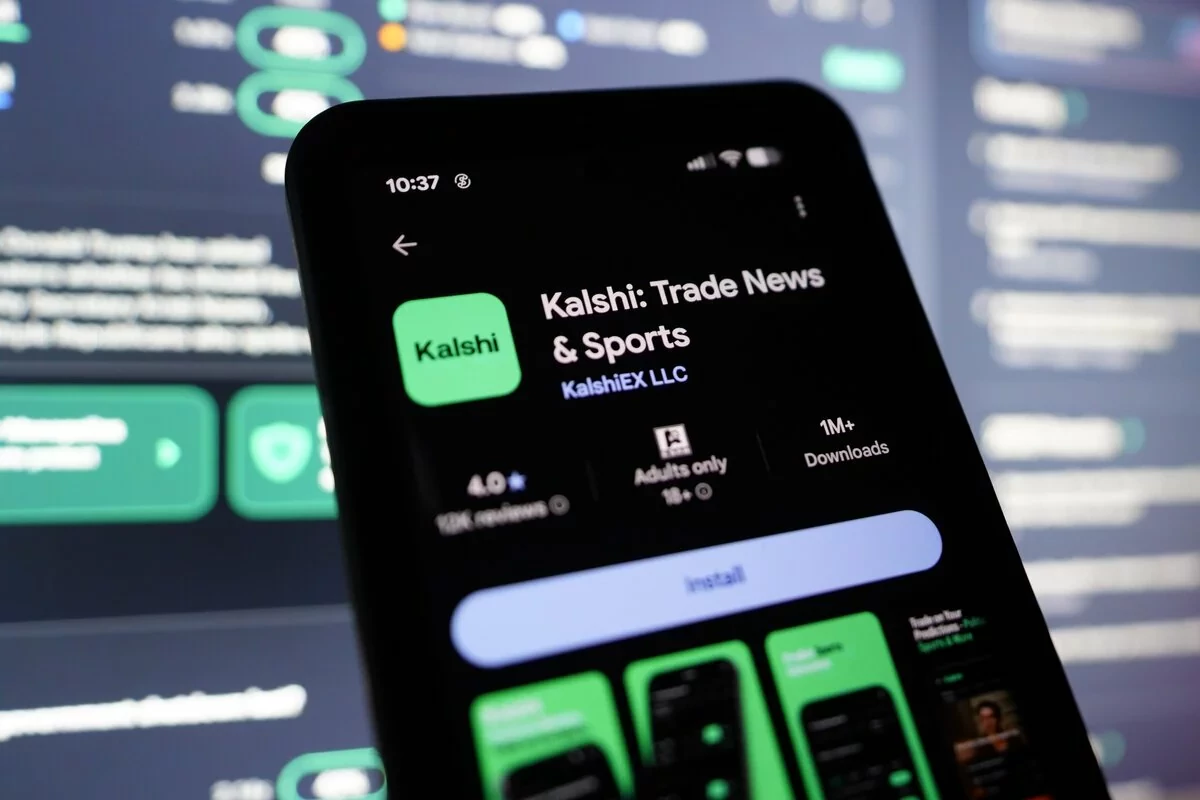
Recent figures provided by third-party analytics website KalshiData point to a meaningful daily trading volume increase in the platform’s non-sports event contracts. In an X post uploaded on Saturday, KalshiData promoter “Martins” shared a chart that shows what many industry observers have suspected in recent weeks: that the CFTC-regulated exchange is experiencing an uptick in crypto trading activity.
The thread shows that approximately 30% of Kalshi’s overall trading volume for Friday, August 21st, was represented by binary, non-sports contracts. The “non-exotics” term used by Martins refers to the highlighted contracts’ sole outcome status, meaning they are not part of any “combo” trade.
The recent launch of 15-minute markets on Kalshi has resulted in an influx of new trading activity from account holders who are more interested in the performance of precious metals and digital assets than sports teams and athletes. Other crypto-related markets, including perpetual futures, have broadened the prediction market’s horizons to attract forecasters who have invested in non-fiat currency assets for years.
“Kalshi has set a new record of roughly $339M in Daily Crypto Volume,” announced Martins on Saturday within the social media thread linked in the first section. Aside from pointing to Kalshi enjoying over $1B in average daily trading volume overall, the numbers paint a picture that shows the country’s most prominent federally regulated prediction platform may have enormous “staying power” in the face of ongoing controversy and legal battles surrounding sports-based event contracts.
Despite the significant growth that Kalshi’s crypto markets have experienced since June, sports event contracts are still expected to make up the bulk of overall trading volume in the coming months on prediction exchanges. Kalshi, Robinhood, and Underdog are all anticipating a surge in forecasting activity tied to the 2026-27 NFL regular season and MLB postseason.
Novig, a sports-only prediction market that recently transitioned from a virtual-currency sweepstakes model, will rely exclusively on athletic event outcomes to boost its daily trading volume averages in September and October. However, the platform’s sole reliance on sports event contracts could leave the exchange uniquely exposed to legal pressures that have forced prediction markets to geofence sports trading in multiple US jurisdictions.
Kalshi’s sports contracts are noticeably unavailable in the states of Washington, Nevada, Massachusetts, and Michigan. Similarly, Novig’s services are geofenced in Michigan, Nevada, and Arizona. Although the current geofenced jurisdictions make up roughly 10% of the nation’s total population, sports-based and all other CFTC-regulated prediction markets remain available in the country’s most populous states.
Investor appetite for Kalshi has grown to unprecedented heights since May 2026, when it raised $1 billion in Series F funding based on a $22 billion valuation. Earlier this month, it was reported that Kalshi is in talks to raise another $750 million based on a revised $40 billion valuation.
Yet converting new accounts from casual observers to real-money traders may hold the key to whether Kalshi can retain its US market share in 2026 and beyond. In an official statement relaying IG Group’s recent acquisition of Underdog on July 30th, the corporation boasted that Underdog has been able to convert five million (out of 11 million) account holders into depositing customers.
That quoted metric is far superior when compared to a statement made on August 21st by CFTC Innovation Advisory Committee member Luana Lopes Lara. “Over 75% of our users [have] never traded on the platform. They just come to consume information,” stated the Kalshi co-founder at the 2:41:55 timestamp mark of the IAC’s inaugural meeting.
Loading …